
Collection: Pelican

Pelican Cases for Laboratory Instruments and Equipment
The case that moves a spectrometer to a client site, a probe set between buildings, or a validation kit onto a plane. Protector, Air and Storm cases are watertight, crushproof and dustproof to IP67, sealed on a gasketed O-ring and fitted with an automatic pressure equalisation valve so they still open after a flight or a cold room. Every listing carries the full Pelican part number, the published interior dimensions and the empty weight — so you can size a case to the instrument instead of guessing.
Shop Pelican casesSize a case to your instrument
IP67watertight and dust-tight
3.3 ftwarranted watertight for 30 min
Lifetimelimited warranty on the case
USAships from US inventory
Choosing a Series
Protector, Air or Storm
All three seal the same way and carry the same IP67 rating. They differ in shell material, latch and weight — not in whether they keep water out.
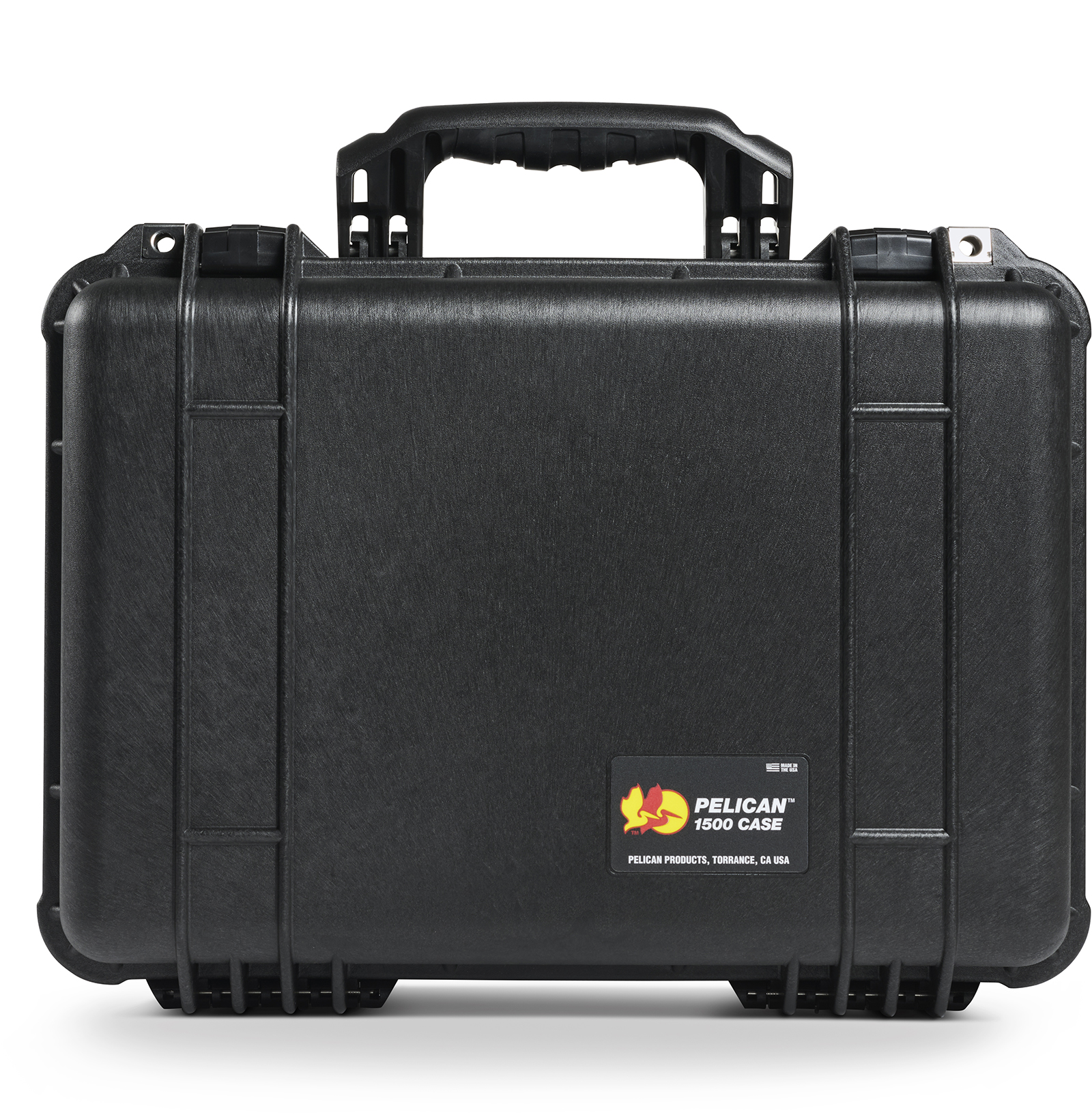
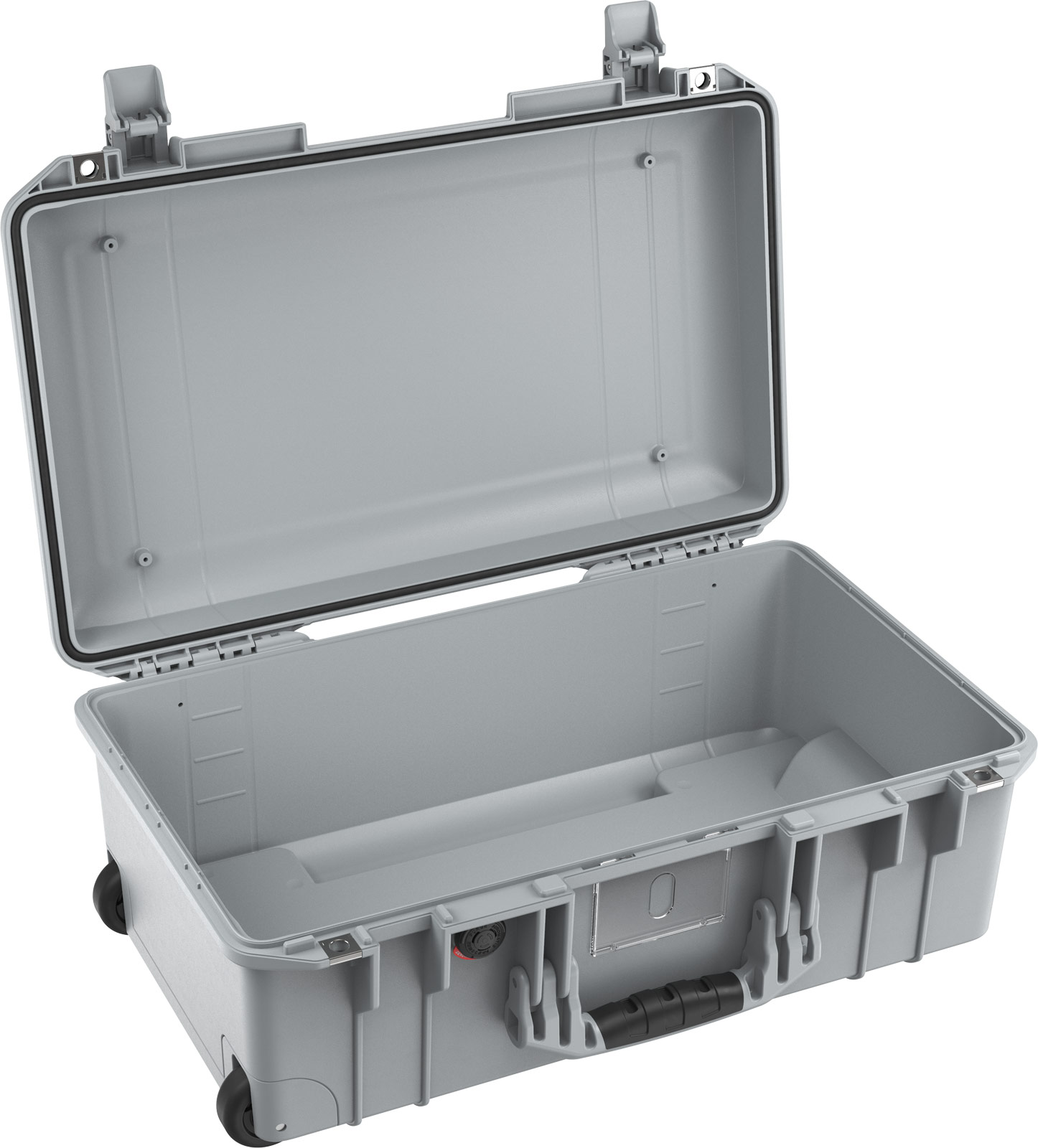
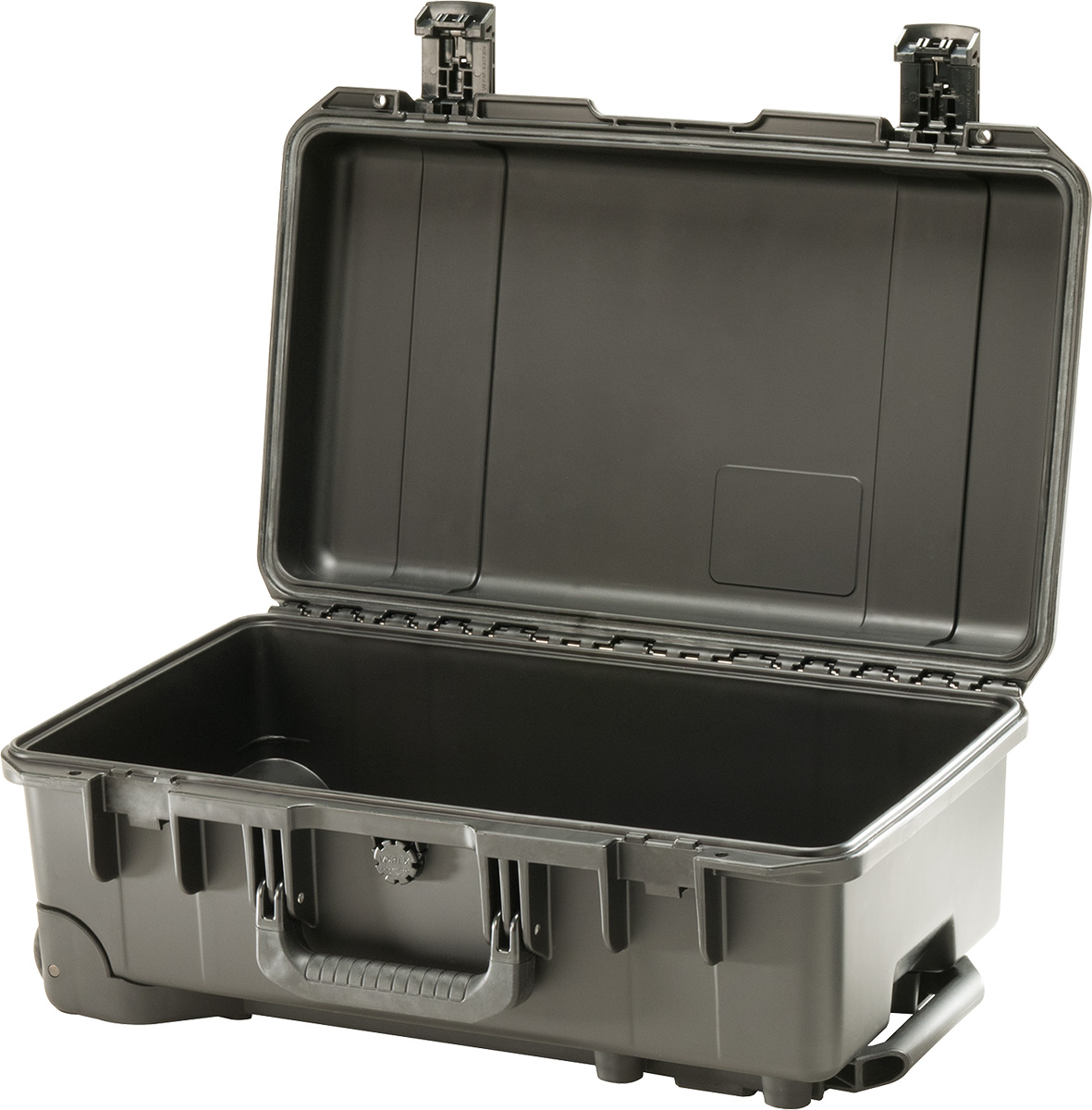
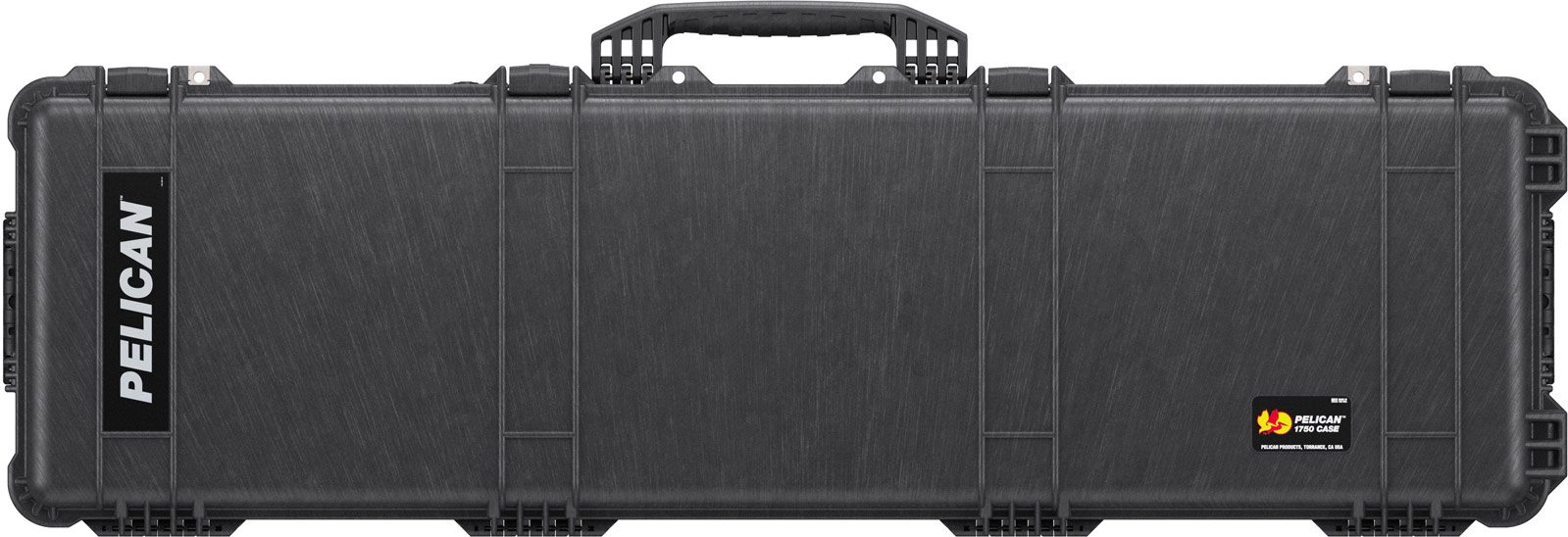
Medical & Laboratory
The Models Pelican Itself Specifies for Medical and Laboratory Systems
Pelican publishes a shortlist of off-the-shelf cases it puts forward for medical and laboratory equipment. These are the ones from that list we stock, with the interior dimensions that decide whether your instrument goes in.
 1400 ProtectorFrom $109.95
Interior 11.81 × 8.87 × 5.18 in
A meter, probe set or electrode kit
 1600 ProtectorFrom $290.95
Interior 21.51 × 16.54 × 7.99 in
A benchtop instrument between labs
 1535 AirFrom $334.95
Interior 20.39 × 11.2 × 7.21 in
Carry-on sized, flies to the site
 1615 AirFrom $388.95
Interior 29.59 × 15.5 × 9.38 in
A large kit, wheeled and liftable
 1465 Air EMSFrom $429.95
Interior 18.62 × 9.99 × 10.93 in
Deep case for a tall instrument
 1780 ProtectorFrom $840.95
Interior 41.12 × 21.54 × 14.88 in
The largest on Pelican’s medical list
Case Sizer
Size a Pelican Case to Your Instrument
Enter the instrument’s outside dimensions and choose how it will be padded. The drawing is to scale and redraws as you type — it shows the instrument sitting inside the smallest case that takes it, with the padding allowance around it.
IP67 watertightMIL-STD-810GLimited lifetime warrantyShips from US inventory
Instrument → caseSized on published interior dimensions, in inches
Start from a typical instrument
Instrument dimensions (in)
How will it be held?
Foam is allowed 1.5 in around the instrument and 1 in above and below; dividers 0.75 in; an empty shell 0.25 in. Orientation is optimised, so a tall instrument may lie down. Dimensions above are typical for that class of instrument — measure your own before ordering.
Case Interiors
Foam, TrekPak and Padded Dividers
The interior is a separate decision from the shell and it changes the price, the empty weight and how well a specific instrument is held. Every case here lists its interior options as a variant, so the choice is made at the point of order rather than afterwards.
| Interior | How it holds the instrument | Best for |
|---|---|---|
| Pick n’ Pluck foam | Pluck the cavity to the instrument’s outline by hand. The instrument is supported on every face and cannot shift. | One instrument that always travels the same way. The most protective option and the heaviest. |
| TrekPak insert | Rigid wall panels locked with steel pins, cut to length with the supplied tool. | A kit whose layout changes, and heavier items that fabric dividers would let move. |
| Padded dividers | Hook-and-loop padded walls repositioned by hand. | Fast reconfiguration between jobs; lighter items and accessories. |
| No foam | Empty shell. | You already have a custom-cut insert or an instrument case going inside. |
Part Numbers
How to Read a Pelican Part Number
A Pelican case part number is three fields. The middle one is the field buyers most often get wrong — it decides whether the case arrives with foam, empty, with padded dividers or with a TrekPak insert. Four different products, four different prices, one model name.
| Interior code | What arrives in the case | Colour code | Colour |
|---|---|---|---|
| 000 / 0000–0002 | With foam | 110 | Black |
| 001 / 0010–0019 | No foam — empty shell | 130 | OD Green |
| 004 / 0040–0042 | Padded dividers | 150 | Orange |
| 005x | TrekPak insert | 180 | Silver |
| 0080 | Travel organiser | 190 | Desert Tan |
| — | — | 240 / 245 | Yellow (cases / lights) |
Worked example: 1507 - 0011 - 110 is a 1507 Air, no foam, black. Change the middle field to 0051 and the same case arrives with a TrekPak insert at a different price. Every colour and interior combination is separately barcoded, and the full cross-reference table is on each product page.
Cold Chain
What These Cases Are Not
Worth stating plainly, because the brand name spans two very different businesses.
| If you need | This range | What to specify instead |
|---|---|---|
| A validated temperature-controlled shipper — qualified, temperature-mapped, with documented time-out-of-refrigeration | No. Pelican Elite coolers here are insulated recreational coolers with 2.1 in of polyurethane foam. They are useful for moving samples on ice between buildings; they are not qualified packaging. | Peli BioThermal is Pelican’s separate cold-chain business and builds validated parcel shippers. We do not supply it — go to them or to an equivalent qualified vendor. |
| A sterile or single-use container | No. These are reusable transport cases and are not supplied sterile. | Specify sterile packaging appropriate to your protocol. |
| A case engineered around one specific instrument — wire-rope isolators, custom foam tooling, rack mounting | Not off the shelf, though a Protector or Storm with plucked foam handles most single instruments. | Pelican Custom Case Solutions and Pelican-Hardigg build to specification — send the instrument dimensions through the contact form. |
Questions
Pelican Case Selection FAQs
Which Pelican case fits my instrument?
Use the sizer above — type the instrument’s length, width and height and it returns the smallest case that takes it with the padding you chose. Foam needs about 1.5 in of clearance on each side, padded dividers and TrekPak about 0.75 in, and an empty shell about 0.25 in. The sizer works on published interior dimensions, not exterior, because interior is what the instrument actually has to fit inside.
What is the difference between Protector, Air and Storm?
All three are watertight, crushproof and dustproof to IP67 and seal identically. Protector is the original HPX resin case with double-throw latches. Air is molded in HPX² and is up to 40 percent lighter than an average polymer case, which matters when a loaded case has to be lifted or flown. Storm (the iM series) uses Press & Pull latches that lock automatically on closing. Choose on weight, latch preference and interior dimensions rather than on protection level.
Foam, TrekPak or padded dividers — which for an instrument?
Pick n’ Pluck foam is best for a single instrument that always travels the same way: pluck the cavity to its outline and the instrument is held on every face. TrekPak rigid panels suit a kit that changes, and hold heavier items more firmly than fabric dividers. Padded dividers are the fastest to reconfigure by hand. Foam adds the most weight and the most protection; an empty shell is correct only when a custom insert is already in hand.
Why does a sealed case have a valve in it?
That is the automatic pressure equalisation valve. A sealed case closed at sea level and then flown, or closed warm and then put in a cold room, develops a pressure difference across the lid that can make it very hard to open and can stress the seal. The valve lets air pass to equalise pressure while blocking water. It is why a Pelican case opens normally after a flight.
Are Pelican cases waterproof, and to what depth?
Pelican warrants its injection-molded cases watertight to 3.3 feet (1 metre) for 30 minutes, provided the case is correctly closed and the O-ring is undamaged. Protector, Air and Storm are additionally rated IP67 for water and dust ingress. The O-ring is a replaceable service part.
Can I use a Pelican cooler to ship specimens or a temperature-controlled sample?
Not as a validated shipper, and we will not sell one as such. Pelican Elite coolers are insulated recreational coolers — useful for moving samples on ice between buildings or to a collection point, but they are not qualified, not temperature-mapped and carry no time-out-of-refrigeration data. Validated cold-chain packaging is a different Pelican business (Peli BioThermal) which we do not supply. If your protocol requires a validated shipper, specify one.
What warranty applies?
Pelican’s injection-molded cases — Protector, Air, Storm and Micro — carry a limited lifetime warranty against breakage and defects in workmanship, excluding contents and foam. Vault cases carry three years, and TrekPak accessories and roto-molded cases carry one year. Warranty service is handled by Pelican Products directly and the purchaser pays return freight.
Where are Pelican cases made?
It varies by part number. Pelican is headquartered in Torrance, California and manufactures in the United States as well as sourcing overseas, so country of origin is recorded per item rather than claimed for the brand. Ask about the specific part number if origin governs your purchase.
Do the case models carry over to non-laboratory equipment?
They do, and a lot of the range is bought that way. A sealed 44-inch long case does not care whether it is carrying an optical rail, a survey rod or site tooling, and the same interior dimensions and load ratings apply. The sizer works from dimensions alone, so it answers the question for any equipment, not only instruments.
Pelican™, Protector™, Storm Case™, Pelican Air™, Micro Case™, TrekPak™, Pick n’ Pluck™, Press & Pull™, HPX™ and Peli BioThermal™ are trademarks of Pelican Products, Inc. LabSupplies.com is an independent distributor and is not affiliated with Pelican Products, Inc. Dimensions, ratings, certifications and warranty terms are as published by the manufacturer. The case sizer is a dimensional guide only — confirm fit against the published interior dimensions before ordering.
-
Pelican 1690 Protector Case | Watertight IP67, 30.13 x 25.13 x 15.36 in Interior
Vendor:PelicanRegular price From $691.66Regular priceUnit price per -
Pelican 0370 Protector Case | Watertight IP67, 24 x 24 x 24 in Interior
Vendor:PelicanRegular price $715.22Regular priceUnit price per -
Pelican 1730 Protector Case | Watertight IP67, 34 x 24 x 12.5 in Interior
Vendor:PelicanRegular price From $779.00Regular priceUnit price per -
Pelican 1780 Protector Case | Watertight IP67, 41.12 x 21.54 x 14.88 in Interior
Vendor:PelicanRegular price From $901.81Regular priceUnit price per -
Pelican 1770 Protector Case | Watertight IP67, 54.58 x 15.58 x 8.63 in Interior
Vendor:PelicanRegular price $929.44Regular priceUnit price per -
Pelican 0500 Protector Case | Watertight IP67, 34.95 x 18.45 x 25.25 in Interior
Vendor:PelicanRegular price From $1,153.83Regular priceUnit price per -
Pelican 0550 Protector Case | Watertight IP67, 47.57 x 24.07 x 17.68 in Interior
Vendor:PelicanRegular price From $1,385.04Regular priceUnit price per


