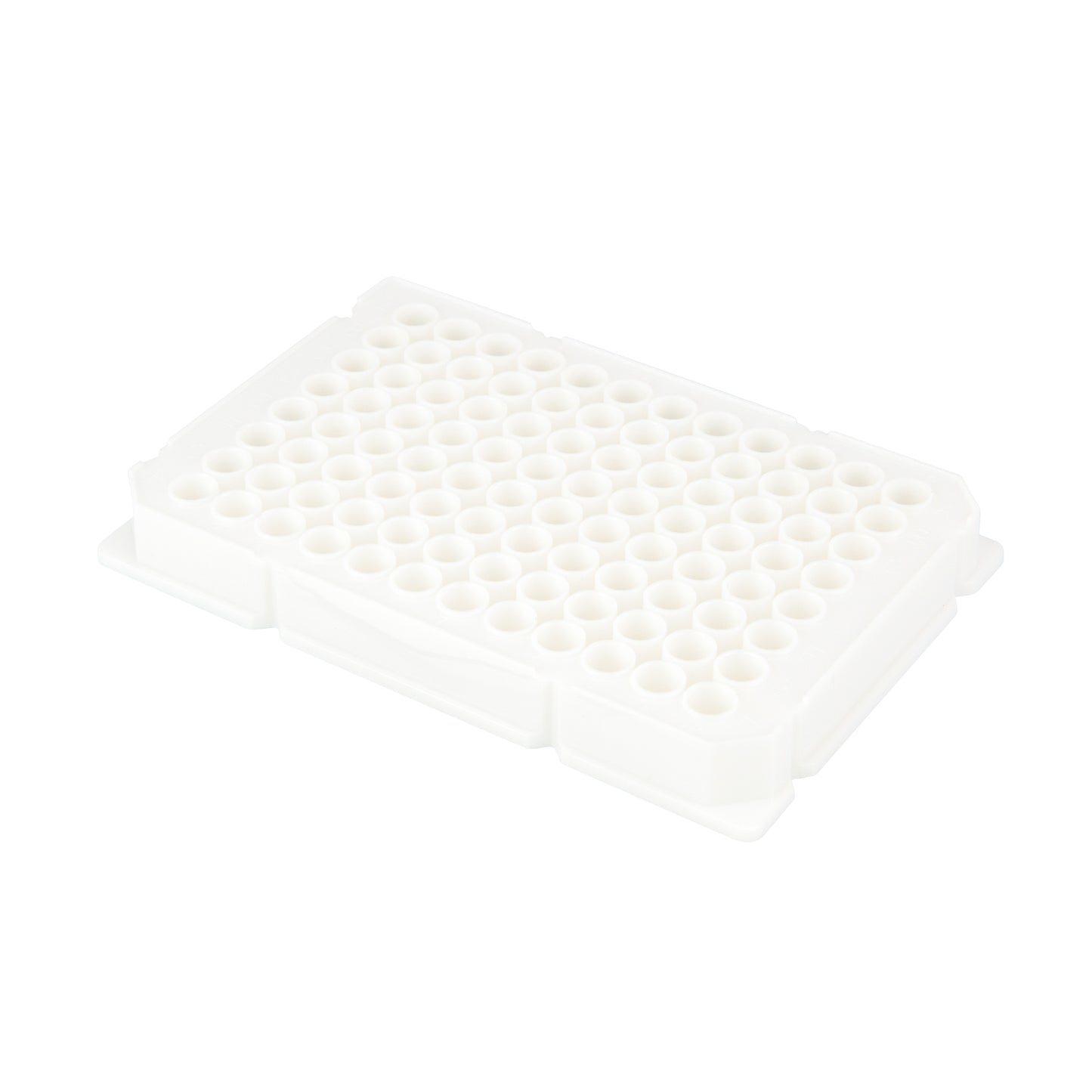

96-Well Flat-Bottom Microplates, White Polystyrene, SBS/ANSI Footprint — Caplugs® Evergreen (290-8027-W1F)
These 96-well flat-bottom microplates feature a white polystyrene (PS) construction in the SBS/ANSI standard footprint, with a 0.37 mL well volume optimized for ELISA, luminescence, chemiluminescence, absorbance, and cell proliferation assays. The white well walls reflect photons back toward the plate reader detector, delivering substantially higher signal in luciferase reporter, ATP bioluminescence, and chemiluminescent ELISA formats compared with clear or black plates. Supplied non-sterile at 9 plates per box (90 plates per case), part number 290-8027-W1F is a cost-effective choice for high-throughput screening programs and routine quantitative assay work alike.
Technical Specifications
| Specification | Value |
|---|---|
| Part Number (MPN) | 290-8027-W1F |
| Well Format | 96-well, SBS/ANSI standard footprint |
| Bottom Geometry | Flat Bottom |
| Well Volume | 0.37 mL per well (working volume ~0.1–0.3 mL) |
| Material | Polystyrene (PS) |
| Color | White |
| Sterility | Non-Sterile |
| Pack Size | 9 / Box (90 / Case) |
| BPA / Phthalates | BPA-free; no phthalate plasticizers |
| Country of Origin | USA |
Applications
- ELISA & colorimetric assays: Flat-bottom geometry maintains uniform path length for absorbance reads at 405, 450, 490, and 570 nm; white PS maximizes signal for chemiluminescent ELISA formats.
- Luminescence assays: White well walls reflect emitted photons toward the detector, providing enhanced signal for luciferase reporter assays and ATP bioluminescence (top and bottom read).
- Cell proliferation assays: Flat bottom is essential for absorbance-based cell viability reads including MTT, MTS, WST-1, and BrdU incorporation; standard 100–200 µL working volumes are well within the 0.37 mL well capacity.
- Fluorescence intensity quantification: Suitable for GFP, RFP, and fluorescent dye quantification (PicoGreen, RiboGreen, SYBR) where white plate signal enhancement is desired; not recommended for FRET-based assays.
- DNA/RNA quantification: Flat-bottom geometry suits fluorescent nucleic acid quantification dyes requiring consistent well geometry.
Chemical Resistance
| Reagent / Condition | Compatibility |
|---|---|
| Aqueous buffers, PBS, saline | Excellent |
| Cell culture media | Excellent |
| HRP substrates (TMB, OPD) | Excellent |
| AP substrates (pNPP) | Excellent |
| Luciferase substrates | Excellent |
| Ethanol (>70%) / methanol | Not recommended — causes PS crazing |
| Acetone / chloroform / aromatic solvents | Not recommended — incompatible with PS |
| Autoclave sterilization | Not suitable — PS is not autoclavable |
Quality & Procurement
Made in USA, these Caplugs® Evergreen microplates are produced from BPA-free, phthalate-free polystyrene resin under rigorous quality management standards. LabSupplies.com is an authorized dealer shipping from USA inventory, with box and case quantities available to support both routine lab restocking and large-scale screening programs.
Frequently Asked Questions
Why choose a white plate over a clear plate for ELISA?
For chemiluminescent ELISA formats, white well walls reflect emitted photons back toward the plate reader detector, significantly increasing signal intensity compared with clear plates. For standard colorimetric ELISA using absorbance detection, clear plates are equally suitable, but white plates offer the added flexibility of supporting both absorbance and luminescence workflows on the same platform.
Are these microplates sterile?
No — the 290-8027-W1F is supplied non-sterile and is intended for biochemical and cell-free assays where sterility is not required. For cell-based assays requiring sterile labware, a sterile variant is separately available.
What working volume range is recommended per well?
The maximum well volume is 0.37 mL; a practical working volume of approximately 0.1–0.3 mL per well is recommended to allow for reagent additions and wash steps without overflow risk across standard ELISA, luciferase, and cell proliferation protocols.
Will these plates fit standard microplate readers and automation equipment?
Yes — the SBS/ANSI standard footprint is compatible with virtually all commercial plate readers, washers, dispensers, and robotic liquid handlers designed for 96-well formats. Always verify plate height and skirt dimensions against your specific instrument's plate-stack or gripper specifications before deploying in fully automated workflows.