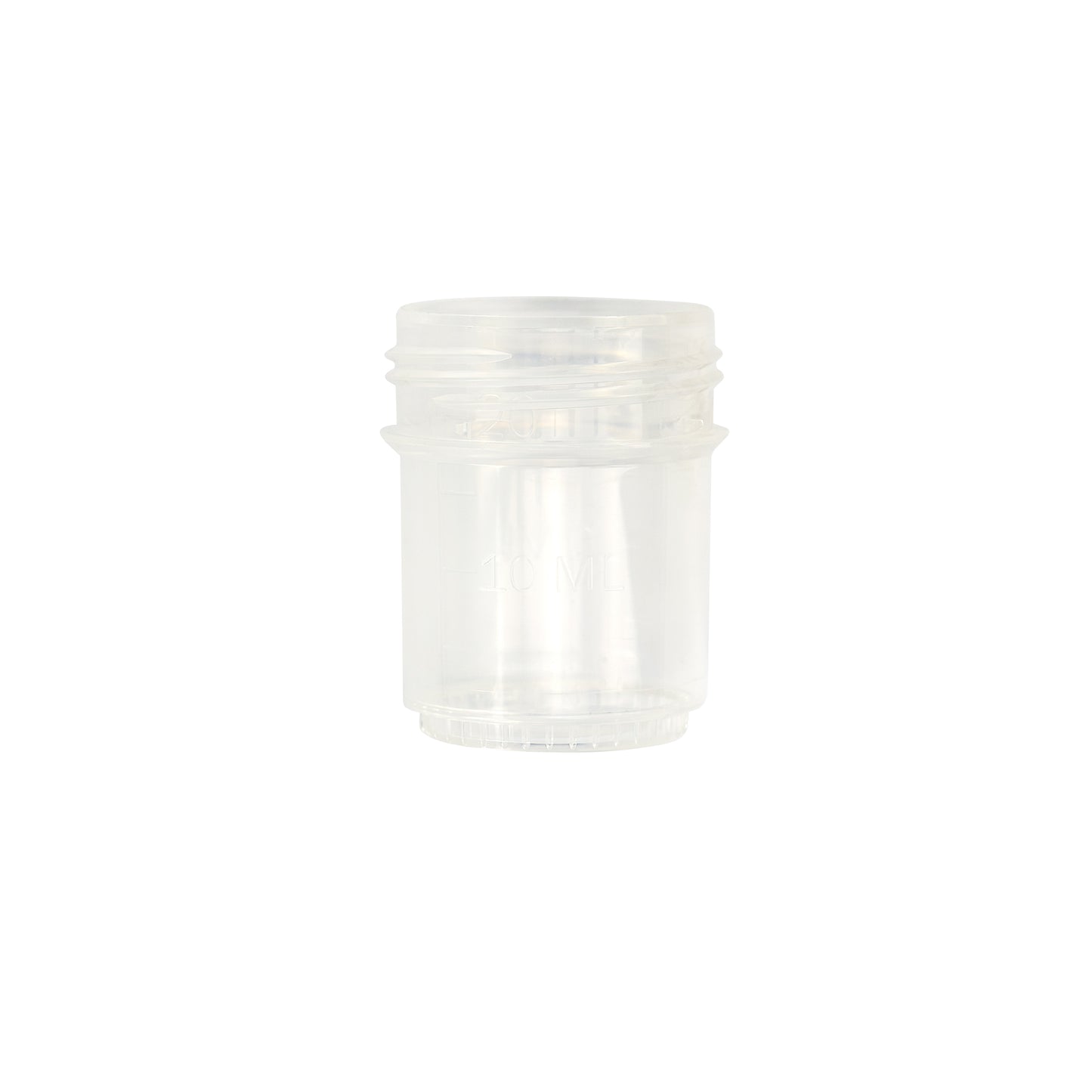

Histo-Click™ 20 mL Click-Top Specimen Containers — Flat Bottom, PPC, Natural, 500/Bag
The Caplugs® Evergreen Histo-Click™ line delivers 20 mL flat-bottom specimen containers with a click-top closure that provides audible and tactile confirmation of a secure seal, eliminating cap-misapplication errors in high-throughput pathology and clinical workflows. Constructed from polypropylene copolymer (PPC) for enhanced flexibility and impact resistance versus standard PP homopolymer, these containers are supplied non-sterile in sealed 500/Bag packaging to maintain product integrity from receipt through point of use. Part number 220-7020-080 is the preferred choice for histology, cytology, and surgical pathology departments that demand reliable.
Technical Specifications
| Specification | Value |
|---|---|
| Part Number (MPN) | 220-7020-080 |
| Volume | 20 mL |
| Container Type | Histo-Click™ Specimen Container |
| Cap Style | Click-Top — audible/tactile seal confirmation |
| Bottom Style | Flat Bottom |
| Material | Polypropylene Copolymer (PPC) |
| Color | Natural |
| Sterility | Non-Sterile |
| Pack Size | 500/Bag |
| BPA / Phthalate Free | Yes |
| Country of Origin | USA |
Applications
- Histology tissue fixation — secure click-top closure prevents formalin leakage during overnight fixation runs
- Cytology fluid specimen collection — 20 mL capacity accommodates standard wash and effusion volumes
- Surgical pathology gross specimen transport — flat bottom provides stable upright positioning on grossing benches and transport trays
- Biopsy collection and storage — PPC flexibility resists cracking under the mechanical stress of handling and automated processing
- Formalin-fixed tissue storage — PPC offers reliable resistance to formalin and aqueous fixatives
Chemical Resistance
| Reagent / Condition | Compatibility |
|---|---|
| Aqueous buffers / saline | Excellent |
| Dilute acids | Excellent |
| Dilute bases | Excellent |
| Methanol | Compatible |
| Isopropanol | Compatible |
| Acetonitrile | Compatible |
| Aromatic solvents (xylene, toluene) | Use with caution — evaluate for your specific application |
Quality & Procurement
Made in USA, these Histo-Click™ containers are manufactured at Caplugs® Evergreen ISO-certified facilities from virgin-grade, FDA-registered PPC resin that is BPA-free and phthalate-free.
Frequently Asked Questions
Are these specimen containers sterile?
No — the 220-7020-080 containers are supplied non-sterile. For specimen collection workflows that require sterility, consult the Caplugs® Evergreen sterile product line.
How do I know the click-top is fully sealed?
The Histo-Click™ closure is engineered to produce an audible click and a distinct tactile resistance change at full engagement, giving technicians immediate confirmation that the cap is properly seated without needing to visually inspect each container.
Why is PPC preferred over standard polypropylene for specimen containers?
Polypropylene copolymer (PPC) incorporates an ethylene comonomer that increases molecular-chain flexibility, making the container walls and closure more resistant to cracking and impact stress than PP homopolymer — an important advantage during specimen transport, drop events, and automated processing.
Can these containers hold formalin-fixed tissue for extended storage?
Yes. PPC provides reliable resistance to formalin and other aqueous fixatives used in histology and anatomical pathology, making these containers appropriate for both short-term transport and longer-term fixed-tissue storage. Always verify compatibility with any additional reagents used in your specific protocol.