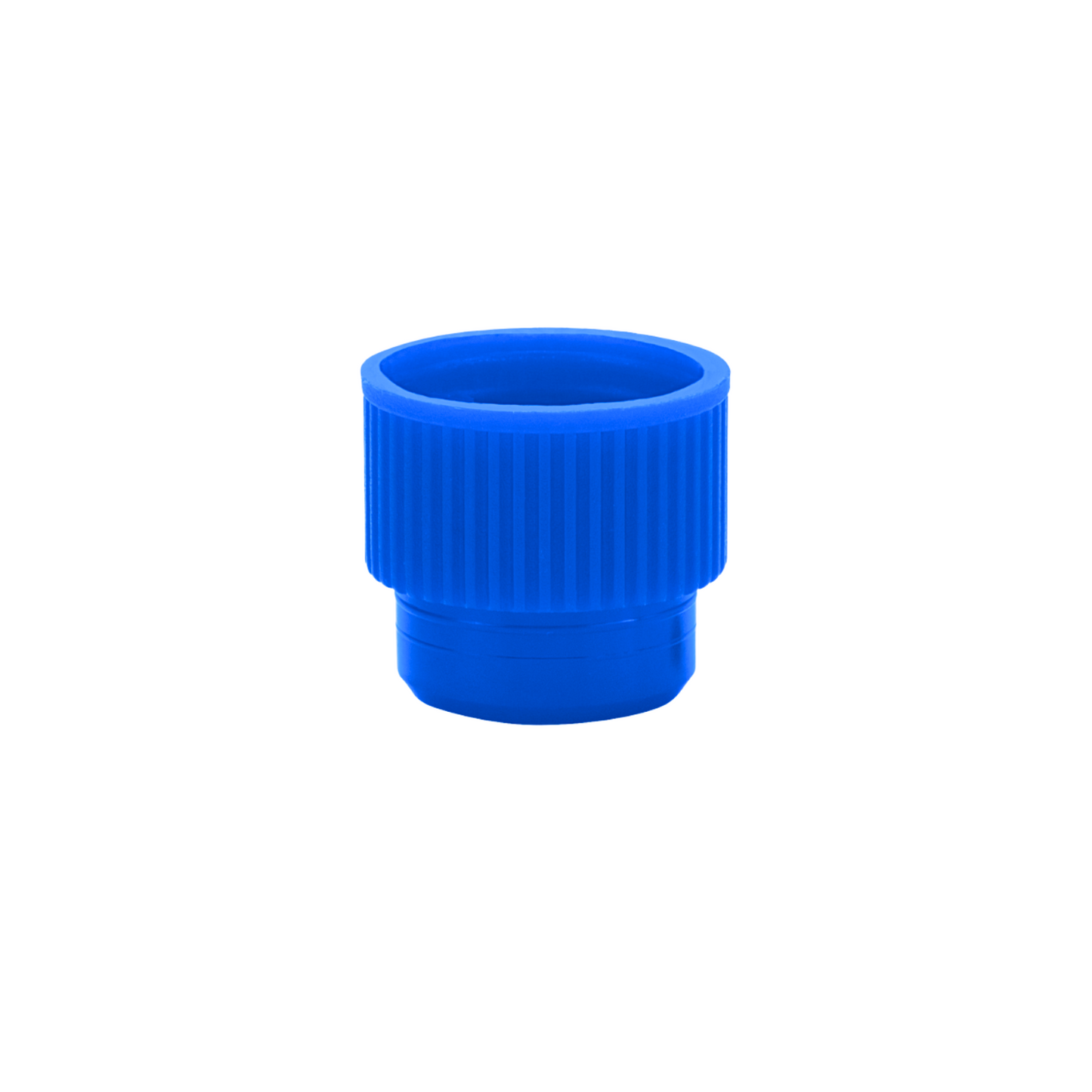

17 mm Test Tube Stoppers — LDPE, Blue, 1000/Bag (300-2917-B2N)
These blue low-density polyethylene (LDPE) stopper caps are engineered for 17 mm OD glass and polystyrene culture tubes, including the standard 17 × 100 mm and 17 × 120 mm formats widely used in microbiology, clinical chemistry, and cell culture workflows. The plug-in friction-fit design relies on LDPE's characteristic flexibility and spring-back to maintain a secure seal through repeated insertion and removal cycles, across a working temperature range of −20°C to +60°C. Supplied non-sterile in convenient 1000/Bag quantities, part number 300-2917-B2N is a straightforward, high-volume consumable for labs managing large culture tube or specimen archiving workflows.
Technical Specifications
| Specification | Value |
|---|---|
| Part Number (MPN) | 300-2917-B2N |
| Tube OD | 17 mm |
| Compatible Tube Formats | 17 × 100 mm and 17 × 120 mm glass and PS culture tubes |
| Cap Style | Stopper — plug-in friction fit |
| Material | Low-Density Polyethylene (LDPE) |
| Color | Blue |
| Temperature Range | −20°C to +60°C |
| Sterility | Non-Sterile |
| Pack Size | 1000/Bag |
| BPA / Phthalates | BPA-free; no phthalate plasticizers |
| Country of Origin | USA |
Applications
- Microbiology culture tube capping: Seals TSB, BHI, LB broth, and other liquid culture media during incubation; LDPE retains flexibility at 37°C for reliable stopper engagement throughout growth cycles.
- Specimen tube archiving: Prevents evaporation and cross-contamination for serum, plasma, and whole blood tubes held in refrigerated or frozen storage down to −20°C.
- Clinical specimen color routing: Blue stoppers mirror the CLSI convention for citrate anticoagulant tube identification, making these stoppers suitable for designating coagulation and citrate specimen batches and for post-collection re-closure of those tube formats.
- Cell culture and virus propagation: Caps suspension culture and virus propagation tubes while the LDPE stopper allows controlled gas exchange dynamics across the seal interface.
- Pneumatic tube transport: LDPE's flexible compression and spring-back retain stopper engagement through the acceleration forces typical of clinical pneumatic transport systems.
- Research reagent and buffer storage: Seals reusable glass and polystyrene tubes between uses for buffers, stock solutions, and reagent aliquots; LDPE is chemically inert to standard aqueous formulations.
Chemical Resistance
| Reagent / Condition | Compatibility |
|---|---|
| Aqueous buffers and saline | Excellent |
| Serum and plasma | Excellent |
| Broth culture media (TSB, BHI, LB) | Excellent |
| Dilute acids and bases | Good |
| Ethanol (<70%) | Good — short-term contact |
| Chlorinated solvents (e.g., chloroform) | Not recommended |
| Aromatic solvents (e.g., toluene, xylene) | Not recommended |
| Concentrated oxidizing acids | Not recommended |
Quality & Procurement
Made in USA, these Caplugs® Evergreen stoppers are produced from BPA-free, phthalate-free LDPE resin under ISO 9001 quality management. LDPE is the material of choice for stopper-style closures precisely because its low flex modulus delivers the compression and elastic recovery needed for a reliable friction fit — properties that rigid polymers such as polypropylene or polystyrene cannot replicate. Because 17 mm OD tubes vary slightly in opening diameter depending on wall thickness, we recommend requesting a sample for fit validation before committing to a bulk order.
Frequently Asked Questions
Are these stoppers sterile?
No — the 300-2917-B2N is supplied non-sterile in 1000/Bag bulk packaging. For applications requiring sterile closures, consider gamma-irradiated alternatives or autoclave the stoppers separately; LDPE is not autoclavable, so cold-sterilization methods such as ethylene oxide or irradiation should be used if sterility is required.
Why is LDPE used instead of polypropylene for stopper-style caps?
LDPE's low flex modulus gives it the compression and spring-back needed for a reliable friction-fit seal across repeated insertions. Polypropylene is significantly stiffer and does not conform to slight tube-opening variations the way LDPE does, making it unsuitable for stopper geometries that depend on elastic deformation for retention.
Will these fit all 17 mm OD tubes?
These stoppers are designed for standard 17 × 100 mm and 17 × 120 mm glass and polystyrene culture tubes. Because wall thickness varies among tube brands and the effective opening diameter differs accordingly, we strongly recommend validating fit with your specific tube brand before placing a high-volume order.
What does the blue color signify in a clinical lab context?
Blue mirrors the CLSI H3 convention for citrate anticoagulant tube tops, making these stoppers a natural choice for re-capping or batch-designating coagulation and citrate specimen tube formats. In non-clinical settings, the color serves simply as a visual management aid for tube-type differentiation.