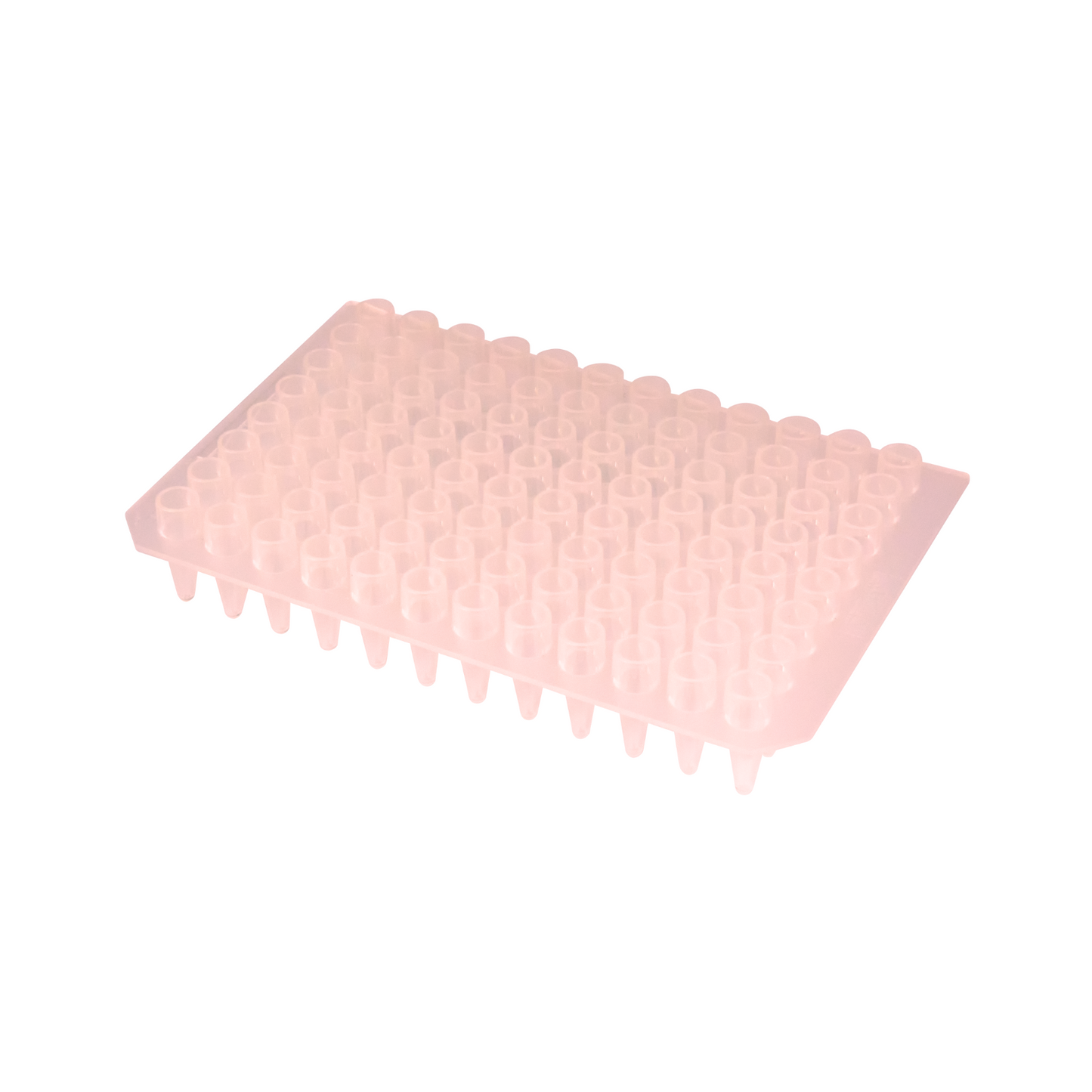

0.2 mL 96-Well PCR Reaction Plates — PPC, Red, 10/Box (214-3496-R80)
These 0.2 mL polypropylene copolymer (PPC) 96-well reaction plates are designed for standard thermocycler block formats and deliver lot-to-lot dimensional consistency for reliable sealing film adhesion across all 96 wells. Supplied non-sterile in sealed 10/Box packaging, they are well suited for PCR, qPCR, reverse transcription PCR, and high-throughput molecular workflows where the standard 96-well plate footprint is required. The red color enables rapid visual identification and sample batch differentiation in multi-plate processing runs.
Technical Specifications
| Specification | Value |
|---|---|
| Part Number (MPN) | 214-3496-R80 |
| Volume per Well | 0.2 mL |
| Format | 96-Well Reaction Plate |
| Material | Polypropylene Copolymer (PPC) |
| Color | Red |
| Sterility | Non-Sterile |
| Pack Size | 10/Box |
| Thermocycler Block Compatibility | Standard 96-well 0.2 mL block |
| Sealing Film Compatible | Yes — standard PCR plate sealing film |
| BPA / Phthalate Free | Yes |
| Country of Origin | USA |
Applications
- PCR and endpoint PCR amplification using standard 96-well thermocycler blocks
- Quantitative PCR (qPCR) and real-time fluorescence-based assays
- Reverse transcription PCR (RT-PCR) for RNA expression analysis
- High-throughput screening workflows requiring automated 96-well plate handling
- Multi-plate processing runs where color-coded plates accelerate batch identification and reduce sample mix-up risk
Chemical Resistance
| Reagent / Condition | Compatibility |
|---|---|
| Aqueous buffers (PCR buffer, TE, water) | Excellent |
| Dilute acids | Excellent |
| Dilute bases | Excellent |
| Methanol | Good |
| Isopropanol | Good |
| Acetonitrile | Good |
| Aromatic solvents (toluene, xylene) | Not recommended |
| Chlorinated solvents (chloroform, DCM) | Not recommended |
Quality & Procurement
Made in USA, these plates are produced at Caplugs® Evergreen ISO-certified facilities from virgin-grade, FDA-registered PPC resin that is BPA-free and phthalate-free. Polypropylene copolymer construction provides enhanced flexibility compared with standard homopolymer PP, reducing the risk of well-to-well cracking during high-speed thermocycling and promoting consistent sealing film adhesion across all 96 wells. Each box is packaged. LabSupplies.com is an authorized Caplugs® Evergreen dealer shipping from USA inventory.
Frequently Asked Questions
Are these PCR plates sterile?
No — they are supplied non-sterile. For most PCR and qPCR applications, sterility is not required because the amplification process itself controls for contamination; however, laboratories with specific contamination-control policies should evaluate whether pre-sterilization is needed for their workflow.
Will these plates seal properly with standard adhesive PCR sealing films?
Yes — the 96-well plate format and PPC construction are compatible with standard PCR plate sealing films and foils. The flexibility of polypropylene copolymer helps maintain consistent contact between the plate rim and sealing film across all 96 wells.
Why choose a red plate instead of a natural or white plate?
The red color allows technicians to distinguish plate batches or sample sets at a glance during multi-plate thermocycler runs, reducing the risk of sample mix-ups without requiring labels or additional markings. It does not affect optical performance in standard fluorescence-based qPCR detection.
Are these plates compatible with robotic liquid handlers and automated plate stackers?
The standard 96-well footprint is designed to fit automated 96-well thermocycler block positions, and the consistent skirt geometry supports use in high-throughput screening environments. Verify dimensional compatibility with your specific robotic platform before full deployment.