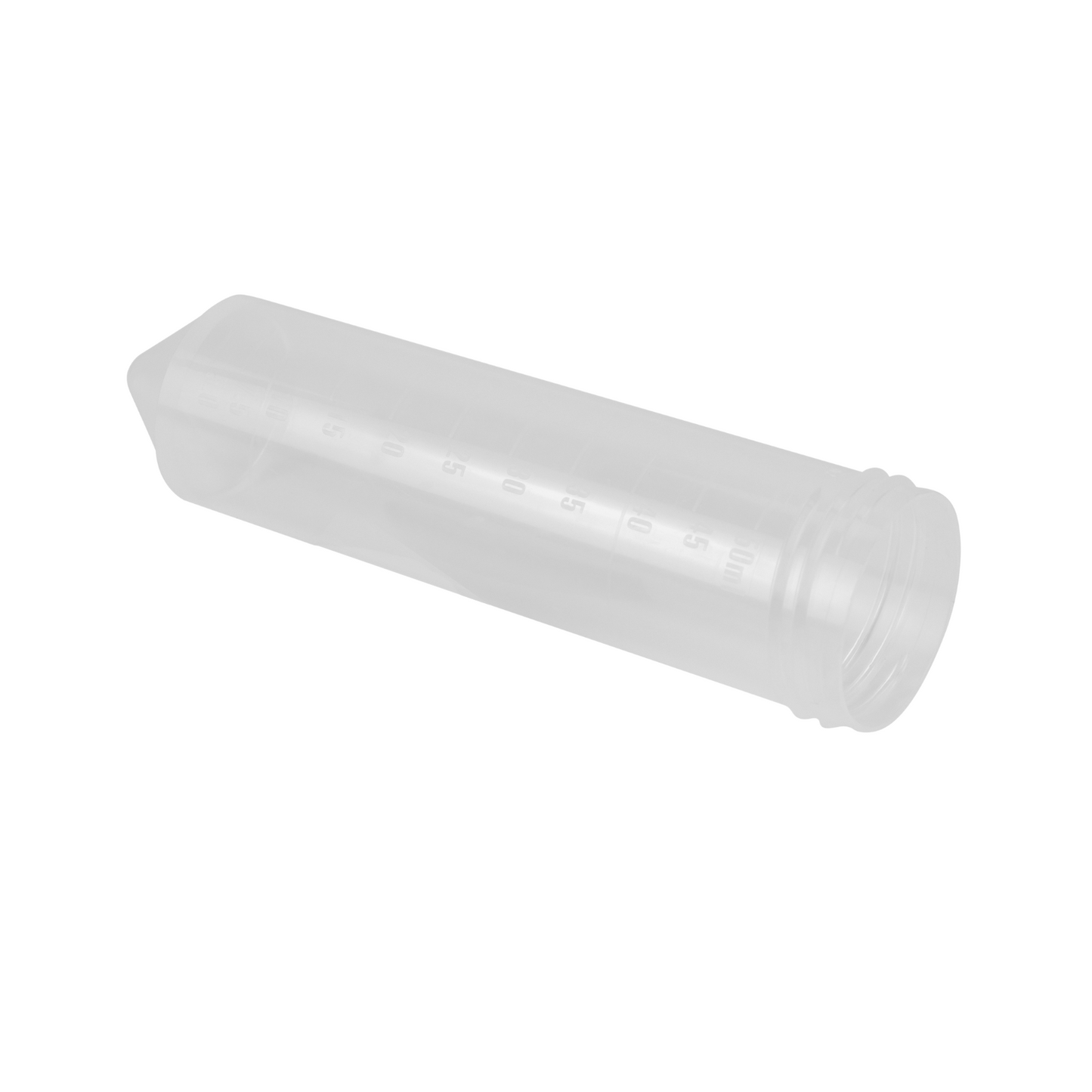

50 mL Conical Centrifuge Tubes — Threaded, Caps Sold Separately, PPC, Natural, 1000/Bag (220-3937-080)
These 50 mL conical-bottom centrifuge tubes are molded from virgin-grade Polypropylene Copolymer (PPC) and supplied non-sterile in sealed 1000/Bag packaging for high-volume clinical and research workflows. A screw cap on the threaded neck gives a leak-resistant seal that outperforms snap-cap formats under centrifugal force and during sample transport, while the conical bottom geometry concentrates cell pellets and precipitates at the tip for complete, low-dead-volume recovery. Lot-to-lot dimensional consistency ensures reliable seating in standard centrifuge rotor positions across the full case quantity.
Sold without caps. These tubes ship uncapped in bulk. Close them with Caplugs Evergreen 300-3541 screw caps, sold separately in 1000-cap bags in eight colours.
Technical Specifications
| Specification | Value |
|---|---|
| Part Number (MPN) | 220-3937-080 |
| Volume | 50 mL |
| Bottom Style | Conical |
| Cap | Not included — use 300-3541 screw caps |
| Material | Polypropylene Copolymer (PPC) |
| Color | Natural |
| Sterility | Non-Sterile |
| Pack Size | 1000/Bag |
| BPA / Phthalate Free | Yes |
| Country of Origin | USA |
Applications
- Cell culture harvesting — conical geometry pellets cells completely at the tube tip for maximum recovery
- Serum and plasma separation — threaded closure prevents leakage during centrifugation and subsequent handling
- Protein precipitation and density gradient centrifugation — precise pellet concentration at the conical tip
- Clinical specimen processing and transport — secure threaded seal prevents evaporation and contamination
- Reagent preparation and storage — chemical-resistant PPC compatible with aqueous buffers and common laboratory solvents
Chemical Resistance
| Reagent / Condition | Compatibility |
|---|---|
| Aqueous buffers / saline | Excellent |
| Dilute acids | Excellent |
| Dilute bases | Excellent |
| Methanol | Compatible |
| Isopropanol | Compatible |
| Acetonitrile | Compatible |
| Aromatic solvents (e.g., toluene, xylene) | Limited — not recommended for prolonged contact |
| Chlorinated solvents (e.g., chloroform, DCM) | Not recommended |
Quality & Procurement
Made in USA at ISO-certified Caplugs® Evergreen manufacturing facilities, these tubes are produced from FDA-registered, virgin-grade PPC resin that is BPA-free and phthalate-free. Sealed 1000/Bag packaging maintains product integrity from warehouse receipt through point-of-use.
Frequently Asked Questions
Are these centrifuge tubes sterile?
No — the 50 mL tubes supplied under part number 220-3937-080 are non-sterile. They are intended for general cell culture, sample preparation, and specimen processing workflows where sterility is not a requirement. If your protocol requires sterile tubes, please contact us for alternatives.
Are PPC centrifuge tubes autoclavable?
Polypropylene Copolymer (PPC) offers good heat tolerance and is generally considered autoclavable; however, Caplugs® Evergreen has not published a validated autoclave cycle for these specific tubes. Confirm your sterilization requirements with your quality team before autoclaving, as the threaded cap seal may be affected by repeated high-temperature cycling.
What centrifuge rotors are these tubes compatible with?
The standard 50 mL conical format fits most swing-bucket and fixed-angle rotors designed for 50 mL conical tubes across major centrifuge platforms. Always verify maximum RCF ratings against your specific rotor manufacturer's specifications before centrifuging at high speeds.
Why choose a threaded cap over a snap-cap design for these tubes?
A threaded closure creates a more reliable leak-resistant seal under centrifugal force and during sample transport than a snap-cap format, reducing the risk of cross-contamination, evaporation, and sample loss — particularly important in clinical specimen handling and regulated laboratory environments.