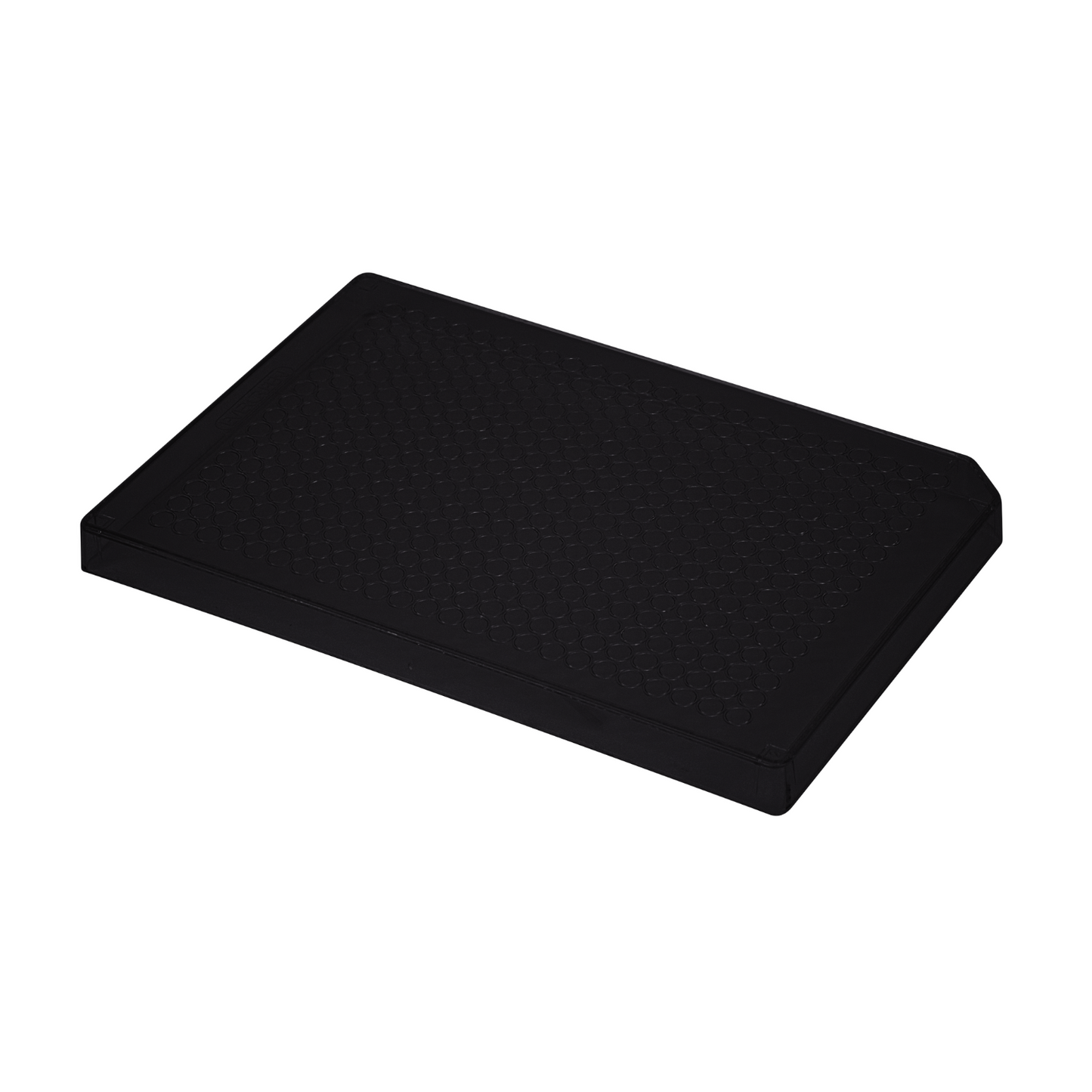

384-Well Microplate Lids, Polystyrene, Black — Light-Excluding Evaporation Control for Fluorescence HTS & HTRF (290-8229-Z1L)
These black polystyrene 384-well microplate lids provide simultaneous evaporation control and ambient light exclusion during incubation steps for light-sensitive assays, supplied non-sterile in packs of 15 lids per box (105/case). Conforming to SBS/ANSI standard footprint, the black PS construction blocks laboratory fluorescent and LED lighting from reaching well contents — preventing photodegradation of fluorescent reagents and quenching of TR-FRET/HTRF fluorophores that transparent lids cannot prevent. They are designed to pair with black 384-well plates such as the 290-8225-Z10 for complete top-and-bottom light exclusion throughout compound-plus-antibody and fluorescent-probe incubation workflows.
Technical Specifications
| Specification | Value |
|---|---|
| Part Number (MPN) | 290-8229-Z1L |
| Well Format | 384-Well, SBS/ANSI Standard Footprint |
| Material | Polystyrene (PS) |
| Color | Black |
| Light Blocking | Yes — blocks ambient light from entering wells during incubation |
| Autoclave Compatible | Yes — 121°C / 15 psi |
| Sterility | Non-Sterile |
| Pack Size | 15/Box (105/Case) |
| BPA / Phthalate Status | BPA-Free; No Phthalate Plasticizers |
| Country of Origin | USA (California) |
Applications
- HTRF / TR-FRET compound incubation: Black lid prevents ambient light from quenching europium cryptate donor fluorescence during the compound-plus-antibody incubation step, protecting time-resolved FRET signal integrity
- Fluorescent reagent and antibody incubation: Shields light-sensitive fluorescent primary antibodies, acceptor dyes, and fluorescent probes from photodegradation under laboratory lighting throughout incubation
- Fluorescent probe protection: Prevents photobleaching of DAPI, calcein, Hoechst, Alamar Blue, and similar dyes during extended plate incubation periods
- 384-well cell-based assays: Autoclave-compatible construction allows sterilization before use in CO₂ incubator workflows, reducing evaporation while blocking incubator light exposure
- Compound plate storage: Maintains dark conditions for 384-well compound plates during storage without additional foil wrapping or light-controlled enclosures
- Overnight and extended incubations: Combined evaporation control and light exclusion eliminate the need to wrap plates in foil or transfer them to light-controlled incubators
Compatibility
These lids conform to the SBS/ANSI standard 384-well plate footprint and are designed as a direct companion to the Caplugs® Evergreen 290-8225-Z10 black 384-well plate. Pairing the black PS lid with a black plate body provides complete light exclusion from both above and below well contents — the preferred configuration for fluorescence HTS and HTRF programs where even brief ambient light exposure during incubation can compromise assay signal. They are also compatible with other SBS-footprint 384-well plates in laboratory inventories; confirm lid-to-plate fit against your specific plate brand before committing to large-scale use.
Chemical Resistance
| Reagent / Condition | Compatibility |
|---|---|
| Aqueous buffers, saline, PBS | Excellent |
| Dilute acids and bases | Good — short-term contact |
| DMSO (low concentrations) | Limited — minimize direct contact |
| Ethanol / methanol (>70%) | Not recommended |
| Acetone | Not recommended |
| Chlorinated solvents (chloroform, DCM) | Not recommended |
| Aromatic solvents (toluene, xylene) | Not recommended |
Quality & Procurement
Made in USA at Caplugs® Evergreen's California facility, these microplate lids are manufactured from BPA-free, phthalate-free polystyrene resin under ISO quality management standards. LabSupplies.com is an authorized Caplugs® Evergreen dealer stocking these lids in both box (15-count) and case (105-count) quantities, ready to ship from USA inventory.
Frequently Asked Questions
Do these lids completely block ambient light from reaching well contents?
Yes — the black polystyrene construction is opaque and blocks ambient laboratory light (fluorescent and LED) from entering wells during incubation. For maximum light exclusion, pair them with a black 384-well plate such as the 290-8225-Z10 so that light is blocked from both the lid and the plate body.
Can these lids be autoclaved before use in sterile cell-based assays?
Yes — the polystyrene construction is autoclave-compatible at 121°C / 15 psi, making these lids suitable for sterilization prior to cell-based 384-well assay workflows requiring sterile plate coverage.
Are these lids supplied sterile, or do they need to be sterilized before use?
They are supplied non-sterile. For assays that require a sterile environment, autoclave the lids prior to use. For standard biochemical or HTRF assays where sterility is not required, they can be used directly from the box.
Will these lids fit 384-well plates from other manufacturers, or only Caplugs® Evergreen plates?
The lids conform to the SBS/ANSI standard 384-well footprint, so they are generally compatible with other manufacturers' SBS-format 384-well plates. However, lid retention and fit can vary by plate brand and rim design, so it is advisable to verify fit with your specific plates before transitioning from your current lid source in a production HTS environment.