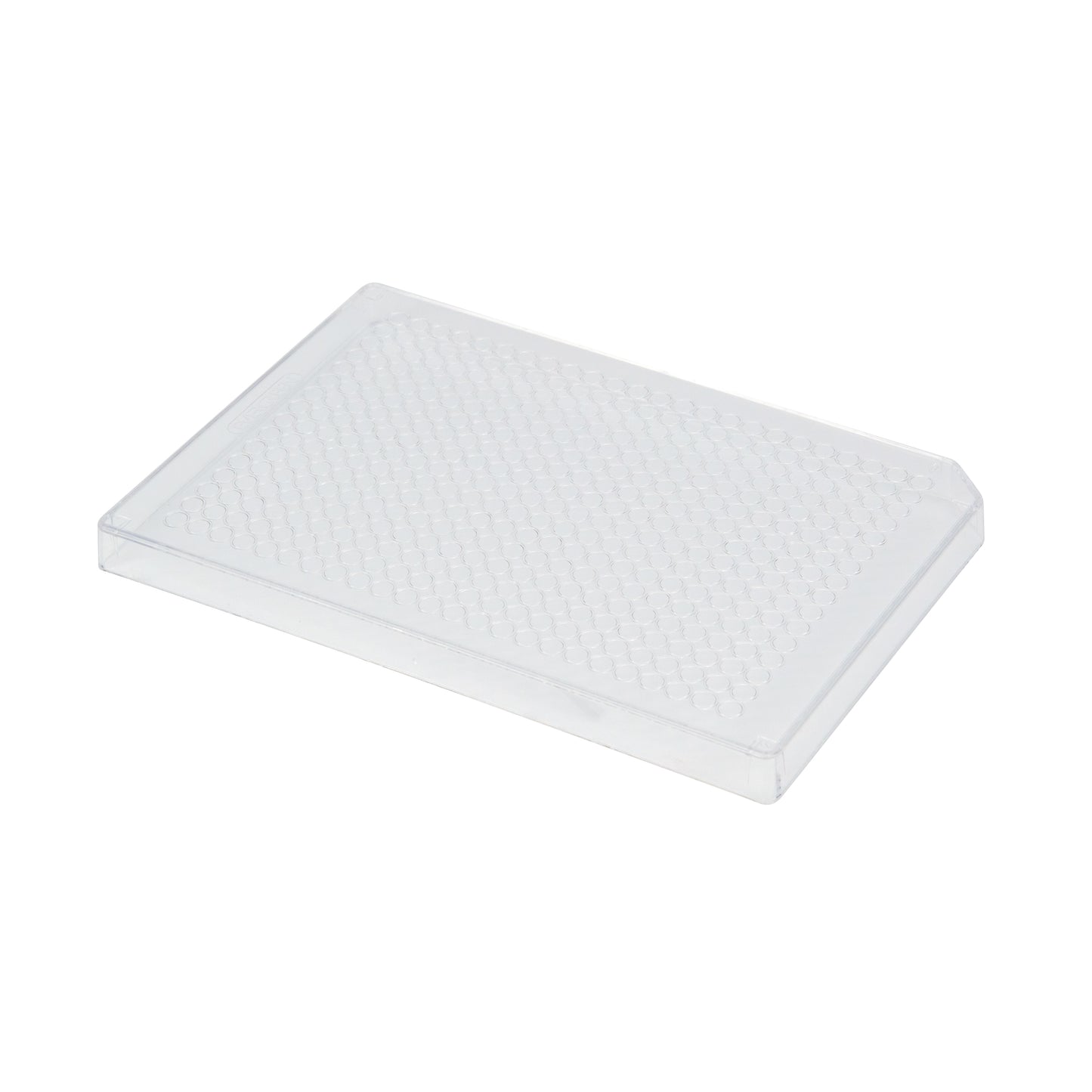

384-Well Microplate Lids, Polystyrene — Natural Transparent, 15/Box (290-8218-01L)
These Caplugs® Evergreen 384-well microplate lids are molded from natural (transparent) polypropylene polystyrene and follow the SBS/ANSI standard footprint, making them compatible with the 384-well plates used across high-throughput screening, enzyme kinetics, and cell-based assay workflows. Supplied non-sterile in boxes of 15 (105/Case), part number 290-8218-01L is designed specifically to minimize the differential edge-well evaporation that is proportionally far more consequential in the 20–120 µL working volume of 384-well format than in wider-well plates. The natural transparent material allows visual monitoring of plate contents without removing the lid.
Technical Specifications
| Specification | Value |
|---|---|
| Part Number (MPN) | 290-8218-01L |
| Well Format | 384-Well, SBS/ANSI Standard Footprint |
| Material | Polystyrene (PS) |
| Color | Natural (Transparent) |
| Sterility | Non-Sterile |
| DMSO Compatibility | Good at ≤10% DMSO |
| Autoclave Compatibility | Compatible (limited cycles) |
| Pack Size | 15/Box (105/Case) |
| BPA / Phthalates | BPA-free; no phthalate plasticizers |
| Country of Origin | USA |
Applications
- 384-well plate incubation for compound treatment, enzyme assays, and HTS dose-response studies where edge-well evaporation control is critical
- Cell-based 384-well assays in CO₂ incubators — lid maintains the humid microenvironment required for cell viability during covered incubation
- Plate storage between HTS batch runs, preventing edge-well desiccation during covered hold periods
- Overnight antibody or enzyme incubations at 4°C where extended incubation time amplifies evaporation risk in small-volume wells
- Robotic plate transport between instruments — lid prevents sample contamination and cross-well aerosol during automated arm transfers
- ELISA, fluorescence, and luminescence 384-well plate incubations with predominantly aqueous reagents
Chemical Resistance
| Reagent / Condition | Compatibility |
|---|---|
| Aqueous buffers / saline | Excellent |
| ELISA reagents and biological samples | Excellent |
| DMSO (≤10%) | Good — short-term contact |
| Ethanol (>70%) | Not recommended |
| Acetone / chlorinated solvents | Not recommended |
| Aromatic solvents | Not recommended |
Quality & Procurement
Made in USA, these Caplugs® Evergreen microplate lids are produced from BPA-free, phthalate-free polystyrene resin. LabSupplies.com is an authorized Caplugs® Evergreen dealer and ships from USA inventory, with case quantities available for high-throughput programs and institutional purchasing agreements. For workflows requiring repeated autoclave cycles or higher DMSO concentrations, the polypropylene alternative (290-8219-03L) offers broader chemical and autoclave durability at the same pack configuration.
Frequently Asked Questions
Are these microplate lids sterile?
No — they are supplied non-sterile. However, they are autoclave-compatible for pre-sterilization before cell-based assays. Note that polystyrene tolerates only a limited number of autoclave cycles; if repeated sterilization is required, the polypropylene version (290-8219-03L) provides better durability.
What well plates do these lids fit?
These lids are designed for the 384-well SBS/ANSI standard footprint, which is the industry-standard format used by the vast majority of 384-well microplates from major manufacturers. Confirm your plate's footprint dimensions comply with the SBS/ANSI standard before ordering.
Can these lids be used with DMSO compound library plates?
They are compatible with DMSO at concentrations up to approximately 10%. For compound library plates stored in higher DMSO concentrations, the polypropylene lid (290-8219-03L) offers broader DMSO tolerance and is the recommended choice.
Why does evaporation matter more in 384-well format than in 96-well format?
Because 384-well working volumes are only 20–120 µL, even a modest evaporation event represents a proportionally large concentration change per well — particularly in edge wells, which lose moisture faster. This lid maintains the humid microenvironment around each well to minimize differential evaporation during incubation and storage.