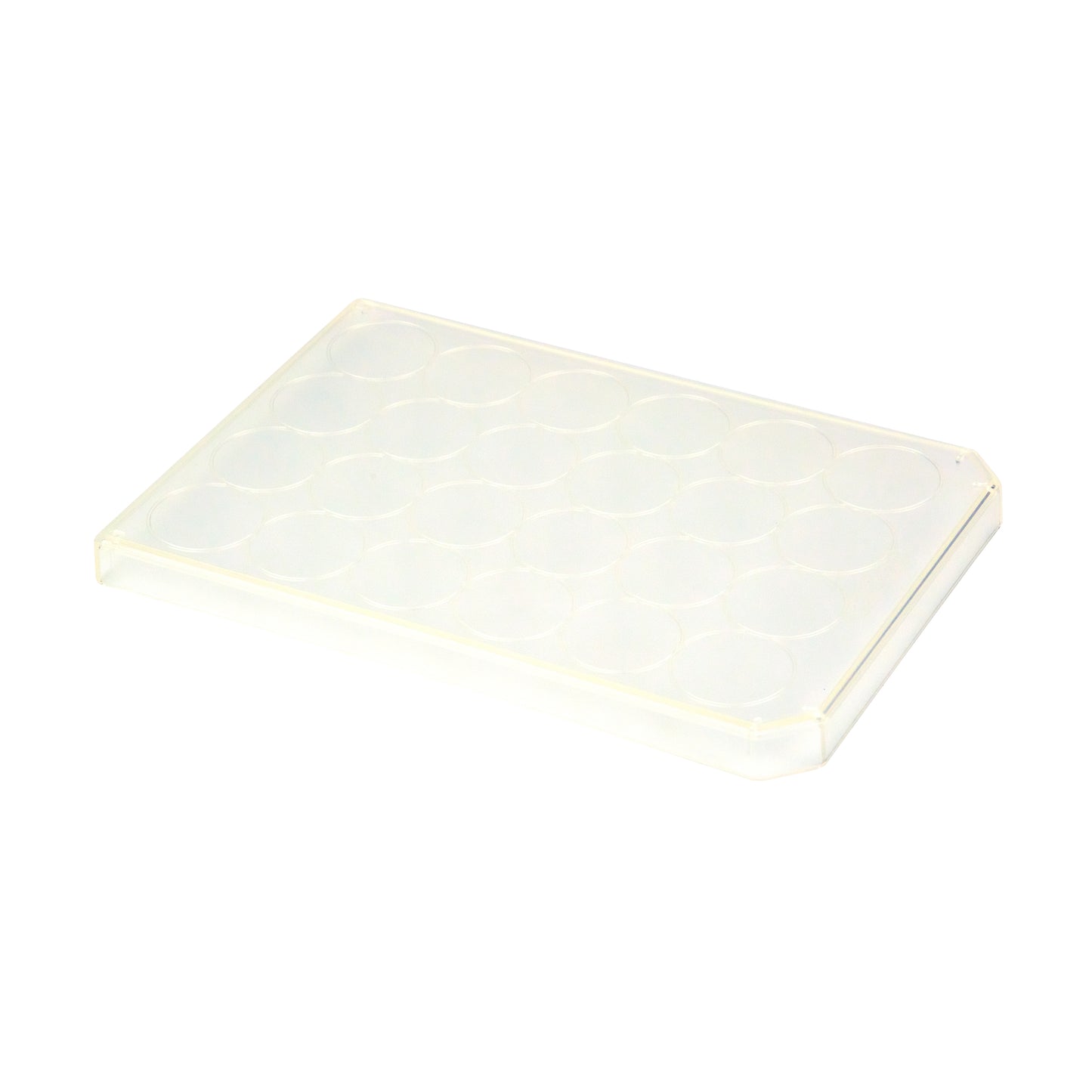

24-Well Microplate Lids, Polypropylene (PP), Natural — SBS Format, 15/Box (290-8126-03L)
These Caplugs® Evergreen 24-well microplate lids are molded from polypropylene (PP) in a natural transparent color, providing a chemically resistant and autoclave-durable covering for SBS/ANSI-standard 24-well plates. Supplied non-sterile at 15 lids per box (105 per case), they are the preferred choice over polystyrene lids whenever workflows involve DMSO-containing media, lipophilic compound carriers, or repeated autoclave sterilization cycles. Natural transparent PP allows visual monitoring of cell confluency and well filling without removing the lid.
Technical Specifications
| Specification | Value |
|---|---|
| Part Number (MPN) | 290-8126-03L |
| Well Format | 24-Well, SBS/ANSI Standard Footprint |
| Material | Polypropylene (PP) |
| Color | Natural (Transparent) |
| Sterility | Non-Sterile |
| DMSO Compatibility | Good — suitable at concentrations up to ~30% |
| Autoclave Compatibility | Yes — 121°C / 15 psi; repeated cycles |
| Pack Size | 15/Box (105/Case) |
| BPA / Phthalates | BPA-free; no phthalate plasticizers |
| Country of Origin | USA |
Applications
- Adherent and suspension cell culture incubation in standard 24-well plates, including media formulations containing organic solvents
- Compound-treated culture plates where DMSO concentrations exceed the stress-cracking threshold of polystyrene lids
- Virus propagation workflows — CPE assays and plaque assay incubation — where lids are autoclaved before use
- 3D organoid culture in Matrigel or basement membrane extract for extended multi-day incubations
- Drug-containing media preparations with lipophilic compound formulations in DMSO carriers
- Any program requiring a reusable lid that withstands repeated autoclave sterilization cycles without warping or geometric distortion
Chemical Resistance
| Reagent / Condition | Compatibility |
|---|---|
| Aqueous buffers / cell culture media | Excellent |
| Dilute acids and bases | Excellent |
| DMSO (≤30%) | Good — broader tolerance than PS lids |
| Ethanol (<70%) | Good — short-term contact |
| Lipophilic compound carriers in DMSO | Good — suitable where PS lids are not recommended |
| Chlorinated solvents / aromatic solvents | Not recommended |
| Autoclave (121°C / 15 psi) | Compatible — repeated cycles with geometry retention |
Quality & Procurement
Made in USA, these Caplugs® Evergreen microplate lids are manufactured from BPA-free, phthalate-free polypropylene resin under ISO 9001 quality management. LabSupplies.com is an authorized Caplugs® Evergreen dealer and ships from USA inventory. Note: autoclave lids in a pouch and allow them to cool completely before placing on culture plates.
Frequently Asked Questions
Why choose this PP lid over the polystyrene variant (290-8125-01L)?
Polypropylene provides significantly better DMSO tolerance — suitable for compound-treated plates at DMSO concentrations up to approximately 30%, where PS lids can stress-crack or leach plasticizers under sustained solvent exposure. PP also withstands repeated autoclave cycles without the warping that limits PS lids to fewer sterilization passes. If your workflow uses DMSO-containing media or reuses sterilized lids, PP is the better choice.
Can these lids be autoclaved, and how many cycles will they tolerate?
Yes — polypropylene is autoclave-compatible at 121°C / 15 psi and retains its geometry across repeated sterilization cycles better than polystyrene. For best results, autoclave lids in a sealed pouch and allow them to cool to room temperature before placing them on culture plates.
Are these lids sterile as supplied?
No — they are supplied non-sterile. Labs that require sterile lids should autoclave them prior to use, as PP is fully compatible with standard autoclave sterilization conditions.
Will these lids fit any standard 24-well plate?
These lids are designed for the SBS/ANSI standard 24-well footprint. Confirm dimensional compatibility with your specific plate brand before switching from OEM or previously qualified lids, as lid-to-plate fit tolerances can vary slightly between manufacturers.