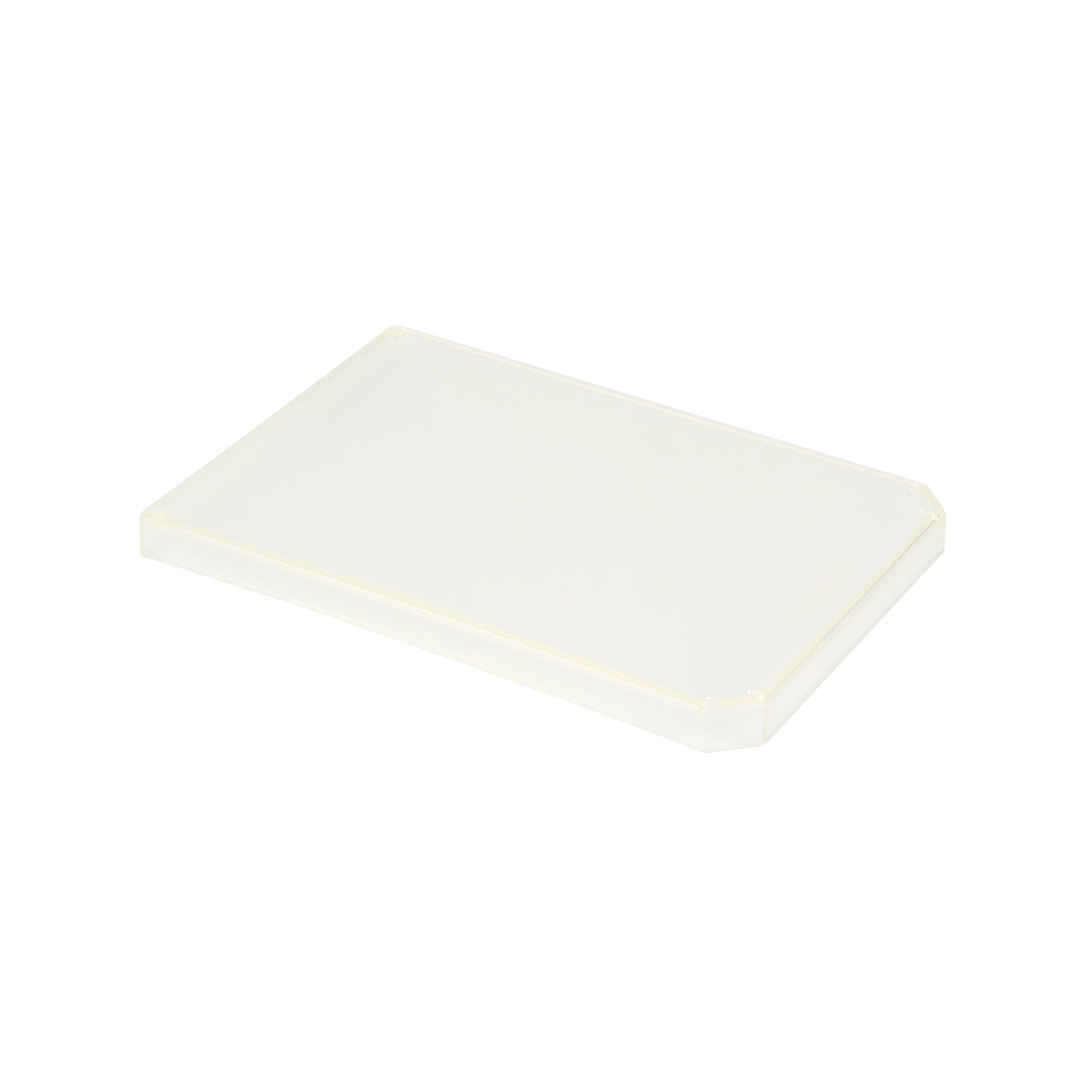

48-Well Polypropylene Microplate Lids — SBS/ANSI Format, Natural (Transparent), 15/Box
These 48-well polypropylene microplate lids from Caplugs® Evergreen (290-8022-03LS) are precision-molded to fit standard SBS/ANSI-footprint 48-well plates, delivering reliable evaporation control, contamination protection, and stack stability across cell culture, assay incubation, compound storage, and automated liquid handling workflows. The natural (transparent) construction allows visual inspection of well contents and fill status without removing the lid, while polypropylene's broader chemical resistance and autoclave compatibility at 121 °C make these lids a stronger choice than polystyrene alternatives for solvent-exposed plates and sterility-critical applications. Each box contains 15 lids; cases of 105 (7 boxes) are available for high-throughput programs.
Technical Specifications
| Specification | Value |
|---|---|
| Part Number (MPN) | 290-8022-03LS |
| Well Format | 48-well, SBS/ANSI standard footprint |
| Material | Polypropylene (PP) |
| Color | Natural (transparent) |
| Sterility | Non-Sterile |
| Autoclave Compatibility | Yes — 121 °C / 15 psi |
| Pack Size | 15 / Box (105 / Case — 7 boxes) |
| BPA / Phthalates | BPA-free; no phthalate plasticizers |
| Country of Origin | USA |
Applications
- Mammalian, insect, and bacterial cell culture: reduces evaporation and contamination during incubation while allowing CO₂ equilibration through the friction-fit flange
- ELISA plate incubation: covers plates during primary/secondary antibody and substrate incubation steps to prevent evaporation and airborne contamination
- Compound library and drug candidate storage: polypropylene construction resists DMSO-containing formulations better than polystyrene, protecting small-molecule compound plates during archiving
- Cell-based assays: maintains a humid environment during extended cytotoxicity, proliferation, and reporter-gene incubation periods
- Sample archiving and biobanking: shields aliquot plates from freezer frost and cross-contact with adjacent containers
- Automated liquid handling: SBS-footprint geometry supports consistent robotic plate handling in high-throughput screening workflows
- PCR plate storage: prevents well-to-well cross-contamination when sample-loaded or master-mix plates are staged before cycling
Chemical Resistance
| Reagent / Condition | Compatibility |
|---|---|
| Aqueous buffers, cell culture media, saline | Excellent |
| Dilute acids and bases | Excellent |
| DMSO (neat or diluted) | Good — suitable for compound storage plates |
| Ethanol (≤70%) | Good — short-term contact |
| Chlorinated solvents (chloroform, DCM) | Not recommended |
| Aromatic solvents (toluene, xylene) | Not recommended |
| Autoclave sterilization (121 °C / 15 psi) | Compatible |
Quality & Procurement
Made in USA, these Caplugs® Evergreen microplate lids are manufactured from BPA-free, phthalate-free polypropylene resin under ISO 9001 quality management. Autoclaving at 121 °C enables sterile lid supply for contamination-sensitive cell culture environments where pre-sterilization is required.
Frequently Asked Questions
Can these lids be autoclaved before use in sterile cell culture work?
Yes. The polypropylene construction is autoclave-compatible at 121 °C / 15 psi, so labs can sterilize lids prior to use in contamination-sensitive mammalian or insect cell culture workflows. Note that the lids are supplied non-sterile from the box.
Will these lids fit my existing 48-well plates from Thermo Fisher or Corning?
These lids are designed for standard SBS/ANSI-footprint 48-well microplates, which encompasses the most widely used 48-well format plates from major manufacturers. If your plates conform to the SBS/ANSI standard footprint, fit is expected; verify flange geometry against your specific plate model if you are switching from an OEM lid.
Why choose a polypropylene lid over a polystyrene lid for compound storage?
Polypropylene offers significantly better resistance to DMSO and other organic solvents commonly present in small-molecule compound libraries. Polystyrene lids can craze or deform on contact with DMSO-containing plates over time, while polypropylene maintains its integrity — making these lids the safer choice for compound library archiving and drug discovery screening plates.
How do these lids handle gas exchange during CO₂ incubation of mammalian cells?
The precision friction-fit flange geometry is engineered to hold the lid securely enough to prevent accidental dislodgement during incubator stacking, yet loose enough to allow the passive gas exchange needed for CO₂ equilibration in standard mammalian cell culture incubators. They are not designed to form a hermetic seal.