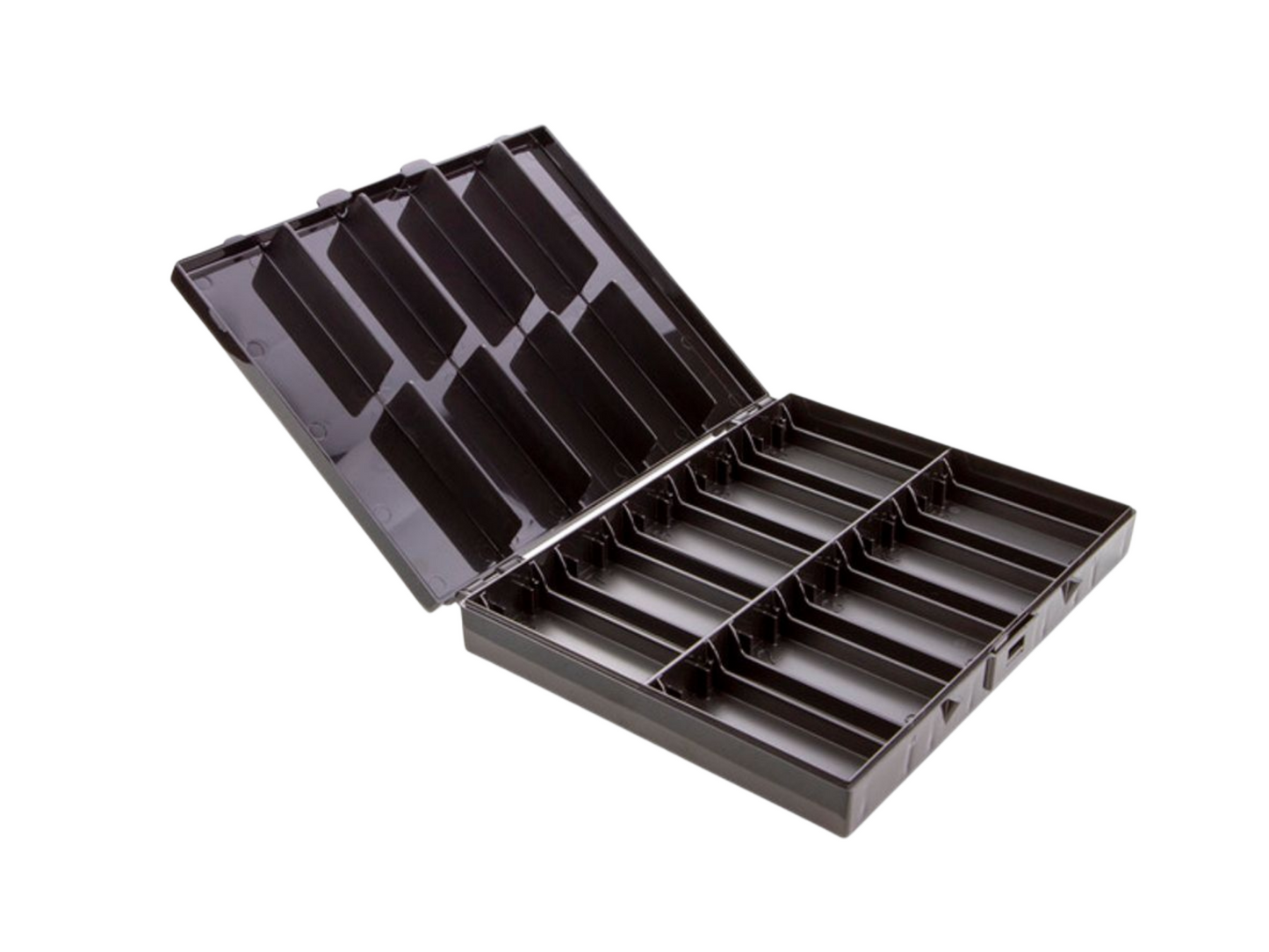

10–100 µL Immunostain Moisture Chambers — Black Polystyrene, Light-Excluding, 3/Bag (240-9020-Z10)
These black polystyrene immunostain moisture chambers are engineered to maintain a saturated humid environment around standard 25 × 75 mm microscope slides during antibody incubation, preventing the evaporation of small-volume reagents (10–100 µL) that causes concentration gradients, uneven staining, and edge artifacts. The black PS construction actively excludes ambient light, making these chambers essential for photosensitive fluorescent secondaries, tyramide signal amplification reagents, and multiplex fluorescent panels where light exposure during incubation degrades signal. Supplied non-sterile in bags of three, part number 240-9020-Z10 is a dependable choice for IHC, IF, FISH, ISH, and proximity ligation assay workflows in research, clinical, and pathology laboratories.
Technical Specifications
| Specification | Value |
|---|---|
| Part Number (MPN) | 240-9020-Z10 |
| Product Type | Immunostain Moisture Chamber |
| Material | Polystyrene (PS) |
| Color | Black (light-excluding) |
| Slide Format | Standard 25 × 75 mm microscope slides |
| Reagent Volume Range | 10–100 µL |
| Sterility | Non-Sterile |
| Autoclave Compatibility | Yes — 121°C / 15 psi |
| Pack Size | 3/Bag |
| BPA / Phthalates | BPA-free; no phthalate plasticizers |
| Country of Origin | USA (California) |
Applications
- Immunohistochemistry (IHC): primary and secondary antibody incubation, including overnight 4°C incubations where consistent humidity is critical
- Immunofluorescence (IF): fluorescent secondary antibody and probe incubation requiring light exclusion to protect signal integrity
- Fluorescence in situ hybridization (FISH) and in situ hybridization (ISH): slide-based probe incubation steps sensitive to both evaporation and light exposure
- Proximity ligation assays (PLA) and tyramide signal amplification (TSA): high-sensitivity assays where small-volume reagent evaporation introduces false-positive signal or concentration artifacts
- Multiplex fluorescent staining panels: multi-step incubations at room temperature, 4°C, or 37°C requiring a controlled humid environment throughout
Chemical Resistance
| Reagent / Condition | Compatibility |
|---|---|
| PBS / TBS aqueous buffers | Excellent |
| Citrate and EDTA antigen retrieval buffers | Excellent |
| Hematoxylin and eosin stains | Excellent |
| DAB chromogen (aqueous) | Excellent |
| Ethanol (>70%) / methanol | Not recommended — PS is not resistant to alcohols above 70% |
| Acetone / chloroform / aromatic solvents | Not recommended — PS is incompatible with these solvents |
| UV decontamination | Compatible — suitable for clean-bench environments |
Quality & Procurement
Made in USA (California), these Caplugs® Evergreen moisture chambers are produced from virgin, BPA-free, phthalate-free polystyrene under ISO 9001 quality management. The rigid PS construction maintains chamber geometry under full slide loads, ensuring the lid seal remains intact throughout incubation and humidity is never compromised. Autoclave compatibility at 121°C / 15 psi supports decontamination between staining runs, reducing cross-contamination risk in shared or high-throughput staining environments. For labs requiring different light-handling specifications, compatible options in natural PS and amber PS are also available from the same Caplugs® Evergreen product family, enabling unified procurement across all three configurations from a single vendor.
Frequently Asked Questions
Can these chambers be autoclaved between staining runs?
Yes — the black polystyrene construction is autoclave-compatible at 121°C / 15 psi, making it straightforward to decontaminate chambers between runs or protocols in shared staining environments.
Why does the chamber need to be black rather than clear?
Many fluorescent secondary antibodies, TSA reagents, and FISH probes are photosensitive and will bleach or degrade if exposed to ambient light during incubation. The black PS walls and lid exclude light throughout the incubation period, protecting signal intensity and assay sensitivity — a feature that clear or natural chambers cannot provide.
How is humidity maintained inside the chamber?
The chamber floor is designed to hold distilled water or damp tissue at a defined depth below the slide surface, establishing a consistently saturated environment without risk of fluid contact with the slide or tissue section.
Are these chambers compatible with standard 25 × 75 mm slides used in clinical pathology?
Yes — the chamber is designed to accommodate standard 25 × 75 mm microscope slides, the format used universally in clinical histology, anatomic pathology, and research immunostaining workflows.