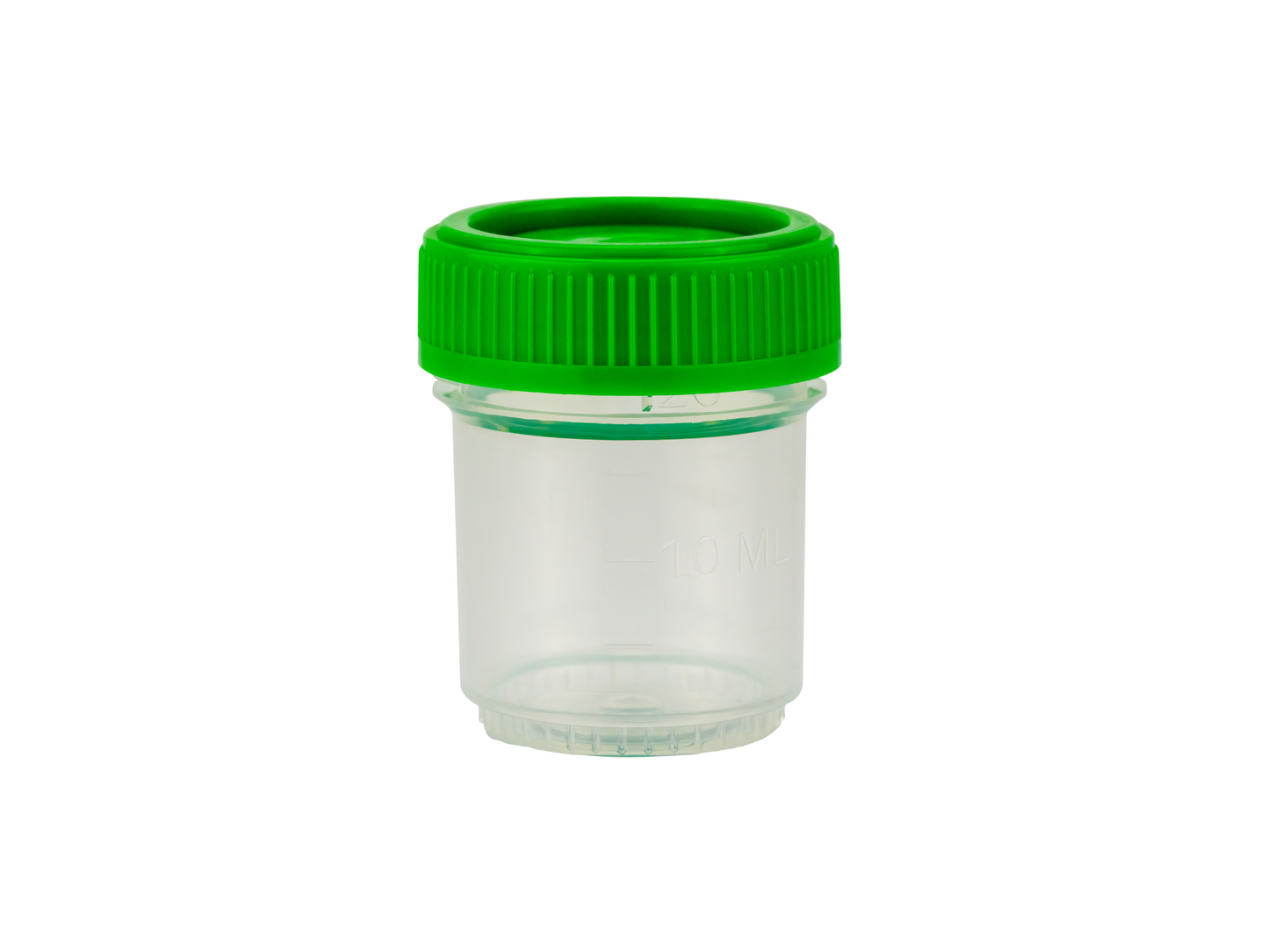

20 mL Histo-Click™ Specimen Containers with Green Snap Caps — PPC, Non-Sterile, 500/Bag (240-7020-G80)
The Caplugs® Evergreen Histo-Click™ 20 mL specimen containers feature a one-hand click-top snap closure engineered for histopathology tissue collection, formalin fixation, and cytology workflows. Constructed from Polypropylene Copolymer (PPC), these containers are compatible with 10% neutral buffered formalin (NBF) and arrive unassembled — 500 natural-body tubes and 500 green caps per Bag — ready for point-of-use assembly or pre-labeling at the collection bench. The green cap color supports specimen-type color-coding systems commonly used to differentiate cytology, brushing, or lavage collections from fixed tissue batches.
Technical Specifications
| Specification | Value |
|---|---|
| Part Number (MPN) | 240-7020-G80 |
| Sub-Brand | Histo-Click™ (Caplugs® Evergreen) |
| Volume | 20 mL |
| Closure Type | Click-Top Snap Lid — one-hand operation |
| Tube Material | Polypropylene Copolymer (PPC) |
| Tube Color | Natural (transparent) |
| Cap Material | Polypropylene Copolymer (PPC) |
| Cap Color | Green |
| Formalin Compatibility | Compatible with 10% NBF formalin |
| Assembly State | Unassembled — 500 containers + 500 caps per Bag |
| Sterility | Non-Sterile |
| Pack Size | 500/Bag |
| BPA / Phthalates | BPA-free; phthalate-free |
| Country of Origin | USA |
Applications
- Histopathology tissue collection and 10% NBF formalin fixation of gross tissue fragments and core needle biopsies
- Cytology specimens including fine needle aspirate washes, cell brushing suspensions, and bronchial lavage fluid
- Color-coded specimen routing in high-volume pathology cores processing mixed specimen types
- Pre-labeled or barcoded container workflows with laboratory information systems (LIS), enabled by the unassembled format
- Surgical and grossing environments requiring one-hand container operation with gloves or gowns
Chemical Resistance
| Reagent / Condition | Compatibility |
|---|---|
| 10% Neutral Buffered Formalin (NBF) | Excellent — purpose-compatible |
| Aqueous buffers / saline | Excellent |
| Dilute acids and bases | Excellent |
| Ethanol (<70%) | Good — short-term contact |
| Acetone / chlorinated solvents | Not recommended |
Quality & Procurement
Made in USA, these Histo-Click™ containers are produced under ISO 9001 quality management from BPA-free, phthalate-free PPC resin. The natural tube body provides direct visual access for specimen volume assessment and morphology inspection without removing the container from a processing tray — a practical advantage in busy grossing workflows. LabSupplies.com is an authorized Caplugs® Evergreen dealer, stocking the full Histo-Click™ color range (including blue- and white-cap variants) and shipping from USA inventory to clinical labs, hospitals, and research institutions.
Frequently Asked Questions
Are these specimen containers sterile?
No — the Histo-Click™ 240-7020-G80 containers are supplied non-sterile. For most formalin fixation and histopathology tissue collection workflows, sterility is not required, but laboratories should confirm this against their own standard operating procedures.
Why does the click-top closure matter in a surgical or grossing setting?
The snap lid engages and releases with a single thumb press, eliminating the two-handed screw-threading motion that is difficult when wearing double gloves or a surgical gown. This reduces contamination risk and speeds specimen handling at the collection bench.
What is the advantage of the unassembled format?
Receiving containers and caps separately allows staff to apply printed labels or laboratory barcode stickers to the tube body before capping, supporting LIS integration and reducing the risk of label placement errors that occur when labeling pre-assembled containers.
Are other cap colors available for multi-specimen color-coding programs?
Yes — Caplugs® Evergreen offers the same 20 mL Histo-Click™ container with blue and white snap caps, allowing facilities to build a complete color-coded specimen routing system across cytology, tissue, and other collection categories.