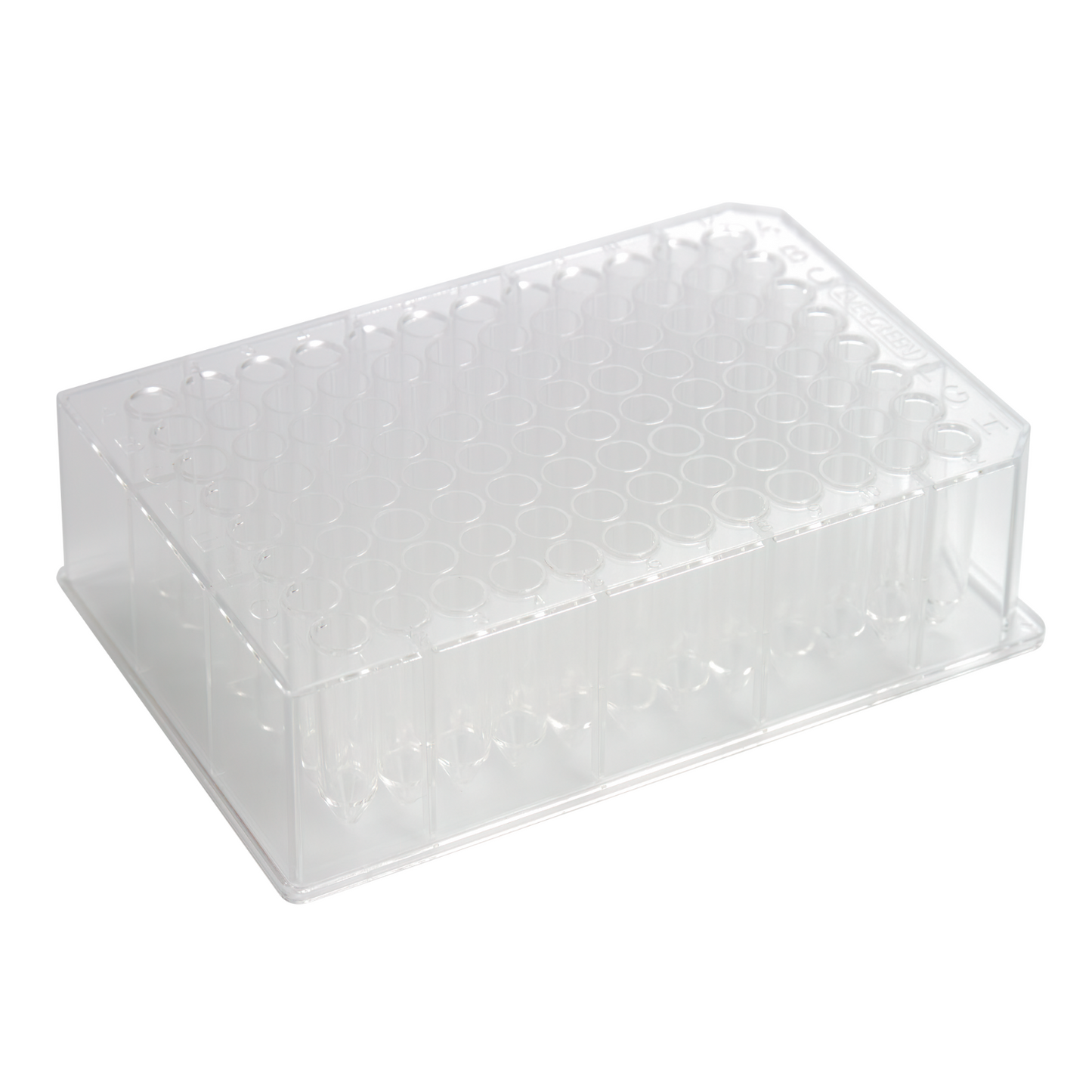

1.0 mL Deep Well Microplates, 96-Well, Tapered Bottom — PPC, Sterile, Natural (222-8664-08N)
These 96-well deep well microplates deliver 1.0 mL per well in a tapered conical bottom geometry, manufactured from polypropylene copolymer (PPC) for full compatibility with the organic extraction solvents used in LC-MS sample preparation, SPE, and liquid-liquid extraction workflows. Supplied sterile in bags of five plates, part number 222-8664-08N is the high-throughput solution for bioanalytical labs that need reliable solvent resistance and complete sample recovery in a standard SBS footprint. The tapered well bottom concentrates residual liquid at the base, enabling thorough aspiration of small residual volumes after centrifugation or extraction — a critical advantage over flat-bottom deep well plates when processing low-volume samples.
Technical Specifications
| Specification | Value |
|---|---|
| Part Number (MPN) | 222-8664-08N |
| Format | 96-Well Deep Well Microplate |
| Well Bottom Style | Tapered (Conical) |
| Well Volume | 1.0 mL (1000 µL) per well |
| Material | Polypropylene Copolymer (PPC) |
| Color | Natural |
| Sterility | Sterile |
| Pack Size | 5/Bag |
| BPA / Phthalate / Latex | BPA-Free, Phthalate-Free, Latex-Free |
| Country of Origin | USA |
Applications
- Protein precipitation (LC-MS): Add acetonitrile or methanol to plasma samples, centrifuge, and aspirate the clarified supernatant — PPC withstands prolonged contact with ACN and MeOH at standard 1:2 or 1:3 sample-to-solvent ratios that would crack polystyrene plates.
- Liquid-liquid extraction (LLE): The 1.0 mL well volume accommodates the full sample volume plus organic extractant at typical LLE protocol ratios, while the tapered base promotes clean phase separation and complete lower-phase recovery.
- SPE eluate collection: Collect organic SPE eluents directly into each well without risk of solvent-induced plate failure or analyte loss from cracking.
- Compound library storage: Store DMSO-based compound stocks at –20 °C or –80 °C; the higher per-well volume supports larger stock quantities than standard 384-well formats.
- Automated liquid handling: The standard SBS footprint is compatible with robotic liquid handlers; the tapered bottom geometry is designed for full tip access and minimal dead volume.
- Dried blood spot (DBS) elution: The 1.0 mL well volume comfortably accommodates elution solvent volumes used in DBS punch extraction workflows.
- Cell-based preparation: Handle cell lysis buffers, extraction reagents, and supernatants at 96-well scale with the volume headroom that 1.0 mL deep well plates provide.
Chemical Resistance
| Reagent / Condition | Compatibility |
|---|---|
| Acetonitrile (ACN) | Excellent — primary LC-MS precipitation solvent |
| Methanol (MeOH) | Excellent — protein precipitation and LLE use |
| Ethyl acetate (EtOAc) | Excellent — LLE organic phase |
| Aqueous buffers / saline | Excellent |
| Dilute acids and bases | Excellent |
| DMSO | Good — suitable for compound storage concentrations |
| Chloroform / dichloromethane | Limited — verify at working concentration and contact time |
| Aromatic solvents (toluene, xylene) | Not recommended for prolonged exposure |
Quality & Procurement
Made in USA, these Caplugs® Evergreen deep well microplates are produced from FDA-compliant, BPA-free, phthalate-free, and latex-free polypropylene copolymer resin under rigorous quality management standards. LabSupplies.com is an authorized dealer of Caplugs® Evergreen laboratory consumables and ships from USA inventory, typically the same business day for stocking items.
Frequently Asked Questions
Why choose PPC over polystyrene for deep well plates used in LC-MS sample prep?
Polystyrene (PS) deep well plates are not resistant to acetonitrile, methanol, ethyl acetate, or other organic solvents commonly used in protein precipitation and liquid-liquid extraction. Prolonged or concentrated organic solvent exposure can crack or swell PS plates, risking sample loss or cross-contamination. PPC provides robust compatibility with these solvents, making it the appropriate material choice for bioanalytical sample preparation workflows.
What is the advantage of a tapered well bottom versus a flat bottom?
A tapered conical well bottom funnels liquid to the lowest-diameter point of the well, concentrating residual sample after centrifugation or aspiration. This geometry maximizes recovery of small residual volumes and improves tip access for automated liquid handlers, reducing dead volume compared to flat- or round-bottom designs.
Are these plates compatible with standard robotic liquid handling systems?
Yes — the plates are manufactured in the standard SBS footprint used by most automated liquid handling platforms. Always verify deck adapter requirements and labware definitions with your specific instrument vendor before first use.
Are these plates supplied sterile, and is individual well sealing available?
Yes, the plates in part number 222-8664-08N are supplied sterile, 5 plates per bag. Sealing options such as adhesive films or cap mats are sold separately; consult the LabSupplies.com catalog for compatible sealing accessories.