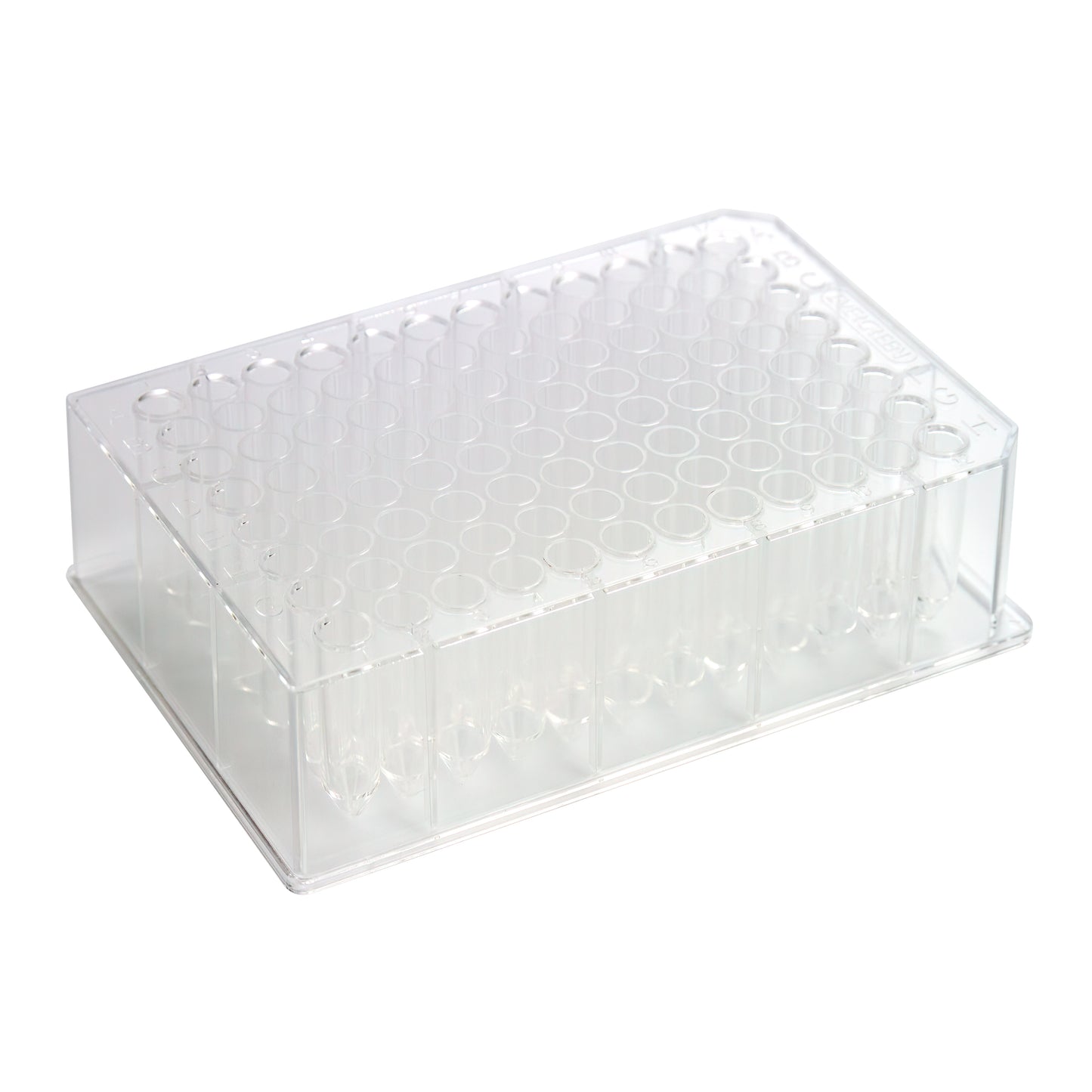

1.0 mL Deep Well Microplates, 96-Well, Tapered Bottom — Sterile PS, Natural, 5/Bag (222-8662-01N)
These sterile 96-well deep well microplates from Caplugs® Evergreen deliver 1.0 mL (1000 µL) per tapered-bottom well in optically clear natural polystyrene — the standard format for LC-MS sample preparation, protein precipitation, and high-throughput extraction workflows. The tapered conical well geometry narrows to a smaller-diameter base, concentrating residual sample volume at the tip for complete aspiration after centrifugation or liquid–liquid extraction. Supplied sterile in packs of five plates, part number 222-8662-01N is well-suited for labs running automated liquid handling platforms on standard SBS-footprint decks.
Technical Specifications
| Specification | Value |
|---|---|
| Part Number (MPN) | 222-8662-01N |
| Format | 96-Well Deep Well Microplate |
| Well Bottom | Tapered (Conical) |
| Well Volume | 1.0 mL (1000 µL) per well |
| Material | Polystyrene (PS) |
| Color | Natural |
| Sterility | Sterile |
| Pack Size | 5/Bag |
| Country of Origin | USA |
Applications
- Protein precipitation (LC-MS): The 1.0 mL well volume accommodates plasma plus precipitation solvent at standard 1:2 or 1:3 sample-to-solvent ratios; brief acetonitrile or methanol contact is acceptable with PS.
- Liquid–liquid extraction (LLE): Sufficient well volume for sample plus organic extractant at typical LLE ratios, with the tapered base enabling thorough phase separation and aspiration.
- SPE elution collection: Collect aqueous SPE eluate directly into the deep well plate; PS is fully compatible with aqueous eluents.
- Compound library storage: Higher-volume DMSO compound stocks benefit from the 1.0 mL deep well capacity at −20 °C or −80 °C.
- Automated liquid handling: Standard SBS footprint is compatible with robotic liquid handlers; the tapered well bottom is designed for reliable tip access and complete aspiration.
- Cell-based preparation: Accommodates lysis volumes plus supernatant for 96-well scale cell lysis and extraction workflows.
- Dried blood spot (DBS) elution: Deep well volume provides adequate capacity for DBS punch elution and extraction.
Chemical Resistance
| Reagent / Condition | Compatibility |
|---|---|
| Aqueous buffers / plasma (pH 4–10) | Excellent |
| Acetonitrile (<100%) — brief contact | Limited — short-term contact acceptable; avoid extended immersion (PS may craze) |
| Methanol (<100%) — brief contact | Limited — short-term compatible; avoid prolonged exposure |
| Acetone / chlorinated solvents | Not recommended |
| Aromatic solvents (e.g., toluene) | Not recommended |
Quality & Procurement
Made in USA, these Caplugs® Evergreen deep well microplates are manufactured from FDA-compliant, BPA-free, phthalate-free, and latex-free polystyrene resin under ISO quality standards. The natural PS material provides excellent optical clarity for visual monitoring of well fill level throughout sample preparation. LabSupplies.com is an authorized Caplugs® Evergreen dealer and ships from USA inventory, typically the same business day for stocking items.
Frequently Asked Questions
Are these microplates sterile out of the bag?
Yes — each plate in the 5/Bag pack is supplied sterile and is ready for use in sample preparation workflows that require a sterile starting vessel, such as clinical plasma processing or cell-based assays.
Will the 1.0 mL well volume accommodate a full protein precipitation protocol?
Yes. The 1.0 mL per-well capacity is the standard deep well volume for most protein precipitation workflows, comfortably holding plasma plus acetonitrile or methanol precipitation solvent at 1:2 or 1:3 sample-to-solvent ratios within a single well.
Why choose polystyrene (PS) over polypropylene (PPC) for deep well plates?
Polystyrene offers superior optical clarity, making it easy to visually monitor well fill levels and observe phase separation during extraction. However, PS has limited resistance to organic solvents — brief contact with acetonitrile or methanol is acceptable, but for protocols involving extended solvent exposure, a PPC plate such as the 222-8664-08N would be the better choice.
Is this plate compatible with standard automated liquid handling systems?
Yes. The plate uses a standard SBS footprint, making it compatible with most robotic liquid handling platforms. The tapered well bottom is specifically designed to facilitate complete aspiration of small residual volumes by liquid handler tips after centrifugation or extraction steps.