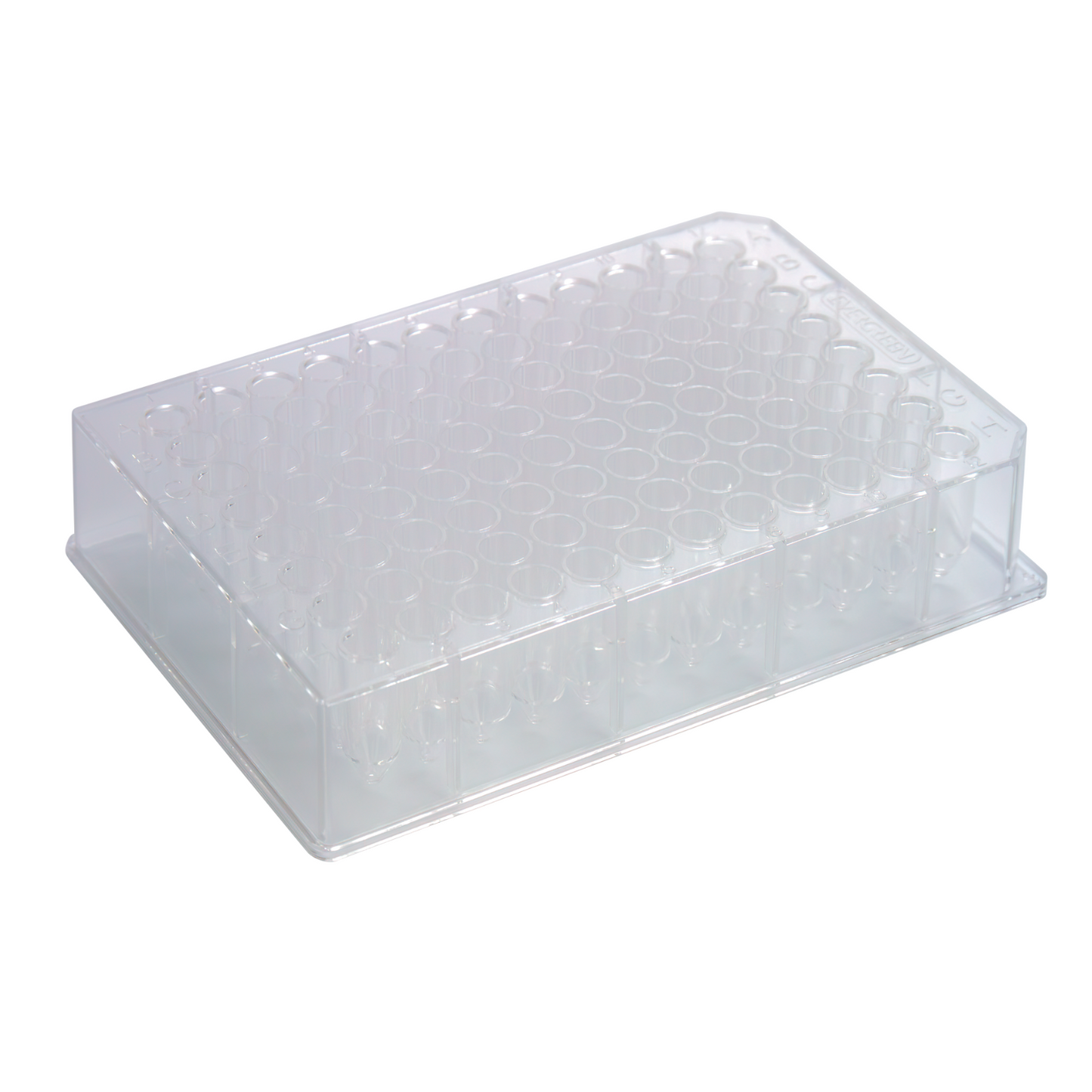

96-Well Deep Well Microplate, Tapered Bottom, 0.5 mL — PPC, Natural, Non-Sterile (222-8649-080)
These 96-well deep well microplates feature a tapered conical well bottom and a 0.5 mL (500 µL) per-well volume, making them an efficient choice for high-throughput LC-MS sample preparation, protein precipitation, liquid-liquid extraction (LLE), and solid-phase extraction (SPE) workflows. Constructed from polypropylene copolymer (PPC), they offer full compatibility with acetonitrile, methanol, ethyl acetate, and other aggressive organic solvents that would crack or swell standard polystyrene deep well plates. Supplied non-sterile in 5/Bag format, part number 222-8649-080 is designed for analytical and bioanalytical labs running SBS-footprint automated liquid handling platforms.
Technical Specifications
| Specification | Value |
|---|---|
| Part Number (MPN) | 222-8649-080 |
| Format | 96-well deep well microplate |
| Well Bottom | Tapered (conical) |
| Well Volume | 0.5 mL (500 µL) per well |
| Material | Polypropylene Copolymer (PPC) |
| Color | Natural |
| Sterility | Non-Sterile |
| Pack Size | 5/Bag |
| BPA / Phthalate / Latex | BPA-Free, Phthalate-Free, Latex-Free |
| Country of Origin | USA |
Applications
- Protein precipitation (LC-MS): The 0.5 mL well volume accommodates a typical 100–200 µL plasma sample plus 200–300 µL acetonitrile or methanol precipitant, with the tapered bottom concentrating the pellet and residual supernatant for more complete aspiration after centrifugation.
- Liquid-liquid extraction (LLE): The per-well capacity supports standard sample-to-extractant ratios at miniaturized total volumes, reducing organic solvent consumption without sacrificing recovery.
- SPE eluate collection: Organic eluents from reversed-phase, mixed-mode, or phospholipid-removal SPE steps are fully compatible with PPC, eliminating the risk of plate stress-cracking seen with polystyrene.
- Compound library storage: Deep well geometry provides the headspace needed for higher-volume DMSO stocks; PPC maintains integrity at –20 °C and –80 °C freeze-thaw cycling.
- Automated liquid handling: SBS-standard footprint is compatible with robotic workstations; the tapered bottom geometry is designed for liquid-handler tip access to small residual volumes.
- Dried blood spot (DBS) elution: Well depth and volume accommodate punch-and-elute workflows with typical extraction solvent volumes used in DBS bioanalysis.
- Cell-based sample preparation: Suitable for 96-well lysis, extraction, and supernatant collection steps requiring more than 200 µL total volume per well.
Chemical Resistance
| Reagent / Condition | Compatibility |
|---|---|
| Aqueous buffers / saline / water | Excellent |
| Dilute acids and bases | Excellent |
| Acetonitrile (ACN) | Excellent — primary LC-MS precipitant solvent |
| Methanol (MeOH) | Excellent |
| Ethyl acetate (EtOAc) | Excellent |
| Ethanol (<70%) | Good — short-term contact |
| DMSO (compound storage) | Good — compatible for storage applications |
| Chlorinated solvents (e.g., chloroform, DCM) | Not recommended — limited resistance for PPC |
Quality & Procurement
Made in USA, these Caplugs® Evergreen deep well microplates are manufactured from FDA-compliant, BPA-free, phthalate-free, latex-free polypropylene copolymer resin. PPC provides enhanced toughness and solvent compatibility compared to standard homopolymer PP, making it the material of choice for bioanalytical sample preparation involving repeated organic solvent exposure. LabSupplies.com is an authorized Caplugs® Evergreen dealer and ships from USA inventory, typically same business day for stocking items.
Frequently Asked Questions
Are these microplates sterile?
No — the 222-8649-080 is supplied non-sterile. For workflows requiring sterility, Caplugs® Evergreen offers sterile deep well plate options in the same product family; contact LabSupplies.com for sterile alternative SKUs.
Why choose PPC over standard polystyrene (PS) deep well plates for LC-MS sample prep?
Polypropylene copolymer (PPC) is fully compatible with acetonitrile, methanol, ethyl acetate, and other organic solvents routinely used in protein precipitation, LLE, and SPE elution steps. Standard polystyrene deep well plates can crack, swell, or leach extractables under prolonged or repeated exposure to these same solvents, making PPC the preferred material for bioanalytical workflows.
What is the benefit of the tapered conical well bottom?
The tapered bottom narrows to a smaller-diameter base, concentrating the sample — and any pellet after centrifugation — at the well tip. This geometry enables more complete aspiration of small residual volumes by pipettors or liquid-handler probes, which is critical for maximizing extraction recovery in protein precipitation and LLE workflows.
Is the SBS footprint compatible with standard robotic liquid handlers?
Yes — the plate conforms to the SBS/ANSI standard microplate footprint, making it compatible with the robotic workstations and liquid-handling systems commonly used for high-throughput 96-well sample preparation in bioanalytical and discovery labs.