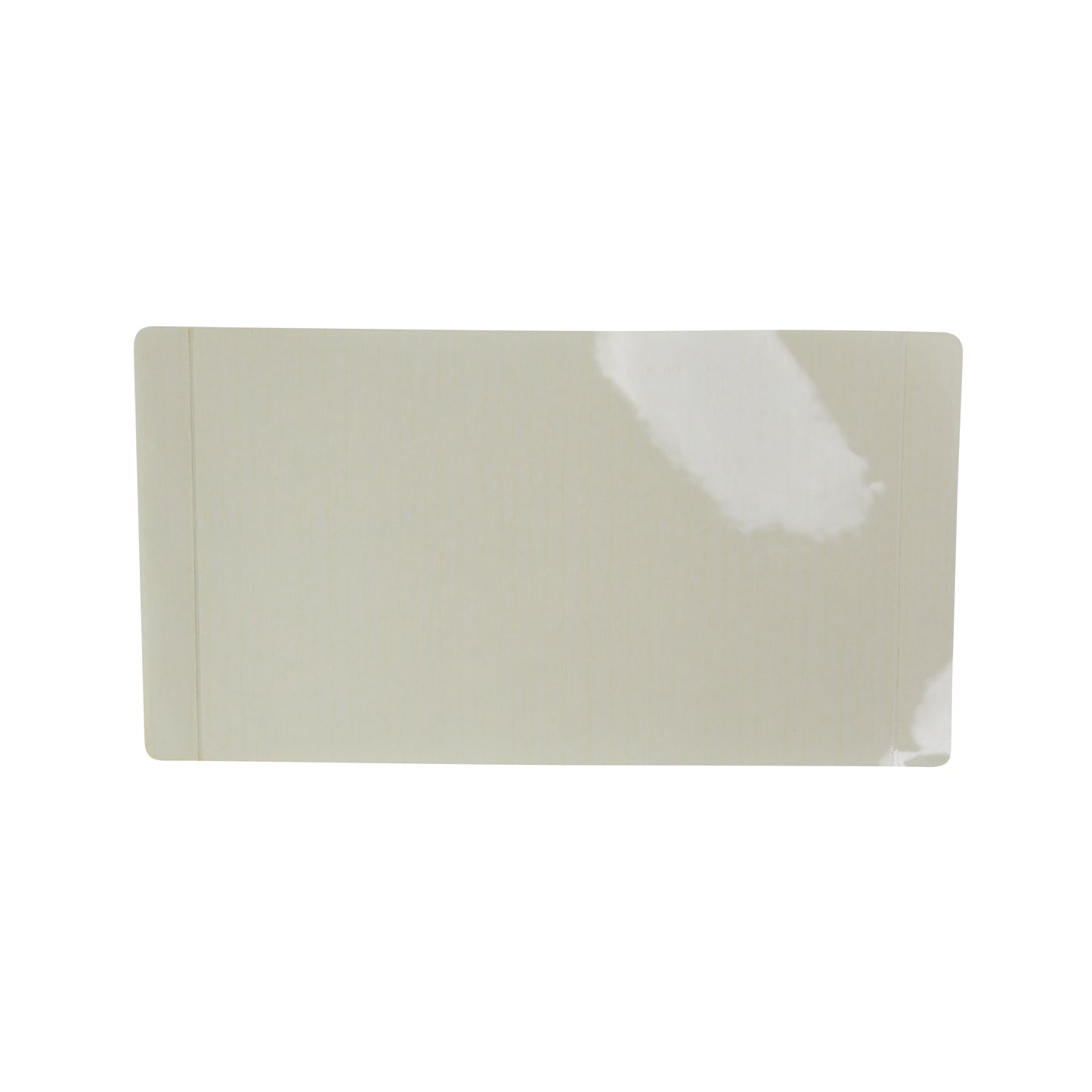

EZ-Seal™ Acrylic Adhesive Microplate Sealer Film — Sterile, Individually Packed, 50/Box (222-8201-MIC)
The Caplugs® Evergreen EZ-Seal™ acrylic adhesive sealer film is a sterile, single-use closure for standard SBS-format microplates, including 96-well and 384-well configurations. Constructed from inert polyester film with a clean-release acrylic adhesive, each film bonds firmly to the plate rim to create an evaporation barrier and contamination seal during incubation, storage, and transport — without the stacking height overhead of a physical lid. Each film is individually packed for sterility assurance, with 50 films per box.
Technical Specifications
| Specification | Value |
|---|---|
| Part Number (MPN) | 222-8201-MIC |
| Product Line | EZ-Seal™ |
| Film Material | Inert Polyester |
| Adhesive Type | Acrylic (strong, clean-release) |
| Compatibility | Standard SBS microplates (96-well, 384-well, etc.) |
| Pack Format | Individually packed (each film sterile-wrapped) |
| Pack Size | 50/Box |
| Sterility | Sterile |
| BPA / Phthalate / Latex | BPA-Free, Phthalate-Free, Latex-Free |
| Country of Origin | USA |
Applications
- Lidless plate sealing: Seal 96-well lidless plates (including the 222-8050/51/52 series) during incubation without requiring a physical lid
- Evaporation control: Maintain well volume integrity during long incubations at 37°C or higher by sealing the plate rim against evaporative loss
- Automated platforms: Eliminate lid-stacking height conflicts — the low-profile adhesive film is compatible with robotic arm and foil sealer workflows
- Cold storage sealing: Maintain a reliable seal at –20°C and –80°C for frozen plate archival and biobanking applications
- Transport between sites: Prevent well contamination and cross-contamination during transit between labs or sample collection sites
- 384-well plate sealing: Acrylic adhesive conforms to the narrower rim of 384-well plates, providing a consistent seal across the full footprint
- Bottom-read plate reader compatibility: Film applied over the plate rim does not interfere with bottom-read optics on standard plate readers
Chemical Resistance
| Reagent / Condition | Compatibility |
|---|---|
| Aqueous buffers / biological media | Excellent |
| Cell culture media (CO₂ incubator conditions) | Excellent |
| Formalin (10%) — short-term contact | Good |
| Ethanol (<70%) — short-term contact | Good |
| DMSO (<1%) — standard assay concentrations | Good |
Quality & Procurement
Made in USA, these EZ-Seal™ films are produced under rigorous quality controls from FDA-compliant, BPA-free, phthalate-free, latex-free materials. The acrylic adhesive is formulated for clean release — it bonds securely to the plate rim during use and removes without leaving adhesive residue that could interfere with downstream assays or plate reuse. LabSupplies.com is an authorized Caplugs® Evergreen dealer and ships from USA inventory, with same-business-day fulfillment typically available for stocking items.
Frequently Asked Questions
Are these plate sealer films sterile?
Yes — each film in the 222-8201-MIC box is individually sterile-wrapped, making them suitable for cell culture, clinical assay work, and any application where sterility assurance per film is required.
Will this film work with both 96-well and 384-well plates?
Yes. The EZ-Seal™ acrylic adhesive film is compatible with standard SBS-format microplates, including 96-well and 384-well configurations. The acrylic adhesive conforms to the plate rim geometry of both formats to provide a consistent seal.
Can these sealers be used with automated liquid handling or robotic platforms?
Yes. Because the film adds virtually no height overhead compared to a stacked lid, it is well suited for automation platforms where lid clearance is a constraint for robotic arms or plate handlers.
Does the adhesive leave residue on the plate rim after removal?
No. The acrylic adhesive is specifically formulated for clean release, meaning it peels away from the plate rim without depositing adhesive residue that could interfere with assay readings or plate reuse.