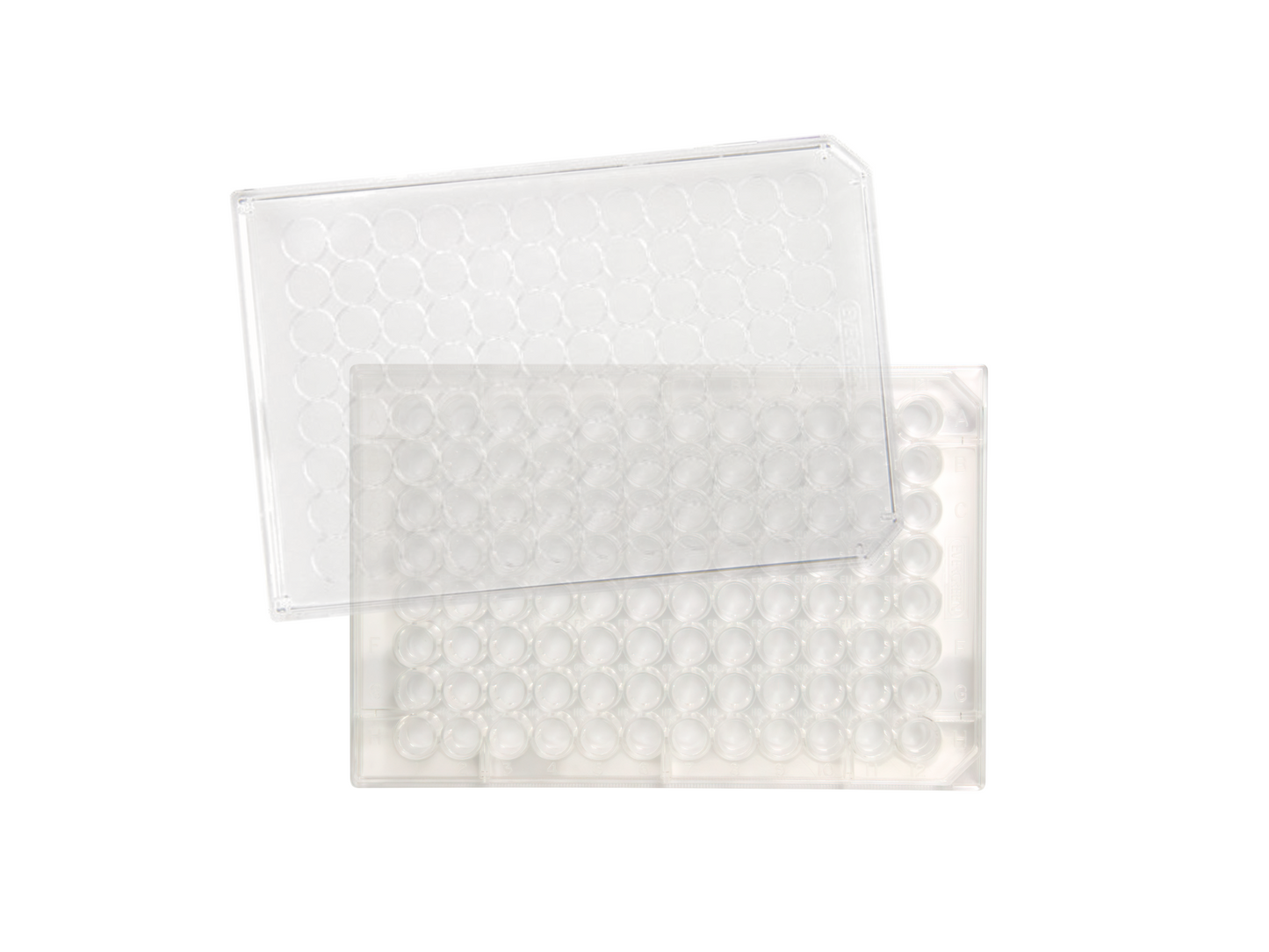

96-Well Flat Bottom Sterile Microplate with Lid — 0.37 mL/Well, Polystyrene, Natural (222-8030-01F) | 100/Box
These 96-well flat bottom polystyrene microplates deliver a uniform optical path across all 96 wells, making them the go-to format for adherent cell culture, ELISA, fluorescence-based assays, and spectrophotometric plate reading. Each plate is individually packed with a matching lid that maintains sterility during incubation, limits evaporation, and guards against aerosol contamination in biosafety cabinet workflows. Supplied sterile and ready to use, the 100/Box format keeps high-throughput labs continuously stocked without compromising per-plate cost efficiency.
Technical Specifications
| Specification | Value |
|---|---|
| Part Number (MPN) | 222-8030-01F |
| Format | 96-Well Microplate |
| Well Bottom | Flat |
| Well Volume (max) | 0.37 mL per well |
| Material | Polystyrene (PS) |
| Color | Natural |
| Lid | Included (individually packed plate + lid) |
| Sterility | Sterile |
| Pack Size | 100/Box, Individually Packed |
| BPA / Phthalate / Latex | BPA-Free, Phthalate-Free, Latex-Free |
| Country of Origin | USA |
Applications
- Adherent cell culture: The flat well bottom provides a uniform surface for monolayer attachment and growth in standard CO₂ incubator conditions.
- ELISA: Flat-bottom geometry ensures a consistent optical path for absorbance readings at 405, 450, and 490 nm on any standard plate reader.
- Fluorescence plate assays: Cell culture-grade polystyrene exhibits low autofluorescence, supporting bottom-read fluorescence detection without interference.
- Cell viability assays: Compatible with MTT, MTS, resazurin, and bioluminescent reagent systems (e.g., CellTiter-Glo) in the standard 96-well format.
- Drug dose-response and pharmacology screening: The 96-well layout accommodates 8-point dilution series and multi-condition compound screening.
- Luminescence assays: Suitable for luciferase reporter and ATP-based assays on luminescence-capable plate readers.
- Bacterial growth and antimicrobial susceptibility: Flat-bottom wells support standard microbroth dilution formats for MIC and MBC determinations.
Chemical Resistance
| Reagent / Condition | Compatibility |
|---|---|
| Aqueous buffers / saline | Excellent |
| Cell culture media (RPMI, DMEM) | Excellent |
| Formalin (10% NBF) — cell fixation | Excellent |
| DMSO (<1%) | Good — compatible at standard assay concentrations |
| Detergents (Tween-20, Triton X-100) | Good — compatible at standard assay concentrations |
| Methanol (<100%) — short-term fixation | Limited — brief contact acceptable; prolonged exposure causes crazing |
| Acetone / chlorinated solvents | Not recommended |
| Ethanol (>70%) | Not recommended |
Quality & Procurement
Made in USA, these Caplugs® Evergreen microplates are manufactured from FDA-compliant, BPA-free, phthalate-free, latex-free polystyrene resin. The flat-bottom wells receive a cell culture surface treatment for enhanced adherent cell attachment, and the optically clear material supports UV-Vis absorbance, fluorescence, and luminescence plate readers without modification. LabSupplies.com is an authorized dealer of Caplugs® Evergreen consumables and ships from USA inventory, typically same business day for stocking items.
Frequently Asked Questions
Are these microplates treated for cell culture?
Yes — the polystyrene wells carry a surface treatment for enhanced adherent cell attachment, making them appropriate for monolayer culture and standard cell-based assays alongside ELISA and plate-reader applications.
Does each plate come with a lid?
Yes. Every plate is individually packed with a matching lid that maintains sterility during incubation, reduces evaporation, and helps prevent cross-contamination during biosafety cabinet handling.
Can these plates be used with standard fluorescence and luminescence plate readers?
Yes. Cell culture-grade polystyrene has low autofluorescence, and the flat well bottom provides the uniform optical geometry required for both bottom-read fluorescence and luminescence detection on most commercial plate readers.
Are these plates autoclavable or compatible with DMSO-based compounds?
Polystyrene is not autoclavable; these plates are supplied sterile and are intended for single use. DMSO is compatible at concentrations below 1%, which covers the vast majority of standard drug screening and assay protocols — higher concentrations are not recommended.