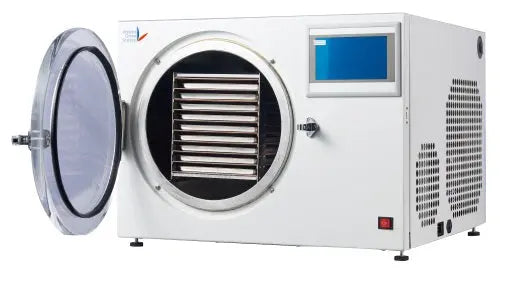
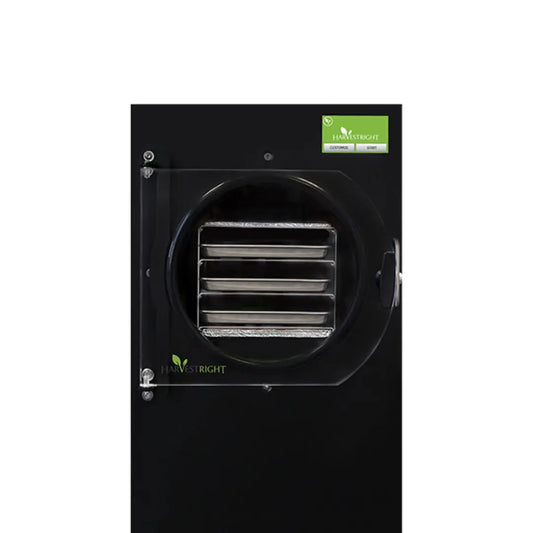
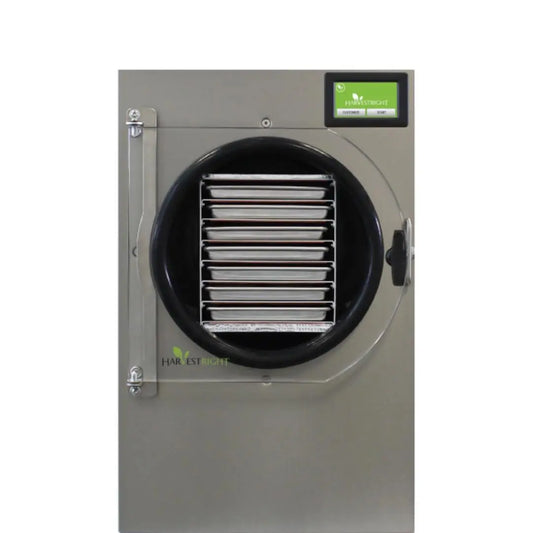
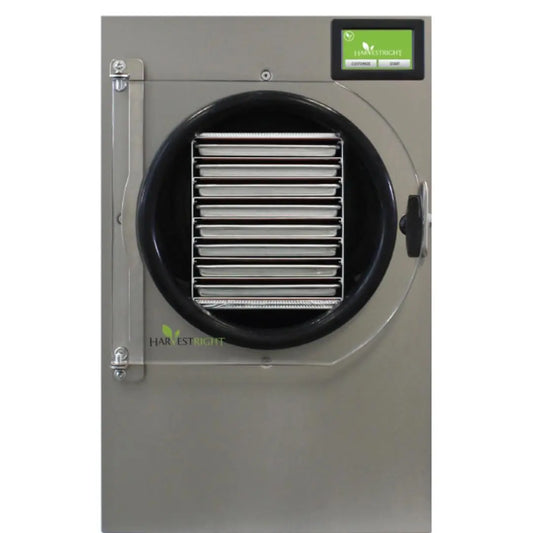
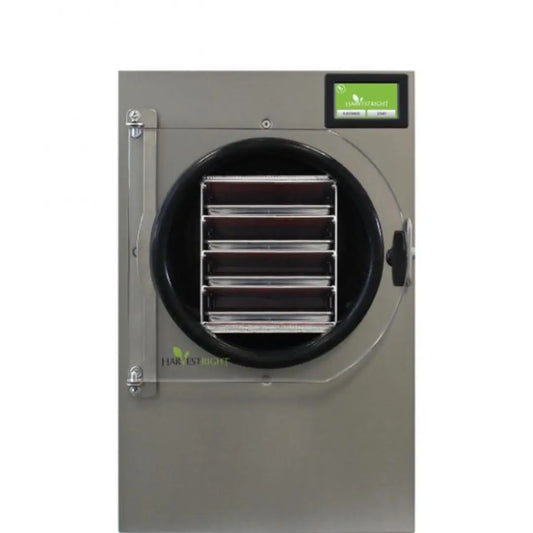
A laboratory freeze dryer — a lyophilizer — pulls water out of a frozen sample by sublimation under vacuum, so the material never passes through a liquid phase on the way out. Structure, potency and solubility survive in a way oven or vacuum drying cannot match, which is why lyophilisation is the standard route for reagents, biologicals, culture stocks and botanical extracts.
The range here
How to choose
Size it by frozen volume, not by tray count
Throughput is governed by how much ice the condenser can hold in one cycle and how deep the product sits on the tray, not by how many trays the cabinet takes. Shallow fills dry faster and more evenly than deep ones, so a tray loaded half as deep finishes in well under half the time. Work out the frozen volume of a typical batch first, then pick the cabinet that takes it at a shallow fill.
Pharmaceutical model or food model?
The pharmaceutical units run a stainless chamber and shelving and are built for reagents, biologicals and extracts. The compact home unit uses the same sublimation cycle and is listed here because people do buy it for teaching labs and field kitchens — but it is a food preserver, and it is not the right cabinet for anything that has to stay clean to a laboratory standard.
Know your collapse temperature before the first run
Every formulation has a temperature above which the frozen matrix loses structure and the cake collapses. Primary drying has to stay below it, which is what makes a cycle long. If the cake comes out shrunken, glassy or slow to reconstitute, the shelf ran too warm rather than the machine being at fault — drop the shelf temperature and extend primary drying before changing anything else.
Glassware, stoppers and spares
Drying flasks, manifold adapters, stoppers and replacement gaskets are listed under Freeze Dryer Glassware & Accessories. Cold traps used ahead of a vacuum pump are under Cold Traps, and pumps themselves under Vacuum Pumps & Kits.