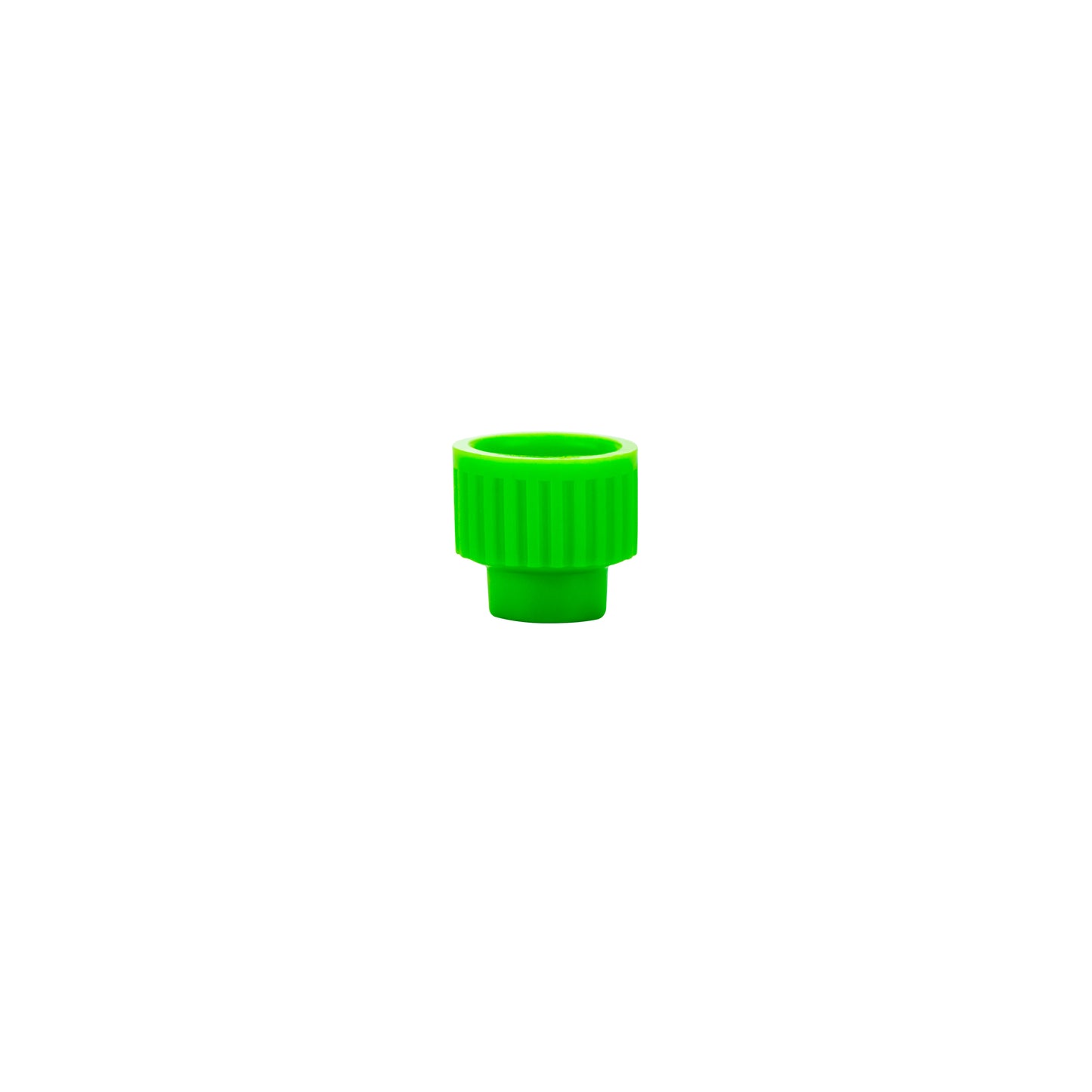

1.0 mL Microcentrifuge Tube Stopper Caps — HDPE, Green, 1000/Bag (300-3710-G20)
These green High-Density Polyethylene stopper caps provide a reliable plug-in friction-fit closure for standard 1.0 mL microcentrifuge tubes, keeping aliquots sealed between centrifuge runs, during refrigerated holds, and throughout routine sample handling workflows. Supplied non-sterile in 1000/Bag bulk packaging, part number 300-3710-G20 is well-suited to high-throughput molecular biology, biochemistry, and clinical aliquoting programs where per-cap economics and fast visual identification both matter. The green color enables straightforward color-coded batch or sample-type routing in microcentrifuge tube racks without the need for secondary labels.
Technical Specifications
| Specification | Value |
|---|---|
| Part Number (MPN) | 300-3710-G20 |
| Tube Format | 1.0 mL microcentrifuge tubes |
| Cap Style | Stopper — plug-in friction fit |
| Material | High-Density Polyethylene (HDPE) |
| Color | Green |
| Sterility | Non-Sterile |
| Pack Size | 1000/Bag |
| BPA / Phthalate Status | BPA-free; no phthalate plasticizers |
| Country of Origin | USA (California) |
Applications
- Sealing 1.0 mL microcentrifuge tubes between successive centrifuge spins for pellet and supernatant storage
- Closure of enzyme, antibody, and oligonucleotide aliquots in 1.0 mL tubes as a reusable alternative to integrated hinge-caps
- Color-coded batch routing — green caps designate a specific sample type or processing group alongside natural or other-colored caps in the same rack
- Biorepository sealing of 1.0 mL archive tubes during refrigerated or frozen storage at –20 °C or –80 °C
- Pre-PCR and pre-qPCR sample holds, keeping reaction tubes sealed before transfer to a PCR plate
- Clinical chemistry serum and plasma aliquots requiring a secure stopper during transit to the analyzer
- Replacement closure for 1.0 mL tubes with lost or damaged integrated hinge-caps
Chemical Resistance
| Reagent / Condition | Compatibility |
|---|---|
| Aqueous buffers / serum / plasma | Excellent |
| Short-chain alcohols (brief contact) | Good |
| DMSO (≤10%) | Good |
| Storage at –20 °C / –80 °C | Suitable — HDPE cryo stability |
| Autoclave (121 °C) | Compatible |
| Concentrated organic solvents | Not recommended |
Quality & Procurement
Made in USA at Caplugs® Evergreen's California facility, these stopper caps are manufactured from BPA-free, phthalate-free HDPE resin. The more rigid character of HDPE compared with LDPE provides consistent friction retention in the narrow opening of 1.0 mL microcentrifuge tubes, ensuring a secure seat without the tip-deformation risk associated with softer materials in this format. We recommend validating stopper-to-tube fit with a sample quantity before committing to a full bulk order, particularly when working with tubes from multiple manufacturers.
Frequently Asked Questions
Will these stoppers fit snap-cap (hinge-cap) microcentrifuge tubes from any brand?
These caps are designed for standard 1.0 mL microcentrifuge tube openings and are intended to seat by friction fit in that tube format. Tube-opening dimensions can vary slightly between manufacturers, so confirming fit with a small trial quantity before bulk purchase is recommended — particularly if your tubes are not a standard HDPE or PP microcentrifuge format.
Are these caps suitable for long-term frozen storage at –80 °C?
Yes. HDPE maintains adequate flexibility and dimensional stability at –80 °C, making these stoppers suitable for refrigerated and frozen biobank or archival holds. Always ensure the cap is fully seated before placing tubes in the freezer to maintain a reliable seal.
Can these stopper caps be autoclaved?
HDPE is compatible with standard autoclave cycles at 121 °C, so the caps can be sterilized if your workflow requires it. Keep in mind that the tips themselves are supplied non-sterile, so autoclaving prior to use is the appropriate route when sterile closures are needed.
What is the difference between the green (300-3710-G20) and natural (300-3710-020) versions?
Both caps share the same HDPE stopper specification and fit 1.0 mL microcentrifuge tubes; the only difference is color. Green is commonly used to designate a specific sample type, processing batch, or tube set when visual color-coding across a rack is important. Natural (translucent) caps are the standard option when color differentiation is not required.