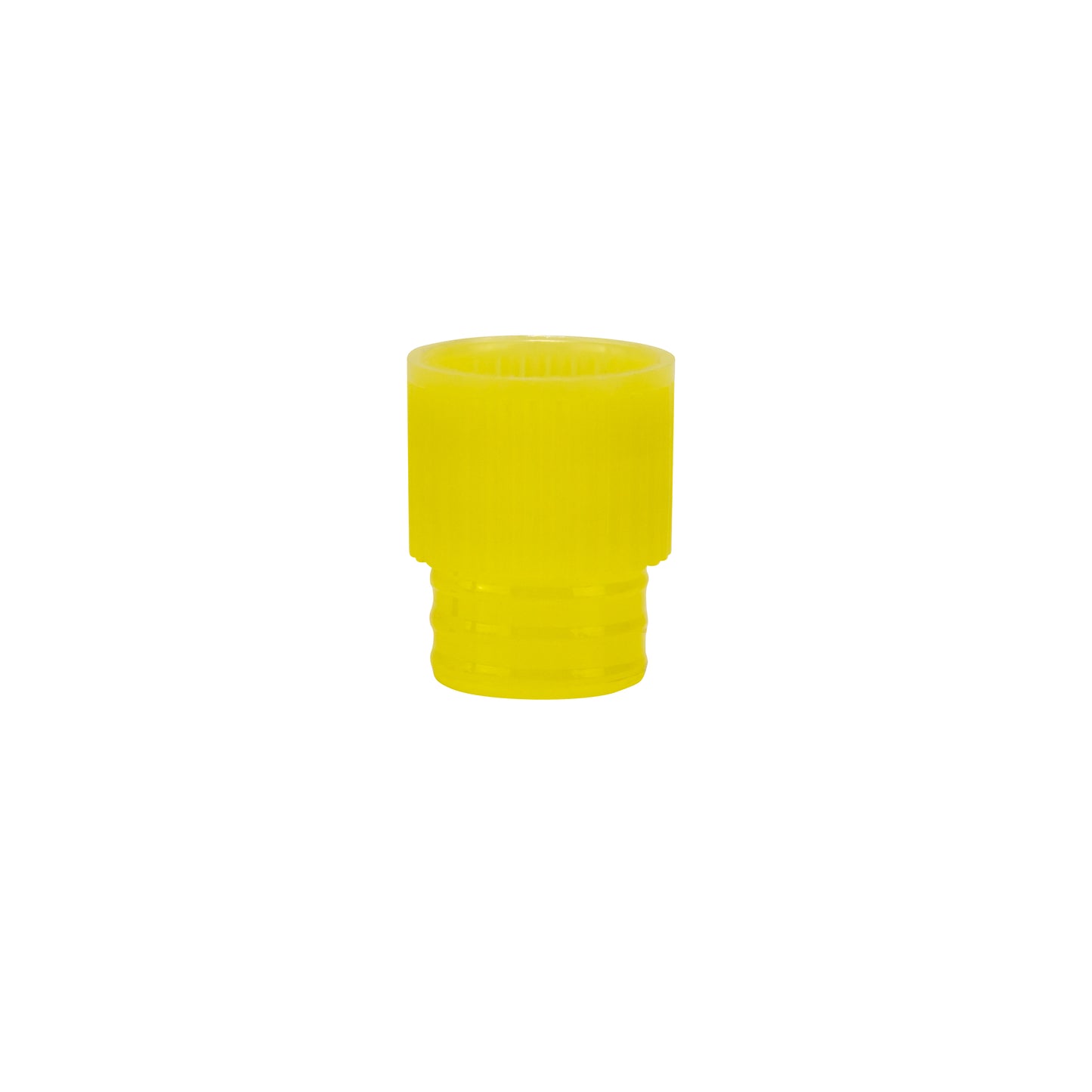

13 mm Test Tube Stoppers — LDPE, Yellow, 1000/Bag (300-2913-Y20)
These yellow low-density polyethylene (LDPE) stopper caps are engineered for 13 mm OD test tubes — including 13 × 75 mm and 13 × 100 mm glass and polystyrene culture tubes — used in clinical hematology, coagulation, microbiology, and specimen archiving workflows. The plug-in friction-fit design relies on LDPE's characteristic flex and spring-back to deliver reliable stopper retention across repeated insertion and removal cycles, while the yellow color aligns with SPS/ACD blood culture tube color-coding conventions for rapid specimen-type identification. Supplied non-sterile in a 1000/Bag format, part number 300-2913-Y20 is a high-volume consumable suited to procurement at the department or system level.
Technical Specifications
| Specification | Value |
|---|---|
| Part Number (MPN) | 300-2913-Y20 |
| Cap Style | Stopper — plug-in friction fit |
| Tube OD | 13 mm |
| Compatible Tube Formats | 13 × 75 mm and 13 × 100 mm glass and PS culture tubes |
| Material | Low-Density Polyethylene (LDPE) |
| Color | Yellow |
| Temperature Range | -20°C to +60°C |
| Sterility | Non-Sterile |
| Pack Size | 1000/Bag |
| BPA / Phthalates | BPA-free; no phthalate plasticizers |
| Country of Origin | USA |
Applications
- Microbiology culture tube capping: Seals TSB, BHI, LB broth, and similar culture media tubes during incubation at 37°C; LDPE retains flex at incubation temperatures.
- Specimen tube archiving: Prevents evaporation from serum, plasma, and whole-blood tubes during refrigerated or frozen storage down to -20°C.
- Clinical color-coded specimen routing: Yellow stopper mirrors CLSI vacuum tube color conventions for SPS/ACD blood culture and specialized anticoagulant tube designation, supporting error-reduction in high-throughput clinical labs.
- Cell culture and virus propagation: Stoppers allow incubation while limiting contamination risk in suspension culture and virus propagation tube formats.
- Pneumatic tube transport: LDPE flex retention withstands acceleration forces encountered during sample transport in clinical pneumatic systems.
- Research reagent and buffer tube archiving: Seals reusable glass and PS tubes containing buffers, stock solutions, and reagents between uses.
- Hematology and coagulation workflows: Provides color-coded closure for EDTA and citrate anticoagulant tube formats in the 13 mm OD standard.
Chemical Resistance
| Reagent / Condition | Compatibility |
|---|---|
| Aqueous buffers and saline | Excellent |
| Serum and plasma | Excellent |
| Broth media (TSB, BHI, LB) | Excellent |
| Dilute acids and bases | Good |
| Alcohols (ethanol, IPA) | Good — short-term surface contact |
| Acetone / chlorinated solvents | Not recommended |
| Aromatic solvents (toluene, xylene) | Not recommended |
Quality & Procurement
Made in USA, these Caplugs® Evergreen stopper caps are manufactured from BPA-free, phthalate-free LDPE resin selected specifically for the flex modulus and compression recovery properties that stopper-style closures require. Always validate stopper fit against your specific tube brand before bulk purchase, as 13 mm OD tubes can vary slightly in opening diameter based on wall thickness — contact us to request a sample.
Frequently Asked Questions
Why is LDPE used for stopper-style tube caps rather than polypropylene or polystyrene?
LDPE's low-density flex modulus gives it the compression and spring-back needed to create a reliable friction fit inside a tube opening and to release cleanly on removal. Stiffer materials such as polypropylene can crack or fail to maintain consistent seal pressure across repeated insertion/removal cycles in stopper applications.
Will these stoppers fit both 13 × 75 mm and 13 × 100 mm tubes?
Yes — the 300-2913-Y20 is designed for the 13 mm OD format, which covers both the 75 mm and 100 mm lengths commonly used in clinical and research settings. That said, wall thickness varies by tube manufacturer and affects the true opening diameter, so we recommend confirming fit with your specific tube brand before committing to a full bag order.
Can these stoppers be used for frozen specimen storage?
Yes. LDPE retains its flexibility down to -20°C, so these stoppers will not become brittle during frozen archive storage and can be removed without cracking — a limitation that affects stiffer cap materials at sub-zero temperatures.
Are these stoppers sterile, and can they be autoclaved?
These stoppers are supplied non-sterile. LDPE is not autoclavable — its service temperature ceiling of +60°C is well below standard autoclave conditions. For sterile applications, surface decontamination with appropriate reagents compatible with LDPE (see chemical resistance table) or use in a laminar-flow environment should be considered.