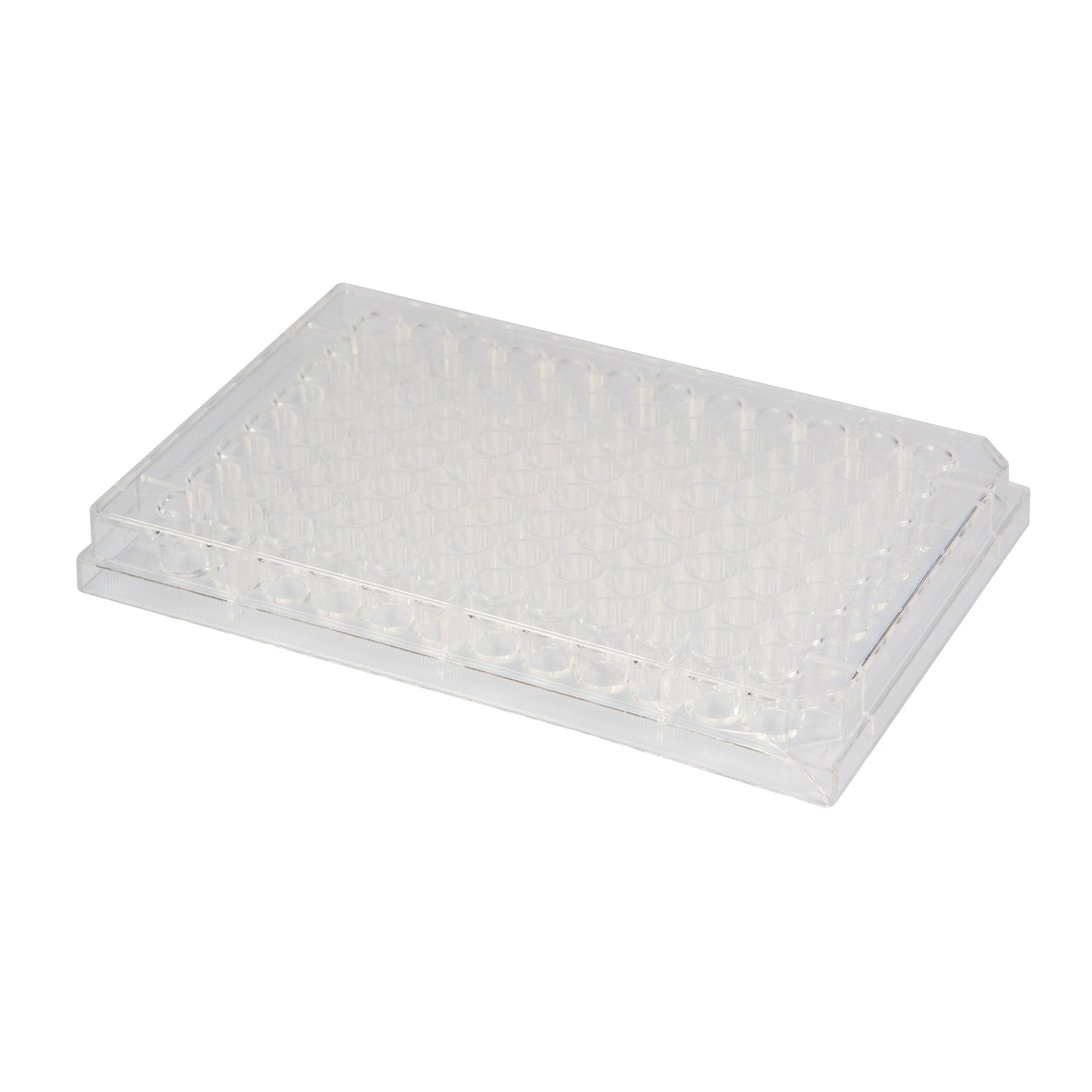

96-Well Flat-Bottom UV-Transparent Microplates, 0.37 mL — Acrylic (PMMA), Natural, 10/Box (290-8120-0AF)
These 96-well flat-bottom microplates are molded from optical-grade Acrylic (PMMA — Polymethylmethacrylate), which transmits UV light from 300–900 nm — including the critical 260 nm and 280 nm wavelengths used for nucleic acid and protein quantification that standard polystyrene plates block below approximately 320 nm. Each well holds 0.37 mL and sits in a standard SBS/ANSI footprint, converting any UV-capable plate reader into a high-throughput UV spectrophotometer without reformatting your workflow. Supplied non-sterile in a convenient 10/Box (100/Case) pack, these plates are an essential tool for labs running high-volume UV absorbance assays directly in plate format.
Technical Specifications
| Specification | Value |
|---|---|
| Part Number (MPN) | 290-8120-0AF |
| Well Format | 96-well, SBS/ANSI standard footprint |
| Bottom Geometry | Flat Bottom |
| Well Volume | 0.37 mL |
| Material | Acrylic (PMMA — Polymethylmethacrylate) |
| Color | Natural (transparent) |
| UV Transmission Range | 300–900 nm |
| Sterility | Non-Sterile |
| Pack Size | 10/Box (100/Case) |
| BPA / Phthalates | BPA-free; no phthalate plasticizers |
| Country of Origin | USA |
Applications
- Direct UV absorbance quantification of DNA and RNA at 260 nm and 280 nm in plate format, replacing batch cuvette runs for high-throughput screening programs
- Protein concentration determination at 280 nm using Beer-Lambert absorbance with consistent flat-bottom path length across all 96 wells
- Near-UV fluorescence assays using dyes with UV excitation profiles (e.g., DAPI, Hoechst) that require UV-transparent labware
- UV enzyme activity and kinetics assays where standard PS plates are incompatible with the required absorbance wavelengths
- UV decontamination workflows at 254 nm — PMMA withstands UV sterilization exposure without the material degradation observed in PS plates
Chemical Resistance
| Reagent / Condition | Compatibility |
|---|---|
| Aqueous buffers, saline, PBS | Excellent |
| Dilute acids and bases | Good — short-term contact |
| Ethanol (<30%) | Limited — may cause crazing; test before use |
| Acetone / chloroform / aromatic solvents | Not recommended — PMMA is solvent-sensitive |
| Autoclaving | Not recommended |
| UV decontamination (254 nm) | Compatible |
Quality & Procurement
Made in USA, these Caplugs® Evergreen microplates are produced from BPA-free, phthalate-free optical-grade PMMA resin, ensuring low extractables and consistent optical performance well-to-well and plate-to-plate. LabSupplies.com is an authorized dealer of Caplugs® Evergreen laboratory consumables and ships from USA inventory, with case quantities available for high-volume programs and institutional purchasing accounts.
Frequently Asked Questions
Why do I need an acrylic plate instead of a standard polystyrene plate for UV assays?
Standard polystyrene microplates are optically opaque below approximately 320 nm, which means they cannot transmit the 260 nm and 280 nm wavelengths essential for direct nucleic acid and protein quantification. The PMMA material used in these plates transmits UV light from 300–900 nm, enabling those reads directly in a 96-well plate format on any UV-capable plate reader.
Are these microplates sterile?
No — they are supplied non-sterile. For cell-based assays requiring sterility, additional decontamination steps such as UV irradiation at 254 nm are compatible with PMMA without causing the material degradation seen in PS plates.
Will these plates fit my existing plate reader?
Yes — the plates conform to the standard SBS/ANSI 96-well footprint, so they are compatible with the vast majority of commercial microplate readers that support a standard 96-well format. Confirm that your instrument includes a UV light source and UV-transmissive optics if you intend to read at 260–280 nm.
Can these plates be used with organic solvents or detergent-based lysis buffers?
PMMA has limited resistance to organic solvents — acetone, chloroform, and high concentrations of alcohols can craze or dissolve the material. Aqueous lysis buffers and standard molecular biology reagents are generally compatible, but it is advisable to verify compatibility with any solvent-containing buffer before committing a full plate run.