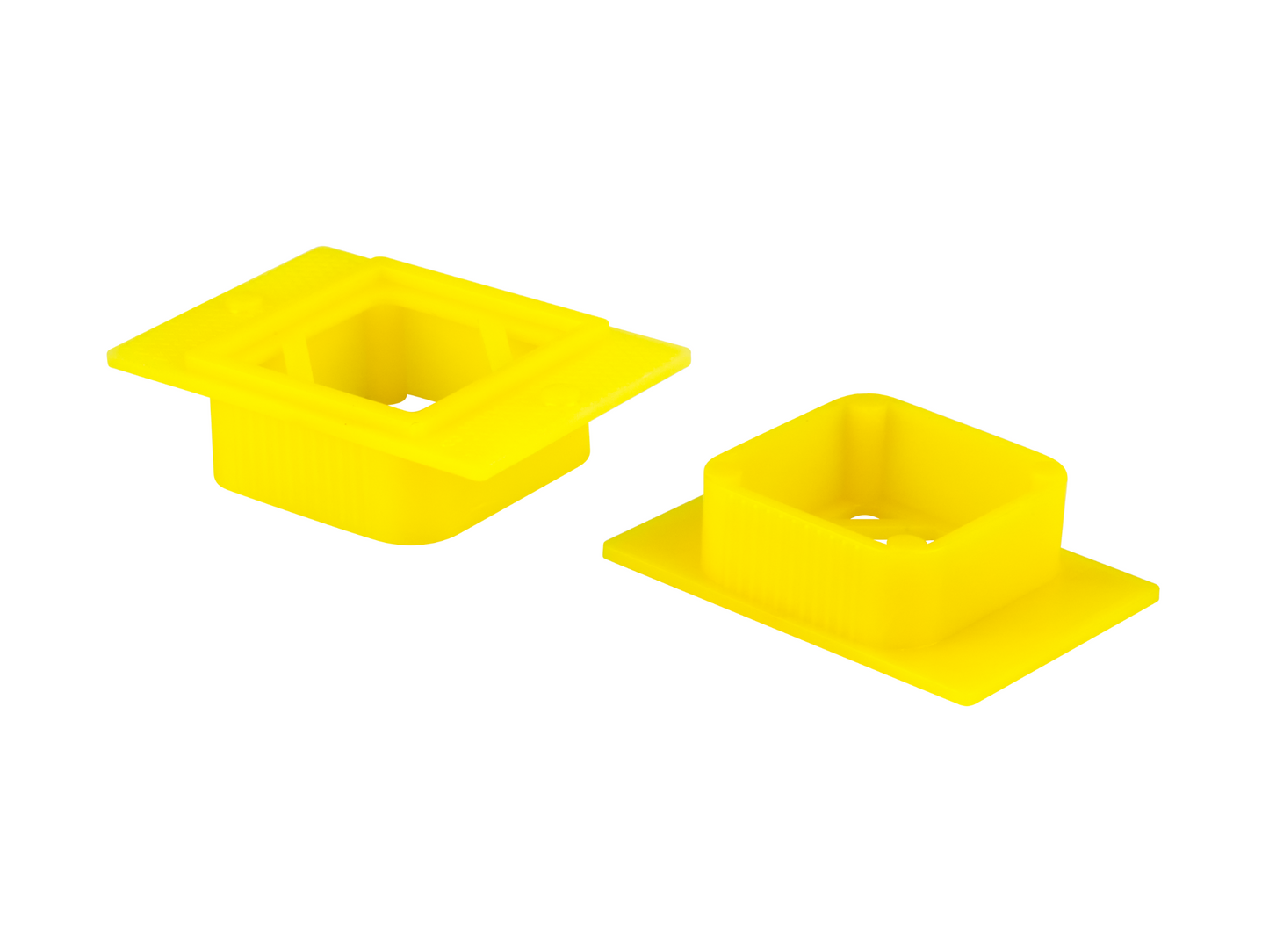

Tissue Embedding Rings — High Impact Polystyrene, Yellow, 500/Bag (258-4014-Y10)
These yellow High Impact Polystyrene (HIPS) tissue embedding rings hold the cassette base in precise orientation within the embedding mold during paraffin infiltration at standard histology embedding center temperatures of 56–65°C. Supplied non-sterile in bags of 500, part number 258-4014-Y10 is engineered for high-throughput surgical pathology cores where consistent tissue orientation and block-face geometry directly affect section quality, ribbon continuity, and the number of diagnostic-quality levels obtainable per block. The vivid yellow color provides high-visibility contrast under fluorescent and LED grossing bench lighting and is widely used for priority or STAT specimen designation in rapid-turnaround pathology workflows.
Technical Specifications
| Specification | Value |
|---|---|
| Part Number (MPN) | 258-4014-Y10 |
| Product Type | Tissue Embedding Ring |
| Material | High Impact Polystyrene (HIPS) |
| Color | Yellow |
| Paraffin Compatibility | Compatible at standard embedding temperatures (56–65°C) |
| Xylene / Xylene Substitute Compatibility | Compatible |
| Formalin Compatibility | Compatible (10% NBF) |
| Sterility | Non-Sterile |
| Pack Size | 500/Bag |
| BPA / Phthalates | BPA-free; no phthalate plasticizers |
| Country of Origin | USA |
Applications
- Surgical biopsy embedding — prostate needle core, cervical biopsy, skin punch biopsy — where consistent cassette-base positioning ensures repeatable block-face geometry
- Endoscopic biopsy specimens including GI mucosal, esophageal, and gastric biopsies requiring precise tissue orientation for thin-section diagnostics
- Color-coded specimen tracking: yellow rings serve as a high-visibility designation for priority or STAT specimens, reducing mis-identification at the grossing bench
- Multi-category color-scheme embedding programs — pairs with the full Caplugs® Evergreen ring color range (white, pink, blue, green) for standardized anatomic pathology workflows procured from a single vendor
- High-throughput histopathology labs processing hundreds of blocks per shift, where per-ring consumable economics matter at volume
Chemical Resistance
| Reagent / Condition | Compatibility |
|---|---|
| Paraffin wax (56–65°C) | Compatible |
| Xylene and xylene substitutes (HistoClear, Sub-X) | Compatible |
| Ethanol (all concentrations) / IPA | Compatible |
| 10% NBF formalin | Compatible |
| Acetone | Not recommended |
| Aromatic / chlorinated solvents (concentrated) | Not recommended |
Quality & Procurement
Made in USA, these Caplugs® Evergreen tissue embedding rings are manufactured from a rubber-toughened HIPS formulation that resists the thermal cycling, solvent exposure, and mechanical handling forces of histology processing without the brittleness that limits standard polystyrene at embedding temperatures. The yellow pigment is compounded directly into the HIPS matrix — not applied as a surface coating — ensuring permanent color retention through repeated solvent exposure. Each ring is BPA-free and contains no phthalate plasticizers. LabSupplies.com is an authorized Caplugs® Evergreen dealer and ships from USA inventory.
Frequently Asked Questions
What makes HIPS better than standard polystyrene for tissue embedding rings?
High Impact Polystyrene incorporates a rubber-toughened polymer matrix that resists cracking and brittleness during the thermal cycling and solvent exposure inherent in histology workflows. Standard polystyrene can become brittle at embedding temperatures or during xylene processing, whereas HIPS maintains structural integrity from the grossing bench through block trimming.
Will the yellow color fade after xylene or formalin exposure?
No — the yellow pigment is compounded into the HIPS matrix during manufacturing rather than applied as a surface coating, so it is permanently bound to the material and will not leach or fade with routine solvent or formalin contact.
Are these rings compatible with standard histology cassette bases?
Yes — these rings are designed to fit standard histology cassette bases, maintaining the cassette in correct orientation within the embedding mold during paraffin infiltration. If your lab uses a non-standard cassette format, verify dimensional fit before placing a high-volume order.
Can yellow rings be used as a color-coding convention for STAT or priority specimens?
Yes — yellow is commonly adopted in surgical pathology labs to flag priority or STAT specimens for rapid turnaround identification. Because the full Caplugs® Evergreen color range (white, pink, blue, green, and yellow) is available from a single vendor, labs can implement or expand a multi-category color-coding program without sourcing from multiple suppliers.