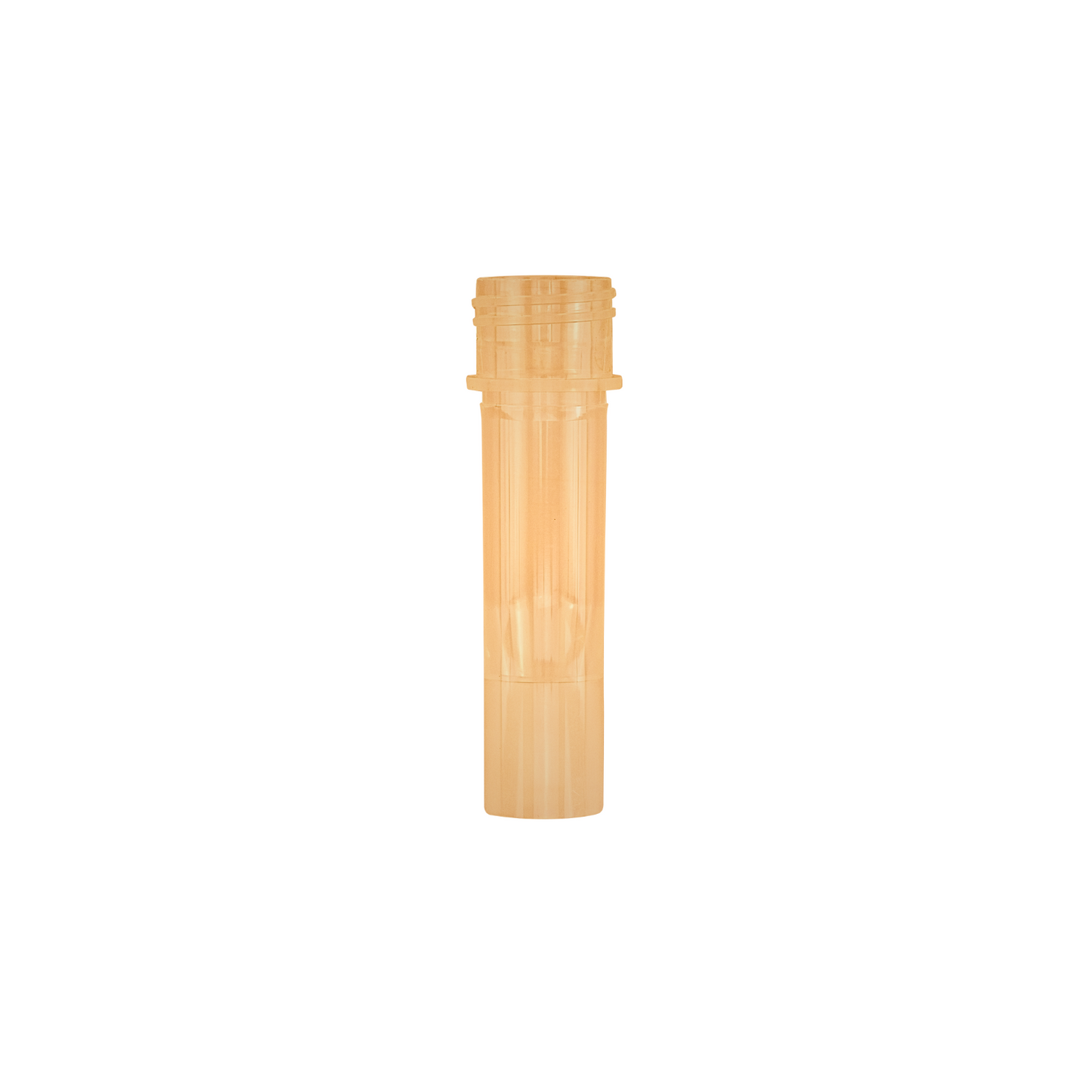

1.5 mL Freestanding Cryogenic Tubes, Amber PPC, Non-Sterile — MST™ Snap-Cap, 1000/Bag
These MST™ 1.5 mL freestanding flat-bottom cryogenic tubes are molded from amber polypropylene copolymer (PPC) and rated for the full cryogenic range — from −80 °C ultra-low temperature (ULT) freezers through liquid nitrogen (LN2) storage at −196 °C and vapor-phase nitrogen. Supplied non-sterile in sealed 1000/Bag packaging under part number 220-3949-N80, they combine crack-resistant cryogenic performance with light-blocking amber pigmentation to protect photosensitive specimens during long-term storage and retrieval.
Technical Specifications
| Specification | Value |
|---|---|
| Part Number (MPN) | 220-3949-N80 |
| Volume | 1.5 mL |
| Tube Type | MST™ Cryogenic Freestanding Tube |
| Bottom Style | Flat Bottom (Freestanding) |
| Cap Style | Snap Cap |
| Cryogenic Rating | LN2 (−196 °C) / Vapor-Phase N₂ / −80 °C ULT |
| Material | Polypropylene Copolymer (PPC) |
| Color | Amber |
| Graduations | None |
| Sterility | Non-Sterile |
| BPA / Phthalate Free | Yes |
| Pack Size | 1000/Bag |
| Country of Origin | USA |
Applications
- Biobanking and long-term cell line storage in LN2 or vapor-phase nitrogen dewars
- DNA and RNA cryopreservation in −80 °C ULT freezers
- Serum and plasma aliquot archiving for clinical biospecimen repositories
- Tissue sample and biopsy archiving at cryogenic temperatures
- Storage of fluorescent-labeled cells, bioluminescent samples, and photodegradable reagents requiring light protection
- Dry ice shipment of cryogenic samples between facilities
- High-throughput biobank sample retrieval workflows where amber color provides rapid visual differentiation from clear tubes
Chemical Resistance
| Reagent / Condition | Compatibility |
|---|---|
| Aqueous buffers / saline | Excellent |
| Dilute acids | Excellent |
| Dilute bases | Excellent |
| Methanol | Good |
| Isopropanol | Good |
| Acetonitrile | Good |
| Aromatic / chlorinated solvents | Limited — not recommended for prolonged contact |
Quality & Procurement
Made in USA at Caplugs® Evergreen ISO-certified manufacturing facilities, these MST™ cryogenic tubes are molded from virgin-grade, FDA-registered PPC resin and are free of BPA, phthalates, and latex. PPC copolymer retains flexibility and crack resistance at cryogenic temperatures where standard polypropylene homopolymer becomes brittle below −40 °C — a critical material advantage for LN2 and ULT applications. Sealed 1000/Bag packaging maintains product integrity from warehouse receipt through point-of-use. LabSupplies.com is an authorized Caplugs® Evergreen dealer shipping from USA inventory.
Frequently Asked Questions
Are these tubes rated for direct liquid nitrogen immersion?
Yes — the PPC copolymer construction maintains structural integrity at −196 °C, making these tubes suitable for both liquid-phase LN2 immersion and vapor-phase nitrogen storage.
Why choose amber tubes over standard clear cryogenic tubes?
The amber PPC pigmentation blocks visible and UV light, protecting photosensitive contents such as fluorescent-labeled cells, bioluminescent samples, and photodegradable reagents from light-induced degradation during storage and bench-top handling. The distinct amber color also speeds visual identification during high-throughput biobank retrieval workflows.
Do these tubes include a rack, or are they truly freestanding on the bench?
The flat-bottom design allows the tubes to stand upright on any flat surface without a rack, which is convenient for aliquoting and sample retrieval during cryogenic workflows. No separate rack is required, though standard 1.5 mL tube racks are fully compatible.
Are these tubes sterile, and can they be autoclaved?
These tubes are supplied non-sterile. PPC, like standard polypropylene, is generally autoclavable; however, Caplugs® Evergreen does not certify a sterility claim for this product as supplied, so laboratories requiring sterile cryogenic storage should consult their sterility validation protocols or seek a sterile-grade offering.