

HDPE Coated Wire Tube Rack for 13–16mm Tubes, 108-Well
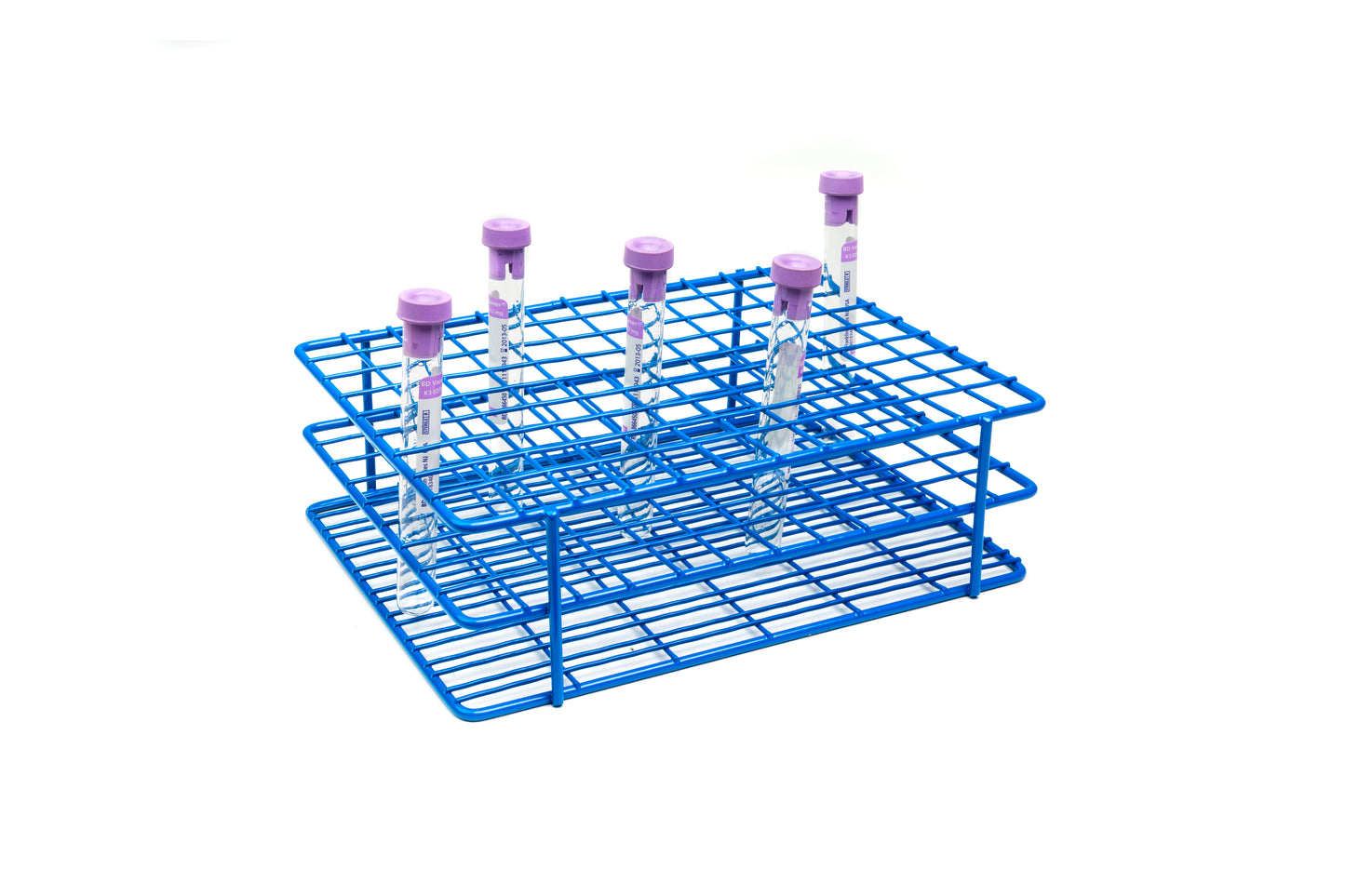
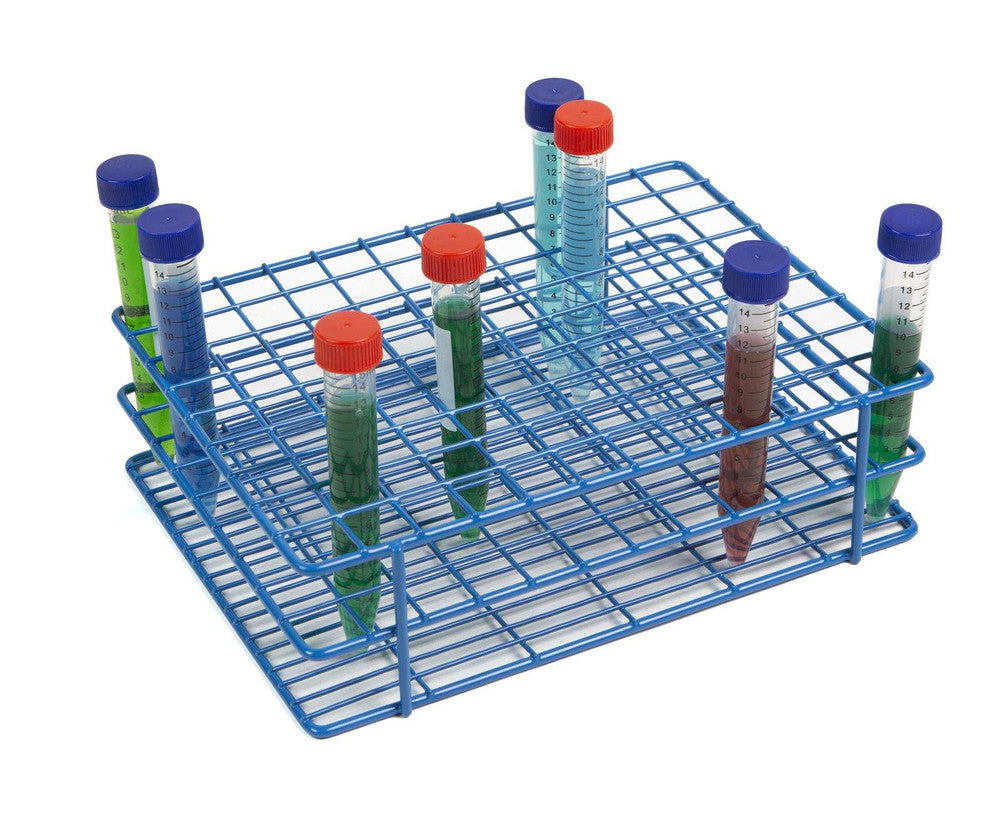
The Heathrow Scientific HDPE Coated Wire Tube Rack provides a proven alternative to solid molded racks for laboratories requiring maximum tube accessibility and cryogenic-rated performance in a single rack. Constructed from sturdy steel wire with a durable HDPE (high-density polyethylene) coating, this 108-well rack in a 9x12 array accommodates 13-16mm outer diameter tubes and is rated for continuous use down to -40°C — making it one of the few tube rack formats suitable for both active bench use and freezer storage. Available in Blue and Red.
Specifications
| Material | HDPE-coated steel wire |
| Autoclavable | Yes |
| Autoclave Temperature | 121°C (250°F) |
| Certifications | REACH, RoHS2 |
| Compatible Tube Diameter | 13–16mm outer diameter |
| Array | 9 x 12 |
| Well Count | 108 |
| Dimensions (L x W x H) | 9.3–9.5 x 5.0 x 2.6 in (23.7–24.1 x 12.7–18.8 x 6.5 cm) |
| Low Temperature Rating | -40°C |
| Colors Available | Blue, Red |
| Sold As | 1 Each |
| Brand | Heathrow Scientific |
Features & Benefits
- Three-deck wire structure: The wire rack features three horizontal levels — base, mid-deck, and top rim — that provide tube retention at multiple points along the tube body, preventing leaning and tipping that occurs in single-rim rack designs when tubes are near full capacity.
- HDPE chemical-resistant coating: The high-density polyethylene coating provides corrosion resistance and chemical durability while adding a smooth surface that won't scratch tube labels or damage tube exterior printing during insertion and removal.
- -40°C low temperature rating: Unlike polypropylene racks that can become brittle below -20°C, the coated wire construction maintains structural integrity and flexibility down to -40°C, making this rack suitable for -40°C freezer storage of tube collections between processing sessions.
- Autoclavable: The wire and HDPE coating assembly withstands standard autoclave sterilization cycles for complete rack decontamination.
- Slotted base: The wire base design has natural openings that allow drainage of condensate, spilled liquids, and cleaning water without removing tubes — a significant advantage over solid-base racks in wet chemistry environments.
- 108-well 9x12 array: The 9-row by 12-column format provides organized capacity for a standard batch, with the grid structure visible from above for easy tube counting and position tracking.
- Blue and Red color options: HDPE coating in two colors for visual project differentiation.
Applications
HDPE coated wire racks are particularly well-suited for environments where condensation, moisture, or liquid exposure is routine. In wet chemistry labs, the slotted wire base allows buffer, water, and spilled reagents to drain freely rather than pooling under tubes as occurs with solid-base racks. Cold storage laboratories that move tube collections between -40°C freezers and room-temperature workstations use coated wire racks because the -40°C rating means the rack does not need to be swapped when samples go into storage. Clinical hematology labs processing ESR (erythrocyte sedimentation rate) tubes require tubes to remain upright and undisturbed for precise timing — the three-deck wire structure provides the multi-point lateral support needed to hold ESR tubes perfectly vertical without any leaning. Environmental testing laboratories measuring turbidity and optical density of water samples in glass culture tubes use wire racks because the open wire structure allows spectrophotometric reading of tube contents from the side without removing tubes from the rack.
Part Numbers
| Option | Manufacturer Part No. | Pack |
|---|---|---|
| Blue | 120763 | 1 Each |
| Red | HS23108 | 1 Each |
Frequently Asked Questions
How does an HDPE coated wire rack compare to a polypropylene molded rack for the same tube diameter?
Wire racks offer greater tube accessibility (open structure allows removal from any angle), superior drainage, and — in the coated version — cryogenic-rated performance to -40°C. Polypropylene molded racks offer more total well positions per footprint, integrated alphanumeric coordinate labeling, and easier autoclaving without concerns about coating delamination from aggressive sterilization. Wire racks are the preferred choice where drainage, cryogenic storage, or open-structure viewing are priorities. Molded racks are preferred for high-throughput processing where well count and position tracking are primary requirements.
Is the HDPE coating affected by repeated autoclaving?
HDPE has an autoclave temperature ceiling lower than polypropylene — extended or repeated exposure to 121°C steam can gradually cause the HDPE coating to soften and potentially allow minor delamination from the wire substrate over many cycles. For occasional sterilization, coated wire racks perform reliably. For labs that autoclave racks after every use as a standard protocol, polypropylene molded racks are the more durable choice for long-term repeated sterilization. The manufacturer recommendation for cleaning coated wire racks is warm water with mild detergent, or surface wipe-down with 70% ethanol for routine decontamination.
Can this rack be used in a water bath or incubator?
The HDPE-coated wire rack can be used in water baths and incubators — the open wire structure allows complete water contact around tubes for even thermal equilibration, which is a distinct advantage over solid-base molded racks where the base acts as a thermal insulator between the tube bottom and the water bath. The -40°C rating covers the relevant cold incubation temperatures. For high-temperature incubation above 60°C, verify the HDPE coating specification before extended submerged use, as HDPE begins to soften above 80°C under continuous load.
Ordering
Authorized dealer, ships from USA inventory. Serving academic, government, and research laboratories nationwide.