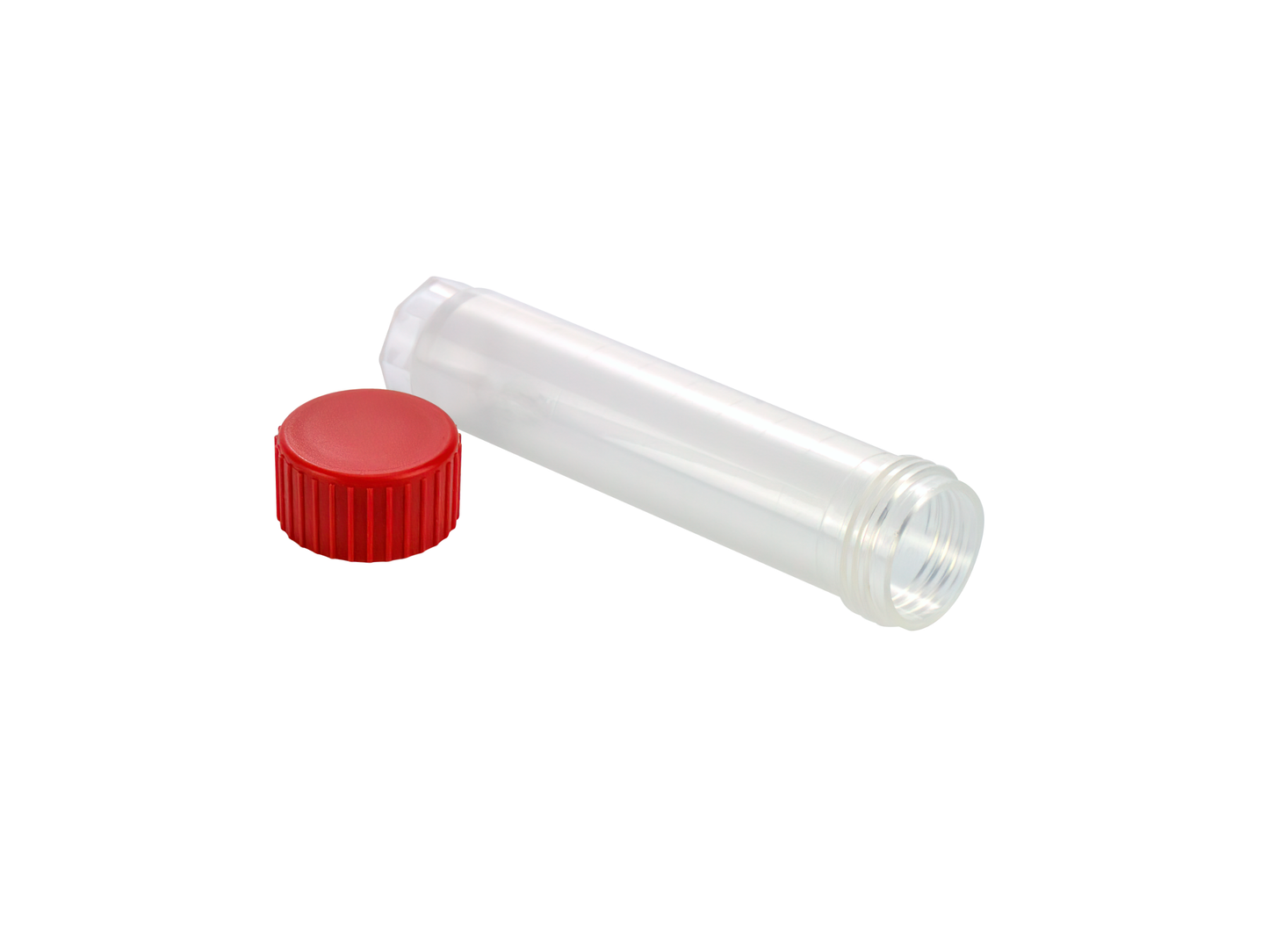

10 mL Polypropylene Transport Vials with Red Screw Caps — CLSI No-Additive Convention (240-3010-R60)
These 10 mL polypropylene transport vials are paired with red screw caps that follow the CLSI H3 color convention for no-additive / clot-activator specimens, making them the standard choice for serum-based clinical chemistry, serology, and serum banking workflows. Both the natural tube body and the red cap are molded from virgin polypropylene, delivering autoclave compatibility and frozen-storage stability in a single collection vessel. Supplied 1,000 vials and 1,000 caps unassembled per bag, part number 240-3010-R60 gives labs full flexibility to pre-label tubes before assembly at the point of use.
Technical Specifications
| Specification | Value |
|---|---|
| Part Number (MPN) | 240-3010-R60 |
| Volume | 10 mL |
| Tube Material | Polypropylene (PP) |
| Tube Color | Natural (clear) |
| Cap Material | Polypropylene (PP) |
| Cap Color | Red |
| Cap Convention (CLSI H3) | No additive / clot activator |
| Cap Type | Threaded Screw Cap |
| Assembly State | Unassembled — 1,000 vials + 1,000 caps per bag |
| Sterility | Non-Sterile |
| Pack Size | 1,000 / Bag |
| Autoclave Compatibility | 121 °C |
| Frozen Storage | −20 °C |
| BPA / Phthalates | BPA-free; no phthalate plasticizers |
| Country of Origin | USA (California) |
Applications
- Clinical chemistry outreach: The 10 mL volume accommodates volume-intensive serum panels — chemistry, serology, and endocrinology — with sufficient residual volume for reflex testing or archive retention in a single tube.
- Serum banking & biorepository aliquoting: Natural tube body allows direct visual assessment of sample quality; the precision screw thread maintains a positive seal during centrifugation for serum separation steps and throughout frozen storage at −20 °C.
- Blood bank / transfusion medicine: Suitable for EDTA whole blood, plasma, and serum aliquots routed within hospital transfusion services following CLSI H3 color conventions.
- Molecular diagnostics: Polypropylene is compatible with standard molecular preservatives, EDTA, citrate, ACD, and other common anticoagulants added at the point of collection.
- Toxicology & drug screening: Leak-resistant screw cap supports chain-of-custody transport of urine and serum specimens, including IATA P650-compliant secondary packaging.
- Microbiology & viral transport: Compatible with standard viral transport media for specimen shipping from outreach draw sites to reference laboratories.
Chemical Resistance
| Reagent / Condition | Compatibility |
|---|---|
| Aqueous buffers, saline, PBS | Excellent |
| EDTA, citrate, ACD, standard preservatives | Excellent |
| Dilute acids and bases | Excellent |
| Ethanol (<70%) | Good — short-term contact |
| Autoclave (121 °C steam) | Compatible |
| Frozen storage (−20 °C) | Compatible |
| Acetone / chloroform / aromatic solvents | Not recommended |
| Concentrated acids or strong oxidizers | Not recommended |
Quality & Procurement
Made in USA (California), these Caplugs® Evergreen transport vials are produced from virgin, FDA-compliant polypropylene resin that is BPA-free and free of phthalate plasticizers, under ISO 9001 quality management. Supplying tube and cap in a single bag line item simplifies procurement and reduces the number of vendor SKUs required for high-volume outreach and biorepository programs. LabSupplies.com is an authorized Caplugs® Evergreen dealer and ships from USA inventory.
Frequently Asked Questions
Are these vials sterile?
No — the 240-3010-R60 is supplied non-sterile. For most clinical chemistry, serology, serum banking, and molecular transport applications, non-sterile tubes are the accepted standard. If your protocol requires a sterile vessel, please contact us to discuss sterile options in the Caplugs® Evergreen line.
Why do the vials arrive unassembled?
Shipping tubes and caps separately in one bag allows labs to pre-label the vials before capping — a common workflow at outreach draw sites and biorepositories where specimen ID barcodes are applied before sample collection or aliquoting.
What does the red cap signify, and does it follow a published standard?
Red indicates no additive / clot activator per the CLSI H3 color-coding convention for blood collection tubes. Using a color-coded screw-cap vial that matches this convention allows the red cap to serve as a routing signal throughout the pre-analytical chain without requiring secondary labels for tube type.
Can these vials be autoclaved or frozen?
Yes on both counts. The polypropylene construction supports standard autoclave cycles at 121 °C and maintains integrity during frozen storage at −20 °C, making these vials suitable for biorepository workflows that require sterilization of empties or long-term frozen archiving of collected specimens.