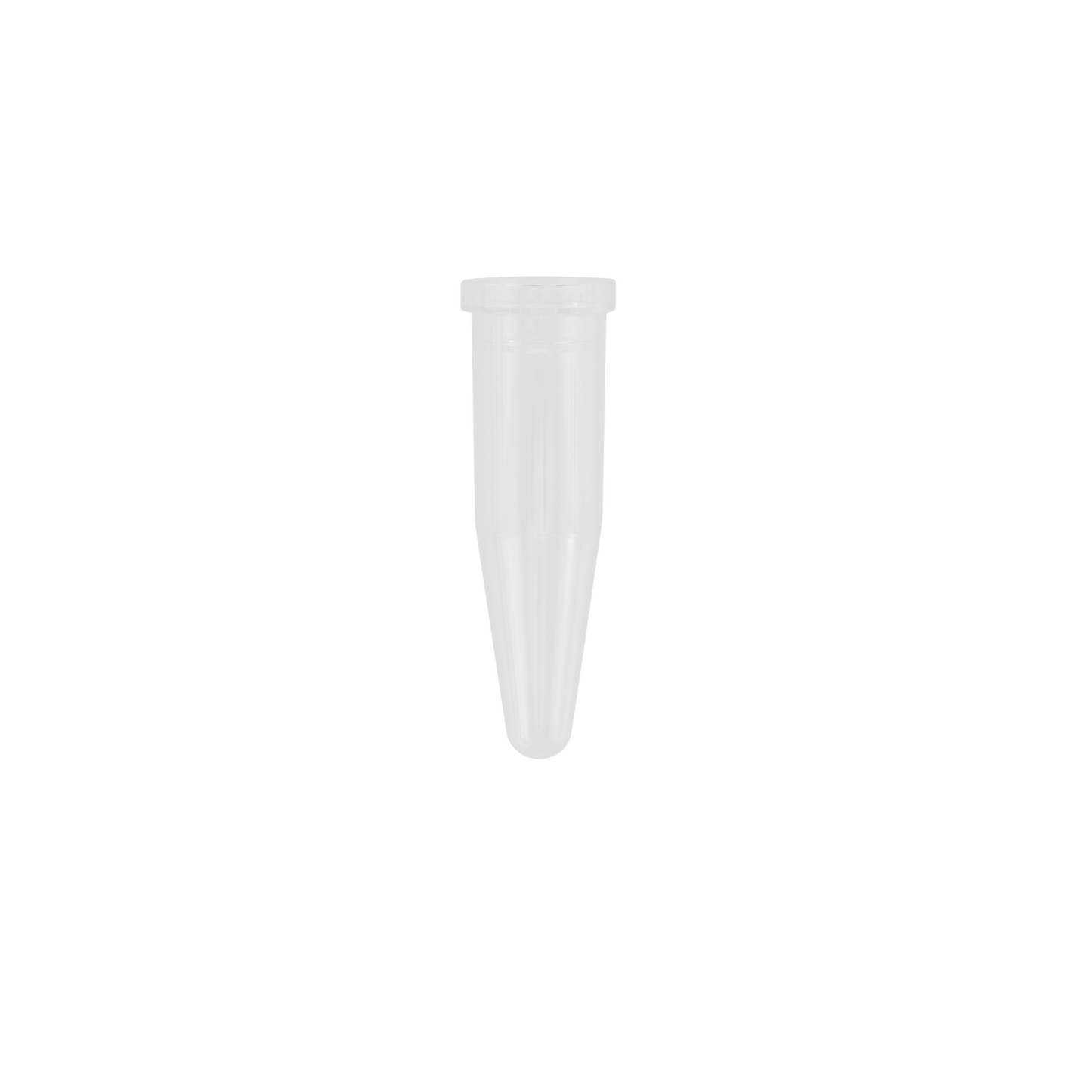

1.5 mL Conical-Bottom Microcentrifuge Tubes — HDPE, Natural, 1,000/Bag (214-3724-020)
These 1.5 mL conical-bottom microcentrifuge tubes are precision-molded from virgin High-Density Polyethylene (HDPE) to deliver consistent wall thickness, reliable cap-thread tolerance, and broad chemical resistance across clinical, research, and industrial laboratory workflows. The conical bottom geometry minimizes dead-volume loss and ensures complete pellet recovery — a decisive advantage in DNA/RNA isolation, protein precipitation, and cell harvest protocols where every microliter of sample matters. Supplied non-sterile in a sealed bulk bag of 1,000, the tubes arrive clean and ready for immediate use from stockroom to bench.
Technical Specifications
| Specification | Value |
|---|---|
| Part Number (MPN) | 214-3724-020 |
| Capacity | 1.5 mL |
| Bottom Geometry | Conical |
| Tube OD | 11 mm |
| Material | High-Density Polyethylene (HDPE) |
| Color | Natural (semi-opaque) |
| Sterility | Non-Sterile |
| Pack Size | 1,000/Bag |
| BPA / Phthalates | BPA-free; no phthalate plasticizers |
| Country of Origin | USA (California) |
Applications
- DNA and RNA isolation: conical bottom enables complete pellet recovery after precipitation or spin-column extraction
- Protein precipitation and enzyme assay preparation requiring minimal dead-volume loss
- Cell harvest and culture supernatant collection via standard microcentrifuge protocols
- PCR and qPCR sample preparation — reagent aliquoting and template dilution series
- Short- and long-term sample storage of buffers, serum, plasma, and biological specimens
- High-throughput clinical and genomics workflows where bulk, cost-effective consumables reduce per-sample costs
Compatibility
With a standard 11 mm OD, these tubes fit the 1.5/1.8/2.0 mL rotor positions found on the most widely deployed benchtop microcentrifuges. Confirmed compatible platforms include Eppendorf® Centrifuge 5415D, 5415R, 5424, 5424R, and MiniSpin®; Thermo Fisher Sorvall™ Legend Micro 17/21 and Heraeus® Pico 17/21; VWR®/Avantor Galaxy 16DH and Galaxy 16 standard 24-position fixed-angle rotors; Labnet® Prism™ R Refrigerated Microcentrifuge (C2500-R) in all rotor configurations accepting the 1.5/2.0 mL format; and Sigma/Sartorius 1-15K, 1-16K, and 3-18KS microcentrifuges in both swing-bucket and fixed-angle configurations. Always verify your specific rotor's tube-position OD specification before substituting any consumable.
Chemical Resistance
| Reagent / Condition | Compatibility |
|---|---|
| Aqueous buffers and saline | Excellent |
| Dilute acids and bases | Excellent |
| Short-chain alcohols (ethanol, isopropanol) | Good — suitable for standard precipitation workflows |
| Many organic solvents (hexane, DMSO at low concentrations) | Good — verify contact time for extended exposures |
| Chlorinated solvents (chloroform, methylene chloride) | Not recommended — use PP or glass alternatives |
| Strong oxidizing acids (concentrated H₂SO₄, HNO₃) | Not recommended |
Quality & Procurement
Made in USA at a California manufacturing facility, Caplugs® Evergreen microcentrifuge tubes are molded from virgin HDPE resin — no regrind, no leachable surface coatings — and are free of BPA and phthalate plasticizers. The semi-opaque natural finish allows visual sample monitoring without the extractable concerns associated with colored pigment systems. LabSupplies.com is an authorized dealer of Caplugs® Evergreen consumables and ships from USA inventory. The sealed bulk-bag format of 1,000 tubes maintains cleanliness through storage and eliminates secondary packaging waste at point of use.
Frequently Asked Questions
Are these microcentrifuge tubes sterile?
No — part number 214-3724-020 is supplied non-sterile. For applications requiring sterility assurance, additional decontamination steps should be incorporated into your sample preparation SOP.
Can HDPE microcentrifuge tubes be autoclaved?
HDPE is generally not recommended for autoclave sterilization. The high heat and steam pressure of standard autoclave cycles can distort the tube geometry and compromise cap-thread integrity. If autoclavable tubes are required, polypropylene (PP) alternatives are the appropriate material choice.
Will these tubes fit my Eppendorf centrifuge rotor?
Yes — the standard 11 mm OD is compatible with Eppendorf 5415D, 5415R, 5424, 5424R, and MiniSpin rotor positions designed for the 1.5/1.8/2.0 mL tube format. Always confirm your specific rotor's dimensional specifications if you are switching from OEM or previously qualified consumables.
What is the difference between these HDPE tubes and polypropylene microcentrifuge tubes?
HDPE offers excellent rigidity and broad chemical resistance to aqueous buffers and many organics, making it well suited for storage and general centrifugation. Polypropylene is the preferred choice when autoclave sterilization or higher-temperature centrifugation is required. Both materials are BPA-free and phthalate-free in the Caplugs® Evergreen portfolio.