

Sharps Disposal Best Practices: OSHA Compliance for Labs and Clinics
Sharps disposal compliance is one of the most frequently cited OSHA violations in laboratory and clinical settings — and one of the most preventable. In our experience working with labs across clinical, research, and academic settings, the violations almost always come from the same three sources: staff who don't know what legally counts as a sharp, containers that are overfilled because nobody set a replacement schedule, and documentation gaps that become visible only during an inspection.
This guide gives you the plain-English version of OSHA 29 CFR 1910.1030 — the Bloodborne Pathogens Standard — as it applies to sharps disposal. Regulation numbers, exact container requirements, fill-line rules, the one-hand technique, and the documentation your Exposure Control Plan needs. Print this page and put it where your staff will see it.
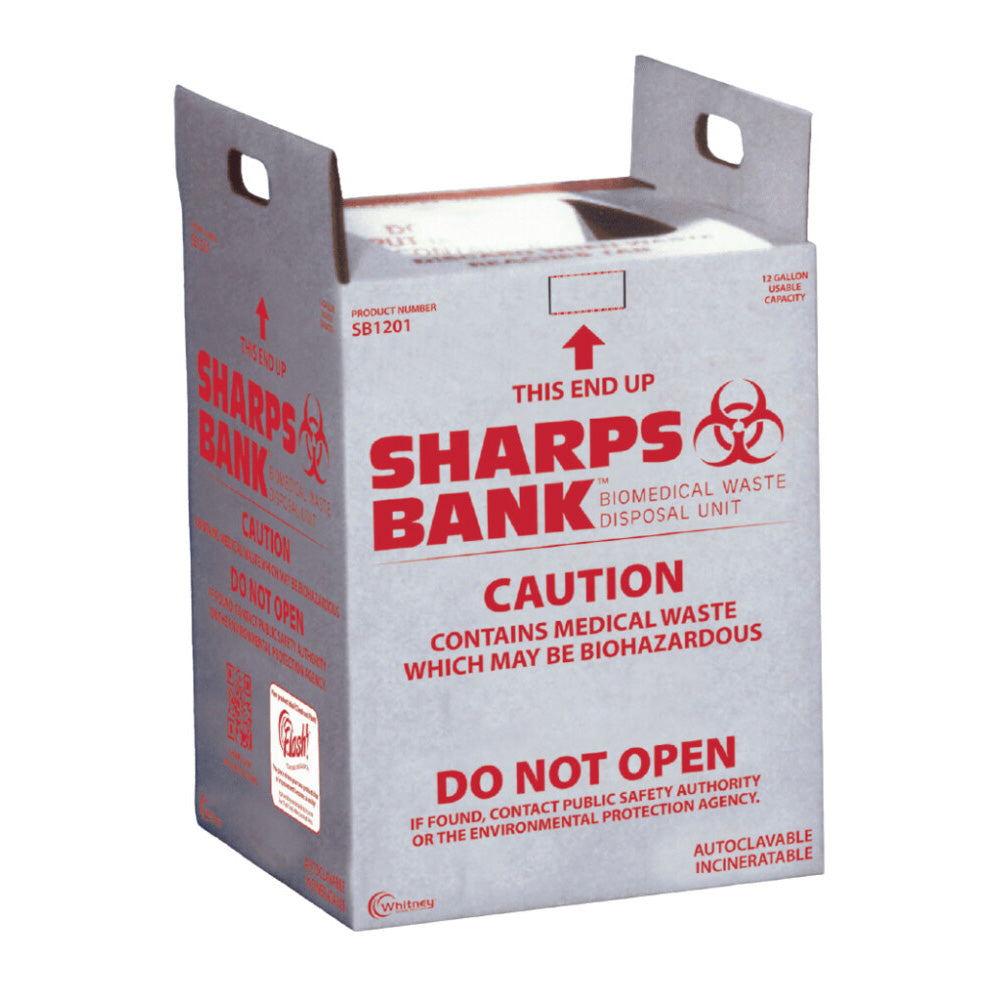
OSHA-compliant sharps containers must be closable, puncture-resistant, leak-proof, labeled with the biohazard symbol, and color-coded red
What Legally Counts as a "Sharp"? (It's More Than Needles)
The most common compliance gap we see: labs that manage needle disposal correctly but treat everything else as regular trash. Under OSHA 29 CFR 1910.1030, a contaminated sharp is any object that can penetrate the skin and has contacted blood or other potentially infectious materials (OPIM). The full list is longer than most people expect.
| Item | Counts as a Regulated Sharp? | Notes |
|---|---|---|
| Hypodermic needles | ✅ Yes | With or without attached syringe |
| Syringes with attached needles | ✅ Yes | Entire assembly goes in sharps container |
| Scalpel blades | ✅ Yes | Including disposable scalpels with integrated blade |
| Lancets and finger-stick devices | ✅ Yes | Used or potentially contaminated |
| Broken glass contacting blood/OPIM | ✅ Yes | Goes in sharps container, not broken glass box |
| Contaminated broken capillary tubes | ✅ Yes | Glass capillaries used for blood collection |
| Contaminated glass Pasteur pipettes | ✅ Yes | If contacted blood or OPIM — sharps container, not trash |
| Exposed dental wires | ✅ Yes | Relevant for dental lab and clinic settings |
| Razor blades used for tissue sectioning | ✅ Yes | Histology and pathology labs |
| Uncontaminated needles (unopened) | ❌ No | Not regulated until use — but best practice is disposal in sharps container anyway |
| Plastic pipette tips | ❌ No | Not a regulated sharp unless they can penetrate skin and have contacted OPIM |
The glass Pasteur pipette point catches labs off guard every time. A glass Pasteur pipette used to aspirate a blood sample is a regulated sharp. It has a tip that can puncture skin, and it contacted blood. It belongs in the sharps container — not the broken glass disposal box and not the biohazard bag.
OSHA's 5 Container Requirements
Per 29 CFR 1910.1030(d)(4)(iii)(A), every sharps container must meet all five of these criteria. A container that fails even one is non-compliant.
| # | Requirement | What This Means in Practice |
|---|---|---|
| 1 | Closable | Must have a lid that can be secured before transport or disposal. A container with no lid — or a lid left open — is non-compliant. |
| 2 | Puncture-resistant | The container walls and lid must resist penetration by the sharps it holds. Cardboard boxes, plastic bags, and most non-purpose-built containers don't qualify. |
| 3 | Leak-proof on sides and bottom | Must contain liquid if a tube inside breaks or blood drips from a needle. This requirement is why standard waste bins never qualify. |
| 4 | Labeled with biohazard symbol | The biohazard legend and symbol must be present on the container. Unlabeled containers — even red ones — are technically non-compliant. |
| 5 | Red or fluorescent orange-red color-coded | The specific color requirement allows anyone in the facility to identify regulated sharps waste at a glance. |
Browse our biohazard & waste management collection — sharps containers, biohazard bags, and disposal supplies that meet OSHA requirements, shipping from the USA.
The Fill-Line Rule: The #1 Cause of Needlestick Injuries During Disposal
OSHA requires sharps containers to be closed and replaced when they reach the fill line — typically marked at the ¾ full point. This rule exists because the primary mechanism of needlestick injury during disposal is reaching into or pressing down on an overfilled container to fit one more item.
At ¾ capacity, most sharps in the container are below the opening. At full capacity, needles and blade tips are within reach of fingers that are closing the lid or carrying the container. The math is simple: every needlestick injury from an overfilled sharps container was preventable by following the fill-line rule.
Setting a Replacement Schedule
Don't rely on staff to notice when containers approach the fill line. Build a system:
- Date-label every new container when it goes into service. Write the date opened on the outside with a permanent marker.
- Set a maximum service period — even if a container hasn't reached the fill line, replace it on a schedule (typically 30–90 days depending on use frequency). Stagnant containers grow mold and develop odors that create additional biohazard concerns.
- Standing reorder: Keep a minimum of 2 replacement containers on hand at all times. Running out of sharps containers is not an acceptable reason to use an improvised substitute.
- Never reach into a sharps container for any reason. If a container is overfilled, close it as-is and replace it. Do not attempt to compress the contents.
The One-Hand Rule and Engineering Controls
OSHA 29 CFR 1910.1030(d)(2)(vii)(A) prohibits two-hand recapping of needles. The two-hand technique — holding the cap in one hand and guiding the needle into it with the other — is the leading cause of healthcare worker needlestick injuries. One slip and the needle goes through the cap into the hand holding it.
Acceptable Alternatives to Two-Hand Recapping
| Method | How It Works | OSHA Status |
|---|---|---|
| One-hand scoop technique | Place cap on flat surface, scoop it onto needle using one hand only, press cap against surface to secure | ✅ Compliant |
| Self-sheathing safety needles | Sheath activates automatically after withdrawal or with one-handed activation | ✅ Preferred — engineering control |
| Needle removal devices | Mechanical device removes needle from syringe without hand contact | ✅ Compliant |
| Needleless systems | IV connectors, blunt-tip cannulas, luer-lock systems that eliminate needles entirely | ✅ Best practice where feasible |
| Two-hand recapping | Holding cap in one hand, guiding needle with other | ❌ Prohibited by OSHA |
OSHA's hierarchy for needlestick prevention places engineering controls (safety needles, needleless systems) above work practice controls (one-hand technique). If safety-engineered needles are available for your application, you are required to evaluate and implement them. "We've always done it this way" is not a compliant defense during an inspection.
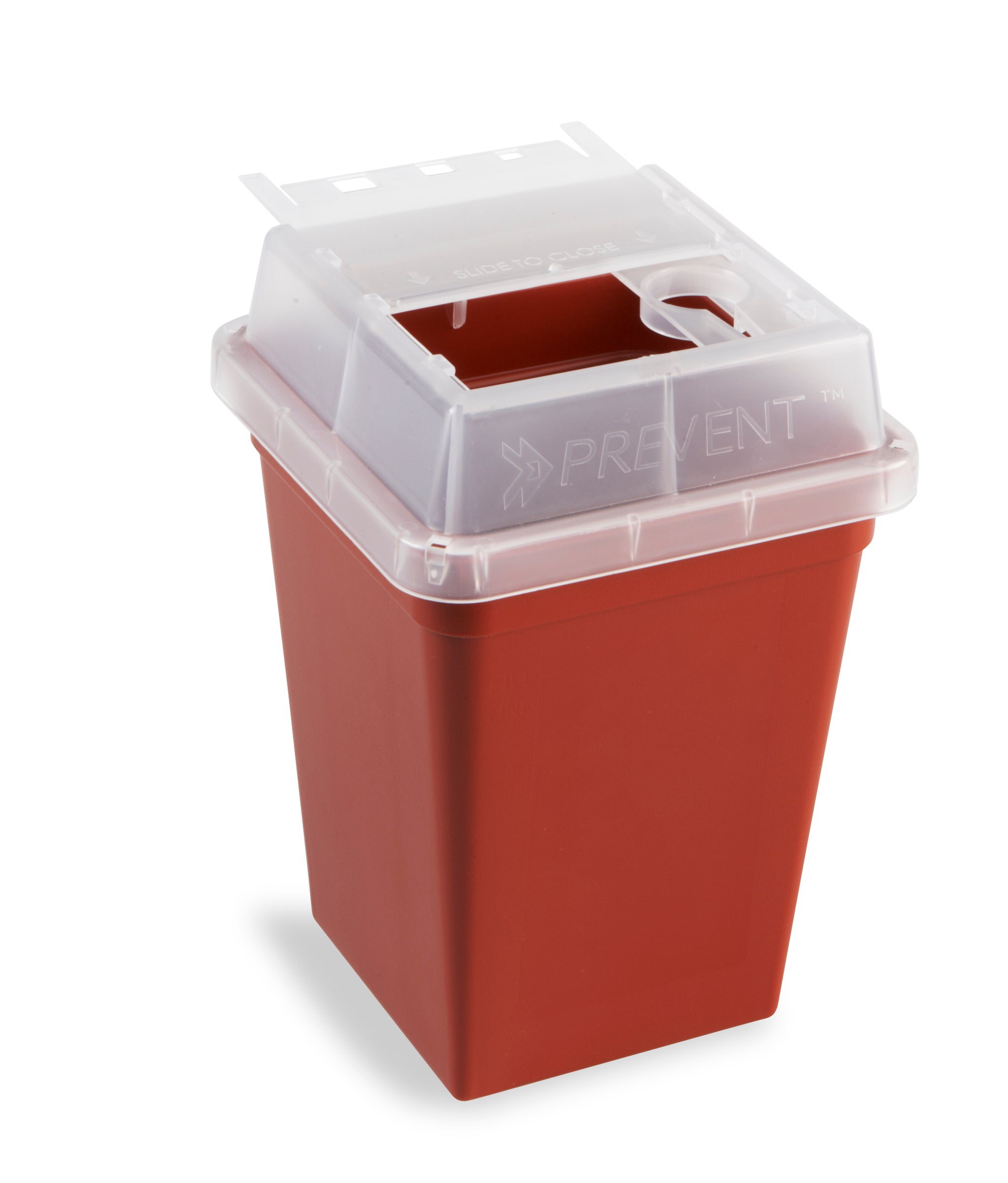
Complete sharps and biohazard waste management — proper containers, bags, and disposal supplies keep your lab inspection-ready
Placement Requirements: Where Containers Must Be Located
OSHA requires sharps containers to be "easily accessible to personnel and located as close as is feasible to the immediate area where sharps are used." This is more specific than most labs realize.
- "As close as feasible" means within arm's reach of the point of use — not across the room, not in the hallway, not in a cabinet. If a phlebotomist draws blood at a chair, the sharps container should be within reach of that chair without the phlebotomist taking a step.
- Height requirements: Containers must be mounted or placed so the opening is not above shoulder height. This prevents workers from looking up into the opening while dropping sharps — a scenario that could result in a needle falling out toward their face.
- Stability: Containers must be upright and stable. Wall-mounted brackets are strongly recommended — a container that tips over creates an immediate hazard and a documented violation.
- Restricted access areas: In areas where patients or unauthorized personnel are present, sharps containers should be secured or positioned to prevent access by non-staff.
Documentation Requirements: What OSHA Will Ask For
When an OSHA inspector arrives, these are the documents they request. Not having them ready is itself a citation.
Exposure Control Plan
Every employer with occupational exposure to bloodborne pathogens must have a written Exposure Control Plan (ECP) per 29 CFR 1910.1030(c). The ECP must be updated at least annually and whenever tasks or procedures change. It must include:
- Identification of job classifications with occupational exposure
- Implementation schedule for engineering and work practice controls
- Hepatitis B vaccination policy
- Post-exposure evaluation and follow-up procedure
- Communication of hazards to employees (training, labeling)
- Recordkeeping procedures
Sharps Injury Log
Employers with 10 or more employees who are covered by OSHA's recordkeeping rule must maintain a Sharps Injury Log (separate from the OSHA 300 Log). The Sharps Injury Log records every percutaneous injury from a contaminated sharp and must include the type and brand of device, the department where the incident occurred, and an explanation of how the injury happened. Keep these records for 5 years.
Employee Training Records
All employees with occupational exposure must receive bloodborne pathogens training at initial employment and annually thereafter. Training records must include the dates of training sessions, the contents of the training, the names and qualifications of trainers, and the names and job titles of employees who attended. Retain these records for 3 years.
Hepatitis B Vaccination Records
Hepatitis B vaccination must be offered at no cost to all employees with occupational exposure within 10 working days of initial assignment. Document offers, acceptances, and declinations (using the OSHA declination statement). Vaccination records must be retained for the duration of employment plus 30 years.
Container Sizing and Placement Guide
Match your container size to your usage volume. An oversized container left at ¾ capacity for months creates a different problem than an undersized container replaced daily.
| Setting | Recommended Container Size | Typical Replacement Frequency | Placement |
|---|---|---|---|
| Single phlebotomy chair / draw station | 1 quart (0.95L) | Weekly to monthly depending on volume | Wall-mounted within arm's reach of draw chair |
| Busy clinical lab (multiple workstations) | 1 gallon (3.8L) | Weekly | One per workstation or shared central container if draw points are clustered |
| Research lab (occasional sharps use) | 1 quart (0.95L) | Monthly to quarterly | One per bench area where needles or glass capillaries are used |
| Operating room / procedure room | 2 gallon (7.6L) | Per procedure or daily | Mobile bracket on instrument table within surgical field |
| Patient room (bedside) | 1 quart (0.95L) | Per discharge or when ¾ full | Wall-mounted bracket at appropriate height |
Frequently Asked Questions
Can I use a regular trash can or coffee can for sharps disposal?
No. Improvised containers — tin cans, thick plastic bottles, cardboard boxes — do not meet OSHA's requirements for puncture resistance, leak-proofness, labeling, and color coding. OSHA has no exemption for "close enough." Using a non-compliant container is a citable violation regardless of whether an injury occurs.
How full should a sharps container be before I replace it?
Replace at the ¾ fill line — never wait until the container is completely full. The ¾ line is marked on OSHA-compliant containers for exactly this reason. Overfilled containers are the primary cause of needlestick injuries during disposal. When in doubt, replace it. A few unused inches of container capacity is worth more than the cost of the container itself.
Do I need a sharps container if my lab only uses glass Pasteur pipettes?
Yes — if those glass Pasteur pipettes contact blood or OPIM. Contaminated glass Pasteur pipettes are regulated sharps under 29 CFR 1910.1030. They must be disposed of in a labeled, puncture-resistant, leak-proof sharps container. An uncontaminated glass pipette that breaks during washing is not a regulated sharp, but broken glass should still be handled with mechanical means (forceps, brush and dustpan) — never bare hands.
What happens during an OSHA bloodborne pathogens inspection?
The inspector will review your written Exposure Control Plan, training records, Sharps Injury Log, and hepatitis B vaccination documentation. They will walk your facility and check container placement, fill levels, labeling, and whether safety-engineered sharps are in use. They may interview staff about training and procedures. Fines for willful violations of the Bloodborne Pathogens Standard can reach $15,625 per violation.
Can employees decline the hepatitis B vaccination?
Yes, but it must be documented. OSHA requires a specific signed declination statement (the language is specified in Appendix A of 29 CFR 1910.1030). If an employee who declined later requests the vaccination, the employer must provide it at no cost. Keep declination records with other exposure-related medical records for the duration of employment plus 30 years.
Run a Compliant Lab — Every Day
Sharps compliance isn't a one-time setup. It's a daily practice: containers in the right place, fill lines respected, staff trained, documentation current. The labs that pass inspections without citations are the ones that built compliance into routine workflows — not the ones scrambling to update binders the week before an audit.
As an authorized dealer for Globe Scientific and Heathrow Scientific, we carry the biohazard and waste management supplies that keep your lab compliant and your staff protected. Reach out at support@labsupplies.com if you need help building a complete sharps disposal program for your facility.
For a broader overview of lab safety and storage compliance, see our Lab Storage & Safety Guide — the pillar page covering chemical storage, PPE requirements, biohazard waste, and labeling.
Ready to get compliant? Shop our biohazard & waste management collection — sharps containers, biohazard bags, and disposal supplies that meet OSHA 29 CFR 1910.1030 requirements. All ship from the USA.
— By the LabSupplies.com Technical Team