

Lab PPE Requirements: What Every Lab Worker Needs
Lab PPE requirements start with five basics every lab worker needs: ANSI Z87.1 safety glasses, a lab coat, chemical-appropriate gloves, closed-toe shoes, and long pants. Everything beyond that — goggles, face shields, respirators, cryogenic gear — is added based on the specific hazards of the work. In our experience outfitting labs from single benches to multi-room facilities, the most common compliance gap isn't missing gear; it's gear that doesn't match the actual hazard, like latex gloves against a solvent they don't resist.
This guide covers what OSHA requires, how to match lab PPE to your hazards, and which equipment is worth standardizing on. Let's start with the non-negotiables.
The Minimum PPE Every Lab Worker Needs
Before any hazard-specific gear, most labs enforce a baseline anyone entering a lab space must wear. University and federal lab policies converge on the same short list:
- Safety glasses with side protection, meeting ANSI/ISEA Z87.1
- A lab coat or long-sleeved garment covering the arms and torso
- Gloves appropriate to the materials handled
- Closed-toe shoes that fully cover the foot — no sandals or mesh uppers
- Long pants or equivalent leg coverage
That baseline is the floor, not the ceiling. The work you actually do dictates what gets added on top, and OSHA requires you to figure that out through a formal process before you buy anything.
PPE Starts With a Hazard Assessment, Not a Shopping List
OSHA's general PPE standard, 29 CFR 1910.132, requires the employer to assess the workplace for hazards, select PPE that protects against them, ensure it fits each worker, and train people on its use and limits. PPE is explicitly the last line of defense — engineering controls like fume hoods and administrative controls come first, and PPE protects against what those can't fully eliminate.
Two points labs miss: the employer generally must provide and pay for required PPE under 29 CFR 1910.132(h), with narrow exceptions, and the hazard assessment must be certified in writing. If you run a lab using hazardous chemicals, this ties into the broader Laboratory Standard (29 CFR 1910.1450), which requires a written Chemical Hygiene Plan naming a Chemical Hygiene Officer and reviewed at least annually.
The practical takeaway: identify your chemical, biological, radiological, and physical hazards first, then spec PPE against each. The sections below map the common hazards to the right gear.
Eye and Face Protection
Eye protection is the most universally required lab PPE, governed by 29 CFR 1910.133, and the gear must meet ANSI/ISEA Z87.1. The category splits three ways, and they're not interchangeable.
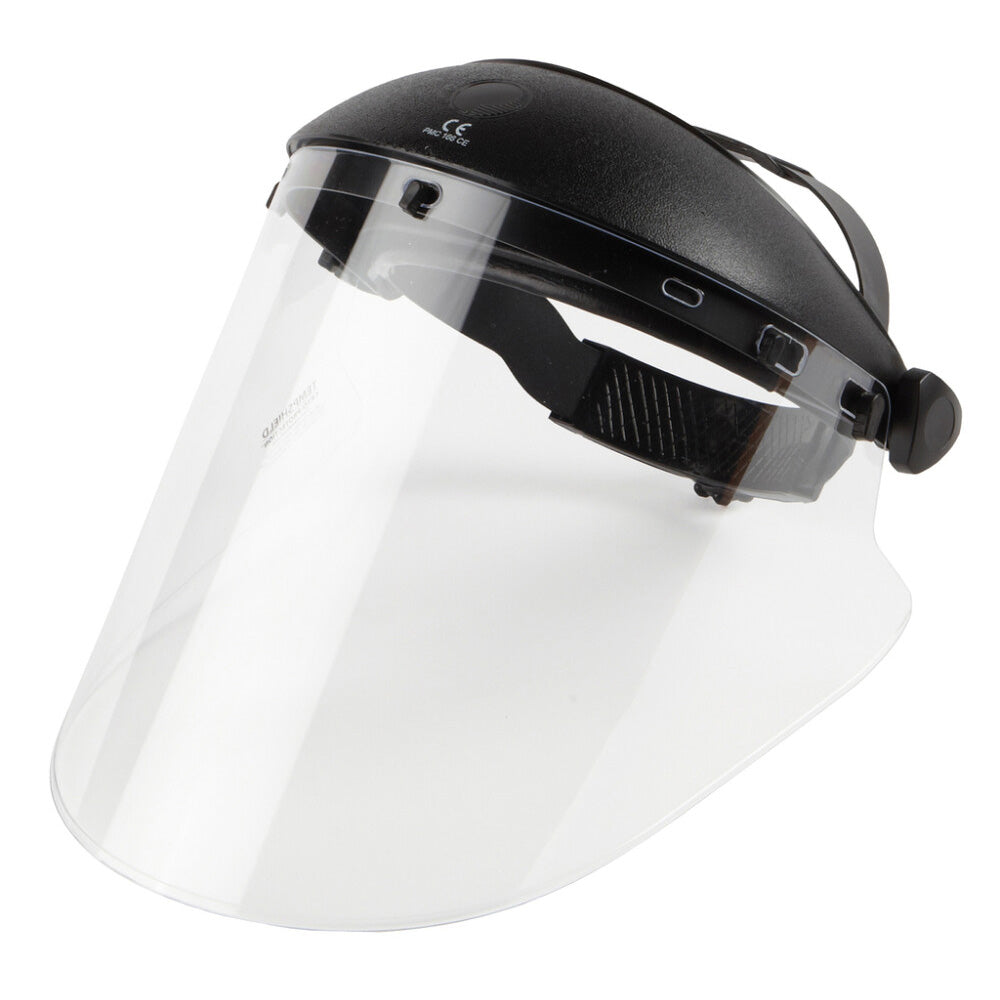
Safety glasses with side shields are the everyday baseline — they stop flying particles and minor debris. Splash goggles form a sealed barrier and are required when liquid chemicals can splash, since glasses leave gaps. Face shields protect the full face but count as secondary protection: you wear them over goggles, not instead of them, for high-splash or cryogenic work.
For splash and cryogenic exposure, a rated full-face shield is the right call. Our TempShield CRYO-PROTECTION face shield meets ANSI Z87.1 and CE Cat. II and is built for the splash and cold-burn risks that standard shields aren't rated for.
Hand Protection: Gloves and the Compatibility Trap
Glove selection causes more PPE failures than any other category, because the right glove depends entirely on the chemical. 29 CFR 1910.138 requires hand protection matched to the hazard, and the only reliable way to match is the manufacturer's permeation and compatibility chart — not a guess.
Nitrile is the lab default: good general chemical resistance, no latex allergy risk, and fine for most aqueous and many organic tasks. Latex offers dexterity but carries allergy concerns and weaker chemical resistance. Neoprene, butyl, and Viton handle specific aggressive chemistries that nitrile can't. The rule: never assume a glove resists a chemical — check the chart, and for prolonged contact, double-glove or use a thicker gauge.
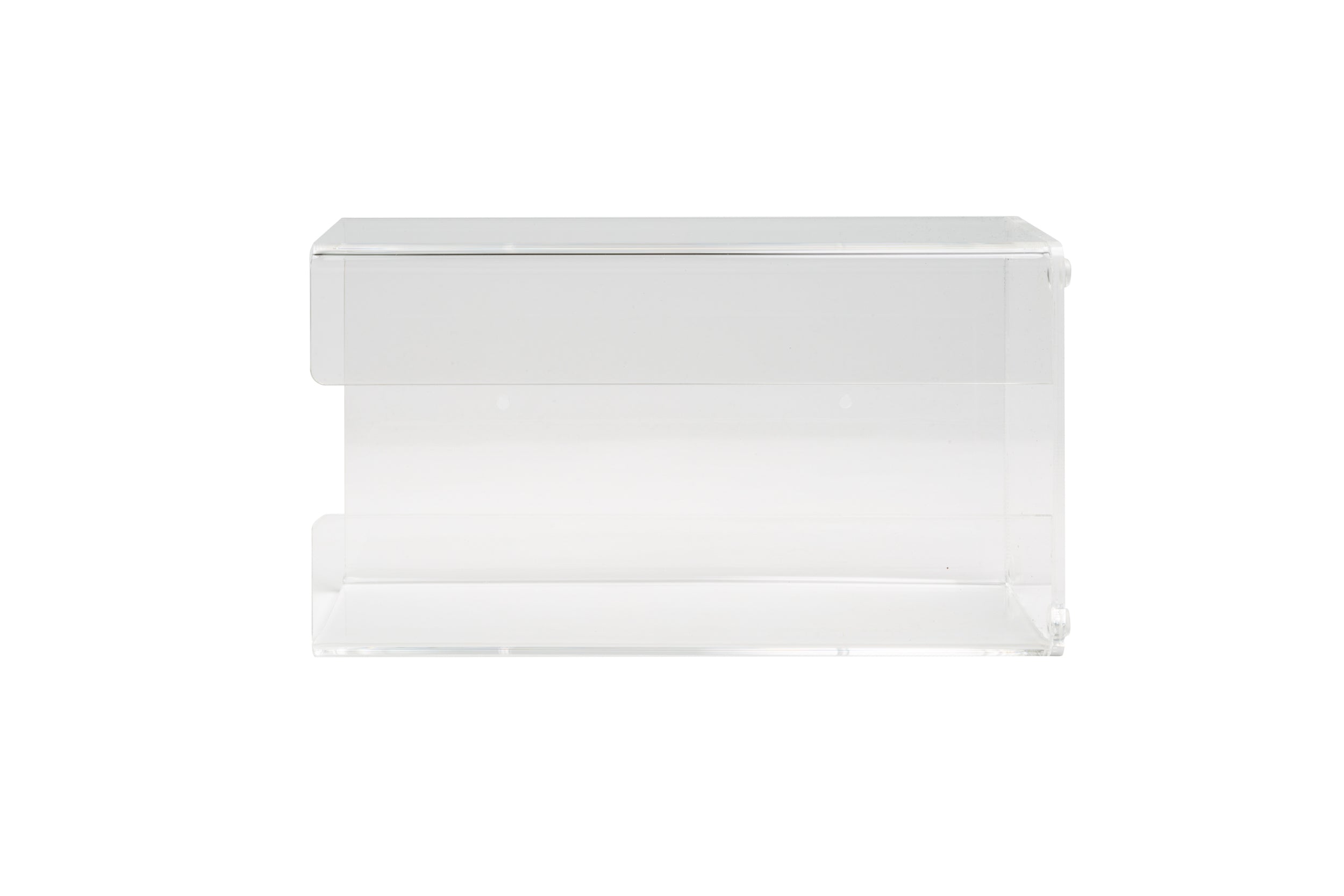
Keeping gloves stocked at the point of use also keeps people compliant. Wall-mounted dispensers like our Heathrow Scientific glove box holders keep boxes visible and within reach, which sounds minor until you watch someone skip gloves because the box was across the room.
Browse our Safety & PPE collection to see in-stock dispensers, face protection, and cryogenic gear → labsupplies.com/collections/safety-ppe
Lab Coats, Aprons, and Body Protection
A lab coat is PPE — it's a removable barrier that keeps spills and splashes off skin and street clothes, and it comes off fast if contaminated. Standard cotton or poly-cotton coats cover routine work. For pyrophoric or flammable chemistry, flame-resistant (FR) coats are the correct choice, and for biosafety work at BSL-2 and above, a solid-front gown with knit cuffs is standard so gloves can seal over the sleeve.
Aprons add a chemical- or cryogen-resistant layer over the coat for pouring, dispensing, and cleaning tasks where splash volume is higher. The principle is layering: the coat is the baseline barrier, the apron is the task-specific upgrade.
Respiratory and Hearing Protection
Respiratory protection under 29 CFR 1910.134 is not a grab-a-mask decision. Required respirator use triggers a medical evaluation, fit testing, and a written program — you cannot simply hand someone an N95 for solvent vapors and call it compliant. Where airborne hazards exist, engineering controls (a fume hood) almost always come first; respirators cover the gap when controls aren't sufficient.
Hearing protection enters the picture when noise reaches or exceeds an 8-hour time-weighted average of 85 dBA, which triggers a hearing conservation program under OSHA's noise standard. Sonicators, certain pumps, and cage-wash areas can cross that line, so it's worth measuring rather than assuming.
Specialized PPE: Cryogenic and Biosafety Work
Some hazards need purpose-built gear that general PPE can't cover. Cryogenic work is the clearest example.
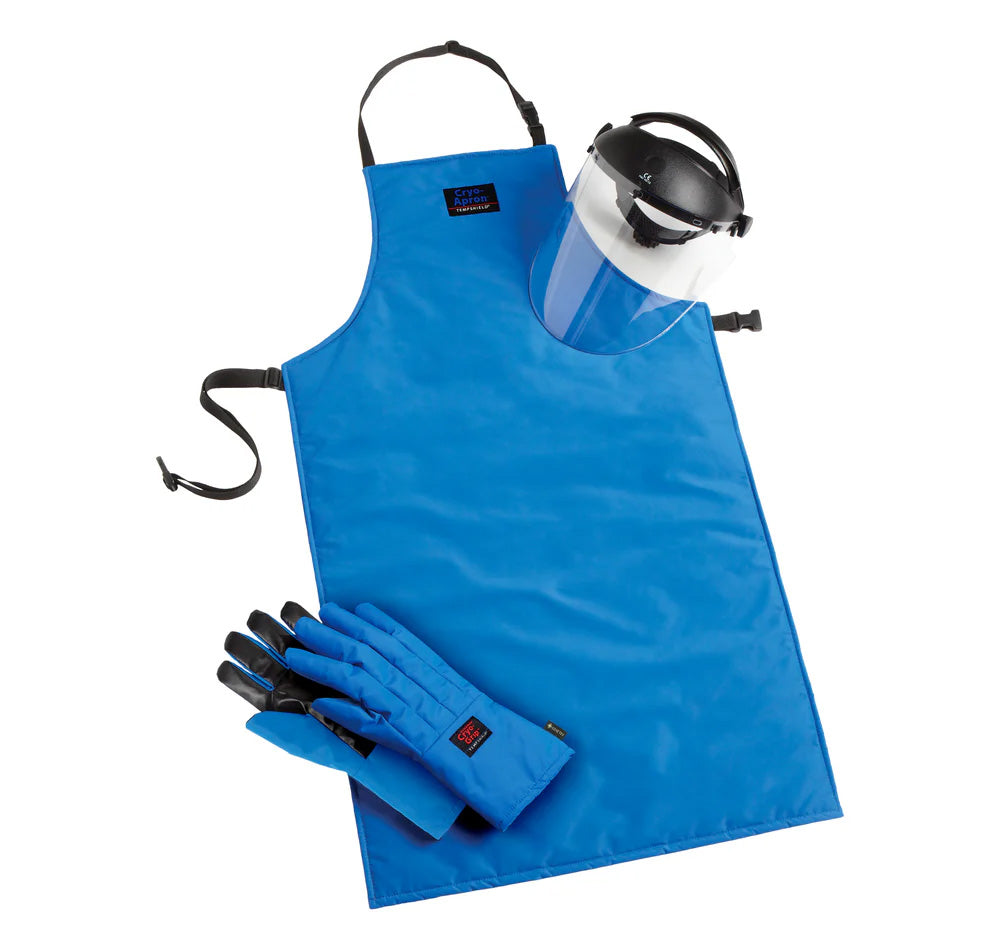
Liquid nitrogen sits at roughly -196°C, and a momentary splash causes instant cold burns. Cryogenic PPE is engineered for this: loose-fitting cryo gloves that can be flung off instantly if liquid gets inside, plus a face shield, apron, and gaiters to cover exposed skin. A complete set like our TempShield CRYO-PROTECTION Grip Safety Kit bundles the gloves, apron, gaiters, and shield so nothing critical is missing when someone fills a dewar.
For biosafety, the BMBL (Biosafety in Microbiological and Biomedical Laboratories) guidelines layer PPE by BSL level. At BSL-2 and above, that typically means a solid-front gown, double gloves pulled over the cuffs, and eye protection when splashes are possible. As an authorized dealer for the brands we carry, we work directly with manufacturer engineering teams and can help you spec a compliant kit for your application. Reach out at support@labsupplies.com.
PPE by Hazard: Quick Reference
Use this matrix to map your hazard assessment to the right gear, then confirm specifics against your chemicals and Safety Data Sheets.
| Hazard | Primary PPE | Key Standard | Notes |
|---|---|---|---|
| Flying particles / debris | Safety glasses with side shields | ANSI Z87.1 (29 CFR 1910.133) | Baseline for nearly all lab work |
| Chemical splash | Splash goggles + face shield | 29 CFR 1910.133 | Face shield is secondary, worn over goggles |
| Skin / chemical contact | Chemical-resistant gloves | 29 CFR 1910.138 | Match glove to chemical via permeation chart |
| Body / clothing exposure | Lab coat (FR for pyrophorics) | 29 CFR 1910 Subpart I | Solid-front gown at BSL-2 and above |
| Cryogenic liquids | Cryo gloves, face shield, apron | ANSI Z87.1 / manufacturer rating | -196°C; loose-fit gloves for instant removal |
| Airborne hazards | Respirator (fit-tested) | 29 CFR 1910.134 | Requires medical eval + fit test + program |
| Noise ≥ 85 dBA (8-hr TWA) | Hearing protection | 29 CFR 1910 Subpart G | Triggers hearing conservation program |
| Foot hazards | Closed-toe / safety shoes | ASTM F2413 (safety-toe) | Closed-toe is the minimum in all labs |
Keeping PPE Accessible and Compliant
Compliance fails at the margins — when gear is inconvenient, people skip it. A few low-cost fixes close that gap: wall-mounted glove dispensers at every bench, safety-labeled wash bottles for eye and skin rinsing, and bottle carriers that prevent the drops that create splash hazards in the first place. None of these are glamorous, but they're the difference between a written policy and a lab that actually follows it.
If you're outfitting a space from scratch, our lab storage and safety guide covers the broader setup, and our new lab setup guide walks through prioritizing purchases. Outfitting a brand-new lab? Our LaunchLab program gives new labs standing savings through the first year.
Frequently Asked Questions
What PPE is required in a laboratory?
At minimum, lab workers need ANSI Z87.1 safety glasses, a lab coat or long-sleeved covering, gloves suited to the materials handled, closed-toe shoes, and long pants. Additional PPE — goggles, face shields, respirators, or cryogenic gear — is added based on a hazard assessment of the specific work.
Is a lab coat considered PPE?
Yes. A lab coat is personal protective equipment because it's a removable barrier that keeps chemicals and biological material off skin and clothing and can be shed quickly if contaminated. For flammable or pyrophoric work, a flame-resistant coat is required instead of a standard one.
Who is required to pay for lab PPE?
Under 29 CFR 1910.132(h), the employer generally must provide required PPE at no cost to the employee, with narrow exceptions such as ordinary safety-toe footwear and prescription safety eyewear allowed offsite. The employer is also responsible for the hazard assessment and training.
What gloves should I use for handling chemicals?
Match the glove material to the specific chemical using the manufacturer's permeation and compatibility chart. Nitrile is the general-purpose default, but aggressive solvents and specialty chemistries may require neoprene, butyl, or Viton, and prolonged contact may call for double-gloving.
Do lab safety glasses need to meet a standard?
Yes. Eye and face protection in US labs must comply with ANSI/ISEA Z87.1, as referenced by OSHA's 29 CFR 1910.133. Look for the Z87 marking on the frame and lens, and choose models with side protection.
The Bottom Line
Lab PPE comes down to a baseline everyone wears plus hazard-specific layers you add after a proper assessment: eye protection to ANSI Z87.1, gloves matched to your chemicals, a coat suited to your fire and biosafety risks, and specialized gear like cryogenic kits where the work demands it. Build from the hazard, not the catalog, and keep the gear accessible so people actually use it.
→ labsupplies.com/collections/safety-ppe
— By the LabSupplies.com Technical Team